What PSI Is a Heavy Duty Pressure Washer?
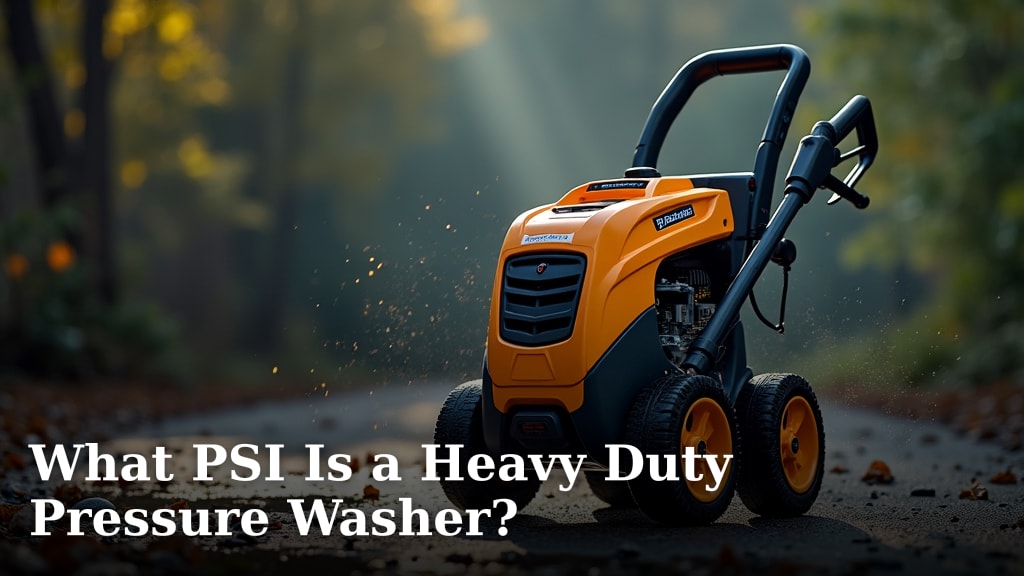
Understanding the PSI Scale for Heavy-Duty Pressure Washers
So, you’re looking for a heavy-duty pressure washer and keep seeing that PSI number. It stands for Pounds per Square Inch, and it’s the single most important spec you need to understand. Think of PSI as the raw punch or force behind the water. A higher PSI means the water is hitting the surface with more power, making it better at cutting through tough, stuck-on grime.
In short, a true heavy-duty pressure washer for tough jobs starts at 3,000 PSI and can go well over 4,000 PSI. But that’s just the starting point. The right PSI for you depends entirely on what you plan to blast away.
What PSI Range Is Considered “Heavy Duty”?
When shopping, you’ll see pressure washers grouped into light, medium, and heavy-duty categories. The PSI is what defines these groups. Here’s a simple breakdown:
- Light Duty: Under 2,000 PSI. Good for washing cars, patio furniture, and siding.
- Medium Duty: 2,000 to 3,000 PSI. Handles driveways, decks, and general home cleaning.
- Heavy Duty: 3,000 PSI and above. This is the zone for stripping paint, cleaning deep grout, and tackling serious commercial or construction messes.
Many equipment guides and retailer specs align with this 3,000+ PSI benchmark for heavy-duty classification. It’s the threshold where the machine moves from “homeowner tool” to “pro-style powerhouse.”
Common Heavy-Duty PSI Ranges Explained
Within the heavy-duty category, there’s still a wide range. Here’s what those numbers typically mean for real-world tasks:
- 3,000 – 3,500 PSI: The versatile workhorse. Excellent for cleaning concrete, removing old stain from a large deck, and washing heavy machinery. This range is ideal for serious DIYers and many commercial cleaners.
- 3,500 – 4,000+ PSI: The industrial-grade muscle. Designed for the toughest jobs, like stripping multiple layers of paint, deep cleaning brick and stone, or preparing large surfaces for repainting. You’ll often see gas-powered models in this range.
Why Just Looking at PSI Isn’t Enough
Here’s a crucial point many people miss: PSI is only half the story. A pressure washer’s true cleaning power comes from the combination of PSI and GPM (Gallons Per Minute). GPM measures the water flow volume.
Imagine you’re trying to rinse mud off a driveway. A high-PSI, low-GPM washer (like a 4,000 PSI / 2 GPM model) acts like a tiny, super-fast power washer. It can cut a clean line but takes forever to rinse the whole area. A lower-PSI, high-GPM model (like a 2,500 PSI / 4 GPM model) acts like a fire hose. It can’t cut as well, but it moves a ton of water and rinses quickly.
For heavy-duty cleaning, you need a balance. A good rule of thumb is to look for a machine with at least 3.0 GPM if you’re getting something over 3,000 PSI. This combination gives you both the force to break grime loose and the flow to wash it away efficiently.
| PSI Range | Typical GPM | Best Heavy-Duty Uses | Common Buyer |
|---|---|---|---|
| 3,000 – 3,200 | 2.5 – 3.0 | Driveway and patio cleaning, fence washing, car detailing (for enthusiasts) | Homeowner with large property |
| 3,200 – 3,800 | 3.0 – 4.0 | Paint prep, heavy equipment cleaning, graffiti removal, fleet washing | Contractor, small business owner |
| 4,000+ | 4.0+ | Industrial degreasing, large-scale surface prep, concrete restoration | Commercial cleaning services, industrial maintenance |
Factors That Determine the PSI You Need
Before you buy, ask yourself these questions. The answers will point you to the right PSI range.
What is your primary surface?
Different materials can handle different amounts of force. Blasting a fragile painted wall with 4,000 PSI is a fast way to damage it. We found that matching PSI to the surface is key to avoiding costly mistakes.
- Concrete & Asphalt: Very durable. Can handle 3,000+ PSI well. Ideal for heavy-duty models.
- Brick & Stone: Generally tough, but older mortar can be crumbly. Start with a lower setting and increase as needed.
- Wood (Decks, Siding): Use extreme caution. High PSI can splinter and damage wood fibers. Most pros recommend under 2,000 PSI for wood, using specialized tips.
- Vehicles & Painted Surfaces: Always use low PSI (under 2,000) and a wide-angle spray tip to avoid stripping paint.
The Role of Nozzle Tips
Your pressure washer comes with colored nozzle tips. These control the spray angle, which changes the effective pressure. A 0-degree red tip concentrates all the PSI into a tiny point for maximum impact. A 40-degree white tip spreads it out over a wide area for gentle rinsing. Always start with a wider, less aggressive tip and move closer or switch to a narrower tip only if you need more cleaning power.
Choosing the Right Heavy-Duty Pressure Washer: A Practical Guide
Knowing the PSI numbers is one thing. Picking the actual machine is another. Let’s walk through the decision process.
Gas vs. Electric: The Power Source Matters
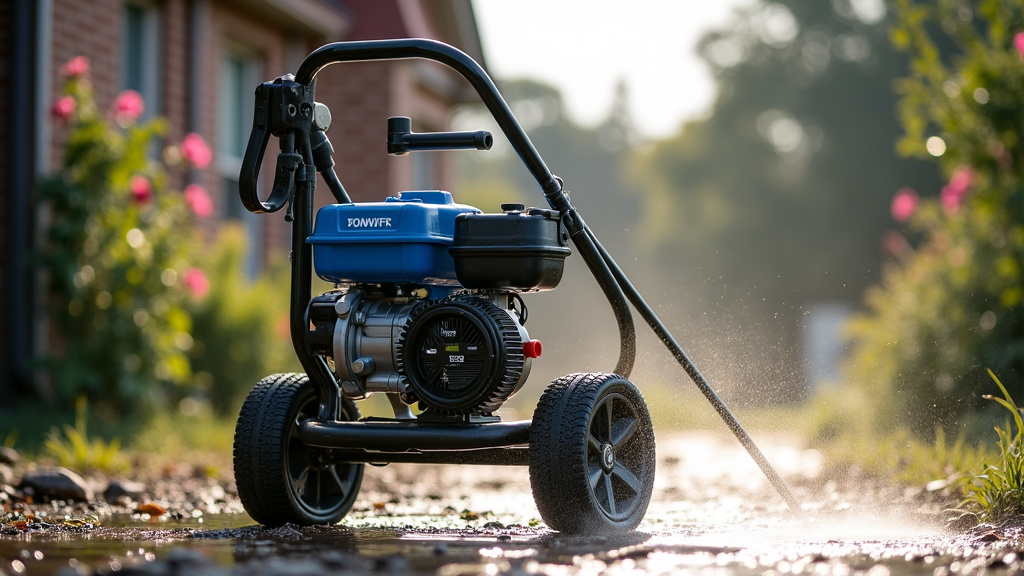
For heavy-duty (3,000+ PSI) work, gas-powered models are the standard. They offer the high power and mobility needed for big jobs. Electric models are quieter and lower-maintenance, but most top out around 2,000-2,300 PSI, putting them in the medium-duty range.
According to major equipment manufacturers, gas engines are required to achieve the torque needed for pumps that generate over 3,000 PSI continuously. If you see an electric model claiming “3000+ Peak PSI,” be wary. That “peak” number is a brief burst, not the sustained pressure you’ll get during actual use.
Reading the Specs: PSI, GPM, and CU
When comparing models, look at the spec sheet. A handy metric some manufacturers use is Cleaning Units (CU), calculated by multiplying PSI x GPM. It gives a single number for overall cleaning power.
- A 3,000 PSI / 3.0 GPM washer = 9,000 CU
- A 3,500 PSI / 2.8 GPM washer = 9,800 CU
While not a perfect measure, it can help you compare two models side-by-side if one has higher PSI but lower GPM. The goal is to find the best balance for your typical tasks.
Heavy-Duty Pressure Washer Buying Checklist
Ready to shop? Keep these key points in your pocket. This quick checklist will help you focus on what matters most.
- ✅ Confirm the PSI Range: Ensure the model is rated at 3,000 PSI or higher for true heavy-duty use.
- ✅ Check the GPM: Look for a flow rate of at least 3.0 GPM to pair with that high PSI.
- ✅ Consider the Engine: For 3,000+ PSI, a gas engine is necessary. Check engine size (CC) for reliability.
- ✅ Evaluate the Pump: Look for a metal pump (brass or aluminum) instead of plastic. A brushless induction motor on electric models (if considering lower-PSI) lasts longer.
- ✅ Look at the Hose & Tips: Ensure it includes a durable hose (steel-braided is best) and a set of color-coded nozzle tips.
- ✅ Read the Warranty: A good warranty on the pump and engine shows the manufacturer stands behind the product’s durability.
Choosing a heavy-duty pressure washer boils down to matching its PSI and GPM capabilities to the job at hand. By understanding what the PSI numbers truly mean and how they work with water flow, you can invest in a machine that will power through your toughest cleaning projects for years to come.
Conclusion
You now know that a true heavy-duty pressure washer starts at 3,000 PSI. This level of power, paired with a strong water flow of at least 3.0 GPM, is what handles the toughest jobs. Remember to match the PSI to your surface to avoid damage and always start with a wider spray tip. Your next step is simple: review your primary cleaning tasks and use the buying checklist to find a model that fits those specific needs. With the right balance of power and control, you can tackle any project with confidence.
Frequently Asked Questions
What PSI is best for cleaning a concrete driveway?
For concrete, we recommend a heavy-duty pressure washer with at least 3,000 PSI. This level of power effectively removes oil stains, dirt, and old sealers. You’ll also want a good flow rate (around 3.0 GPM) to rinse the large area efficiently.
Can a heavy-duty pressure washer damage my home’s siding?
Yes, it can if you’re not careful. Siding, especially vinyl or wood, can be damaged by high PSI. Always use a low-pressure setting (under 2,000 PSI) and a wide-angle nozzle tip. Keep the nozzle at a safe distance from the surface to prevent denting or cracking.
Is a gas or electric pressure washer better for heavy-duty work?
For true heavy-duty work above 3,000 PSI, a gas-powered model is the standard choice. Electric models are quieter and easier to maintain, but they typically max out around 2,300 PSI. A gas engine provides the sustained power needed for the most demanding jobs.
What does GPM mean and why does it matter with PSI?
GPM stands for Gallons Per Minute, which measures water flow. A high PSI cuts through grime, but a high GPM washes it away quickly. For heavy-duty cleaning, you need both. We suggest looking for at least 3.0 GPM to pair with 3,000+ PSI for an effective clean.
How do I know if a pressure washer is truly heavy-duty or just marketing?
Look at the sustained PSI and GPM ratings, not the “peak” numbers. A true heavy-duty machine will have a continuous PSI rating of 3,000 or higher. Check for a durable metal pump and a gas engine, as these are hallmarks of a machine built for serious, repeated use.