How Much PSI to Clean a Fence? The Full Picture
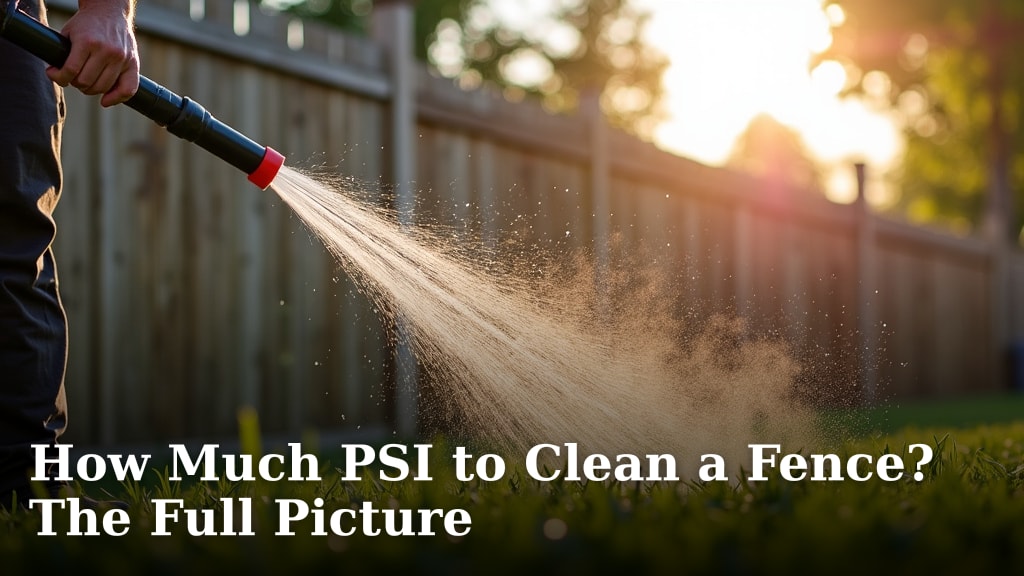
The right PSI for cleaning your fence depends on its material and condition, but generally, 1200-1500 PSI is a safe starting point for most fences. Too much pressure can easily damage softer woods or vinyl. You’ll want to use the lowest effective PSI to avoid causing costly repairs.
Choosing the correct pressure washer setting is key to a clean fence without damage. For older or softer wood fences, you might need to go even lower, perhaps 800-1000 PSI. Vinyl fences can often handle a bit more, but it’s always wise to start low and test on an inconspicuous area first. Remember, a gentler approach is usually better than brute force.
- Most fences need 1200-1500 PSI to start.
- Softer wood or older fences need less pressure (800-1000 PSI).
- Always test on a small, hidden spot first.
- Using too much PSI can cause damage and expensive repairs.
- A lower PSI is often all you need for a good clean.
Let’s walk through exactly what PSI you should use for your specific fence type and how to do it safely.
Choosing the Right PSI for Your Fence Cleaning Project
The big question is always about the PSI, or pounds per square inch. This tells you how much force the water comes out of your pressure washer. For fence cleaning, finding that sweet spot is key. Too little, and you won’t get the grime off. Too much, and you could damage your fence. We’ve looked into what works best for different fence types.
Understanding Pressure Washer Settings
Most modern pressure washers have adjustable PSI settings. Some electric models have fixed nozzles, while gas-powered ones often let you swap out nozzles or use a dial. The nozzle color usually indicates the spray angle and intensity. A red nozzle is the most concentrated and high-pressure, while green and white are gentler (National Association of Home Builders).
It’s smart to think of your pressure washer like a garden hose with super-strength. You wouldn’t blast your delicate flowers with a fire hose, right? The same logic applies to your fence. Start low and work your way up. You can always increase the pressure if needed, but you can’t easily un-damage a splintered wooden fence.
Nozzle Selection Matters
The nozzle tip is your primary PSI control when you don’t have an adjustable unit. A 0-degree nozzle (red) is like a laser beam of water – far too strong for most fences. A 15-degree nozzle (yellow) is still quite aggressive. For general fence cleaning, a 25-degree nozzle (green) or a 40-degree nozzle (white) is usually your best bet. These spread the water out, reducing the direct impact and therefore the PSI on any single spot.
PSI Recommendations by Fence Material
Your fence’s material is the biggest factor in deciding the right PSI. Different materials have different strengths and weaknesses when it comes to water pressure. We’ve gathered some common recommendations:
Wooden Fences: The Delicate Touch
Wood fences, especially older or softer varieties like pine or cedar, are the most vulnerable. They can easily get splintered, gouged, or even have wood grain ripped away by too much pressure. For most wood fences, a low setting is essential. We found that 800-1200 PSI is generally recommended.
For very soft or aged wood, you might even need to go lower, perhaps 500-800 PSI. Think of it like giving your fence a firm but gentle shower, not a power blast. If your pressure washer doesn’t have a low setting, try standing further away with a wider nozzle. This disperses the pressure over a larger area, making it much safer.
Vinyl Fences: A Bit More Forgiving
Vinyl fences are typically more durable than wood. They are less prone to splintering. This means you can often use a bit more pressure. For most vinyl fences, a range of 1200-1500 PSI is usually effective for removing dirt and mildew (Vinyl Institute).
However, it’s still wise to avoid going too high. Extremely high pressure, especially with a narrow nozzle, can potentially warp or even crack the vinyl. Always start at the lower end of that 1200-1500 PSI range and test. If it’s not cleaning effectively, you can slowly increase it. Never use a pressure washer above 2000 PSI on vinyl.
Composite Fences: Similar to Vinyl
Composite fencing, made from a mix of wood fibers and plastic, shares many of vinyl’s characteristics regarding pressure washing. They are quite resilient. You can generally aim for the 1200-1500 PSI range. Just like with vinyl, ensure you’re using a wide fan nozzle and keeping the wand at a consistent distance.
Always check the manufacturer’s specific cleaning recommendations for your composite fence. Some might have surface treatments or specific textures that require a gentler approach. A quick check of the warranty information or the manufacturer’s website can save you a lot of headaches.
Metal Fences: Less About PSI, More About Technique
Metal fences, like wrought iron or aluminum, are generally quite robust. The main concern here isn’t usually pressure damage to the material itself, but rather to any protective coatings like paint or powder coating. If you’re just trying to rinse off dirt, you can use a moderate PSI of around 1500-2000 PSI.
However, if the fence is painted or coated, be cautious. Too much pressure can strip away the paint, leading to rust issues down the line. If you see flaking paint, it’s best to back off the pressure or use a much wider nozzle and a gentler spray. For heavily soiled metal fences with intact paint, a medium PSI with a green nozzle is often sufficient.
The Art of Pressure Washing: Beyond Just PSI
While PSI is critical, it’s not the only factor in getting a clean fence without causing damage. Technique plays a huge role. Think of it like a doctor diagnosing an illness – they consider many symptoms, not just one.
Distance is Your Friend
How far you hold the pressure washer wand from the fence surface makes a significant difference. The closer you are, the more concentrated the force. We found that holding the wand about 12-18 inches away is a good starting point for most surfaces. For delicate wood, you might need to increase this distance to 24 inches or more.
Experimentation is key here. Start at a safe distance and slowly move closer until you see the dirt lifting. If you notice the wood fibers starting to fray or the paint looking stressed, you’ve moved too close. Back up immediately. It’s all about finding that balance between cleaning power and surface integrity.
Nozzle Choice is Crucial
We touched on this earlier, but it bears repeating. The spray pattern of your nozzle dictates how the pressure is applied. A wide-angle nozzle (like a 40-degree green or white tip) spreads the water over a larger area. This is much gentler than a narrow stream.
Always choose the widest angle nozzle that still allows you to clean effectively. This is often the safest approach for any fence material. If your pressure washer came with multiple nozzles, take a moment to identify them and understand their spray patterns before you start. Don’t just grab the first one you see!
Test in an Inconspicuous Area First!
This is perhaps the most important piece of advice we can give you. Before you blast away at the most visible part of your fence, find a small, hidden spot. This could be behind a large bush, on the back of a gate, or a corner section that isn’t easily seen. Spray this small area using your chosen PSI and technique.
Observe the results carefully. Does the dirt lift easily? Is the wood grain staying intact? Is the vinyl showing any signs of stress? If everything looks good, you can proceed to the rest of the fence. If you see any issues, adjust your PSI, distance, or nozzle and test again.
Consider Cleaning Solutions Wisely
Sometimes, water alone isn’t enough. Mildew, algae, and stubborn dirt might require a cleaning solution. However, you need to choose these carefully, especially for wood. Many household cleaners can damage wood fibers or leave residues. Look for cleaners specifically designed for pressure washing or for your fence material.
Many experts recommend a solution of one part bleach to three parts water for tackling mold and mildew on vinyl or composite fences. For wood, a gentler solution like a specialized wood cleaner or even just a mild dish soap mixed with water might be sufficient. Always follow the instructions on the cleaner and rinse thoroughly afterward. Never mix bleach with ammonia or other cleaners, as this can create dangerous fumes (EPA).
A Simple Checklist for Safe Fence Cleaning
To help you remember the key steps, here’s a quick checklist:
- Know your fence material.
- Choose the right PSI range.
- Select the widest fan nozzle.
- Maintain a safe distance (12-18 inches+).
- ALWAYS test on a hidden spot first.
- Rinse thoroughly after cleaning.
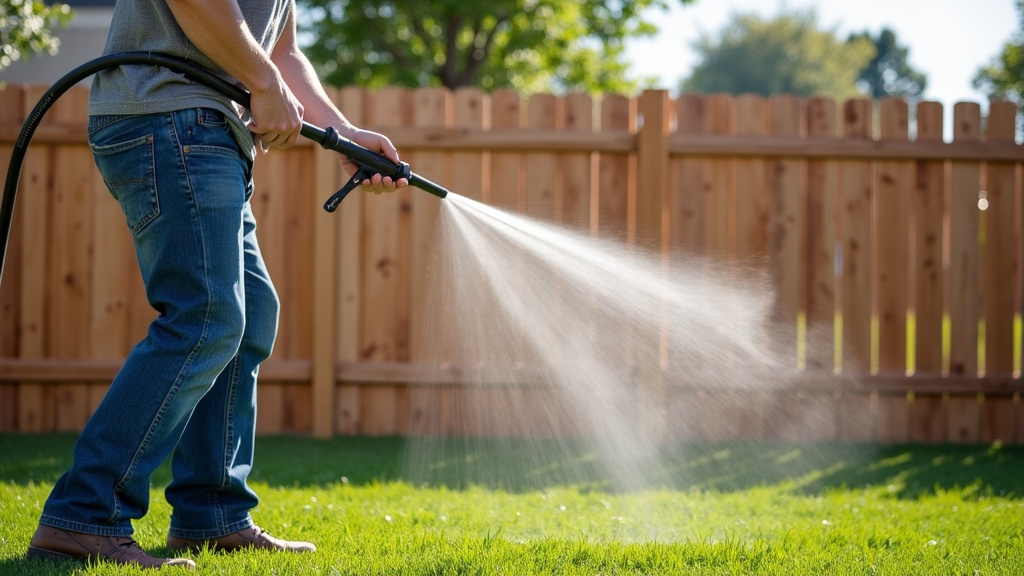
By following these guidelines and approaching the task with a little patience, you can achieve a beautifully clean fence without causing any damage. Remember, a gentle approach often leads to the best results.
Conclusion
Cleaning your fence doesn’t have to be a high-pressure situation. We’ve shown you that understanding your fence’s material is key to choosing the right PSI. For most wooden fences, a gentle 800-1200 PSI is best, while vinyl and composite can handle a bit more, up to 1500 PSI. Remember, the nozzle angle and your distance from the fence matter just as much as the PSI. Always test in an inconspicuous area first before tackling the whole fence. Take your time, start low, and your fence will thank you for it.
Frequently Asked Questions
Can I use my regular garden hose to clean my fence?
A garden hose can work for very light dirt and debris. However, it won’t have the necessary force to remove tougher stains like mildew or algae. For a truly clean fence, especially if it’s made of wood, you’ll likely need a pressure washer set to the correct, lower PSI.
What if my pressure washer doesn’t have adjustable PSI?
If your pressure washer doesn’t have an adjustable PSI setting, you’ll rely heavily on your nozzle selection and distance. Always use a wider fan nozzle (like a green or white tip) and keep the wand at least 18-24 inches away from the fence surface. This helps to disperse the pressure and make it safer for your fence.
How often should I pressure wash my fence?
The frequency depends on your environment and fence material. Generally, cleaning your fence once a year is a good practice to prevent heavy buildup of dirt, mold, or mildew. If your fence is in a damp, shaded area, you might need to clean it more often.
Can I use bleach to clean my fence?
Bleach can be effective for mold and mildew on vinyl and composite fences, but use it cautiously. A diluted solution (like one part bleach to three parts water) is recommended. For wood fences, bleach can be too harsh and may damage the wood fibers or lighten the color. Always test in a hidden spot first.
What’s the risk of damaging my fence with too much PSI?
Using too much PSI can cause significant damage. For wood fences, this can mean splintering, gouging, or removing the wood grain. Vinyl fences can warp or crack, and paint or coatings on metal fences can be stripped away, leading to rust. It’s always better to be too gentle than too aggressive.