What Is Nozzle Degree Spray Angle? 6 Common Angles
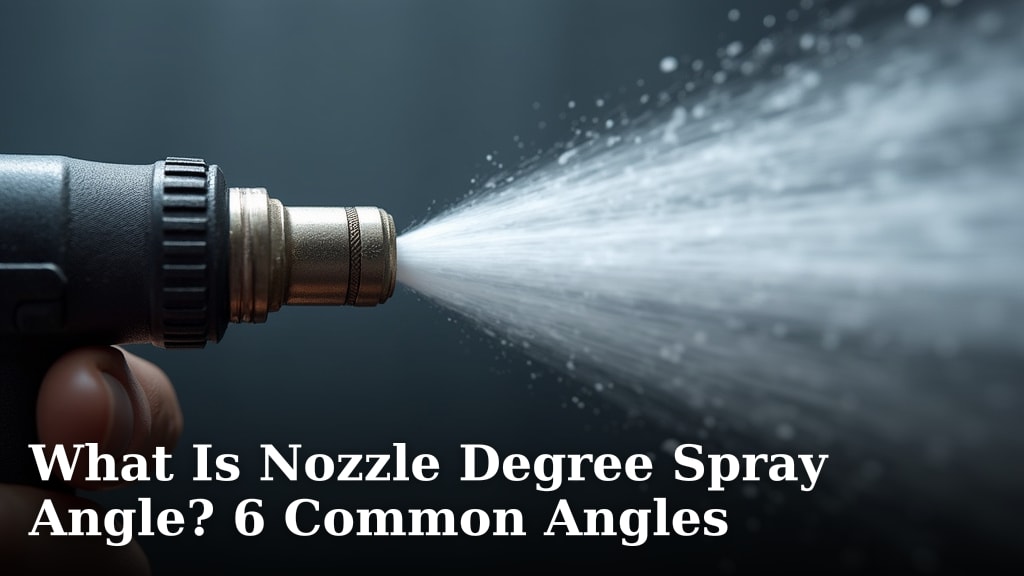
The nozzle degree spray angle is the cone-shaped pattern a sprayer makes when it releases liquid. It’s measured in degrees and helps you understand how wide the spray will be. This angle is super important for getting the right coverage when you’re applying liquids like pesticides, fertilizers, or even water for cleaning.
Think of it like an ice cream cone. A wider cone covers more area at once. A narrower cone focuses the spray. Choosing the right spray angle ensures you’re not wasting product or missing spots. It directly impacts the efficiency of your application.
- A nozzle’s spray angle determines the width of the spray pattern.
- It’s measured in degrees, like 80°, 110°, or 120°.
- Wider angles cover more ground but can lead to overlap.
- Narrower angles offer more precision but require more passes.
- Picking the correct angle is key for effective application.
Below, we’ll break down what nozzle degree spray angle means and look at six common angles you’ll find.
Understanding Your Nozzle’s Spray Angle
So, what exactly is this nozzle degree spray angle we keep mentioning? Think of it as the shape of the spray that comes out of your nozzle. It’s not just a random stream; it’s designed to form a specific cone. This angle tells you how wide that cone will be when the liquid is sprayed.
The angle is measured in degrees. You’ll see numbers like 80°, 110°, or even 120°. A bigger number means a wider spray pattern. A smaller number means a narrower, more focused stream. Knowing this angle is pretty vital for getting the best results with your sprayer.
Why the Spray Angle Matters So Much
You might wonder why such a specific detail is important. Well, the spray angle directly impacts how you apply your liquids. It affects coverage, efficiency, and even how much product you might waste.
Achieving Even Coverage
The goal is usually to get an even coating of whatever you’re spraying. If your spray angle is too narrow, you’ll have to make many passes to cover the same area. This can lead to missed spots or areas that get too much product. On the other hand, a spray angle that’s too wide might overlap too much, wasting product and potentially causing issues.
Efficiency and Speed
Choosing the right spray angle can make your job much faster. A wider angle covers more ground in a single pass. This is great for large areas like lawns or fields. A narrower angle is better for precise applications where you need to be more careful. It’s all about matching the angle to the task at hand.
Minimizing Drift
Some spray angles are designed to produce larger droplets. Larger droplets are less likely to drift away in the wind. This is really important when you’re spraying chemicals. Minimizing drift protects surrounding areas and ensures the product lands where you intend it to. Many agricultural guidelines recommend specific angles for herbicide application to reduce drift (USDA).
How Spray Angle Affects Droplet Size
Interestingly, the spray angle is also linked to the size of the droplets produced. This connection is something many people overlook.
Wider Angles and Droplet Size
Generally, wider spray angles tend to produce smaller droplets. Think about stretching a rubber band wide; the material gets thinner. Smaller droplets can be good for covering a fine mist, but they are also more prone to evaporating or drifting. This is why you might see recommendations for wider angles in certain situations, like applying insecticides where fine coverage is key.
Narrower Angles and Droplet Size
Conversely, narrower spray angles often produce larger, heavier droplets. These droplets are less likely to be carried away by wind. They can also reduce the chance of evaporation before they reach the target. This makes them ideal for applications where drift is a major concern, such as applying certain fertilizers or herbicides.
Comparing Common Nozzle Spray Angles
Let’s look at some of the most common spray angles you’ll find on nozzles and what they’re generally used for. Understanding these can help you make a better choice for your needs.
| Angle (Degrees) | Typical Use Cases | Pros | Cons |
|---|---|---|---|
| 25° – 50° (Narrow) | Targeted applications, spot spraying, precise strip applications. | Excellent for precision; reduced drift; good penetration. | Requires more passes; slower coverage of large areas. |
| 65° (Narrow-Mid) | General-purpose spraying, some row crops, banding. | Good balance of coverage and precision. | Can still require careful overlap; moderate drift potential. |
| 80° (Mid-Range) | Common for many agricultural applications, fertilizers, herbicides. | Good coverage; widely available; can handle various speeds. | Moderate overlap needed; some drift risk in windy conditions. |
| 110° (Wide) | Broadacre spraying, large fields, general weed control. | Faster coverage; reduced number of passes; good for boom sprayers. | Higher overlap needed; increased drift potential; smaller droplets. |
| 120° (Extra Wide) | Specific high-volume applications, landscape spraying, strip applications. | Maximum coverage per pass; very fast application. | Significant overlap required; highest drift potential; careful calibration needed. |
| Air Induction (AI) / Low Drift (LD) | Any application where drift is a significant concern. | Produces larger droplets, greatly reducing drift. | May require higher pressure; can result in coarser spray. |
Understanding the Angles in Practice
When you’re out in the field or working in your yard, the angle plays a big role. If you’re spot-spraying weeds in your garden, a narrow angle like 25° or 50° is your friend. It keeps the spray right on the weed and off your prize-winning roses.
For larger areas, like applying fertilizer to a whole lawn, an 80° or 110° angle is more practical. It covers more ground quickly. You just need to be mindful of overlapping your passes correctly to avoid stripes of uneven coverage.
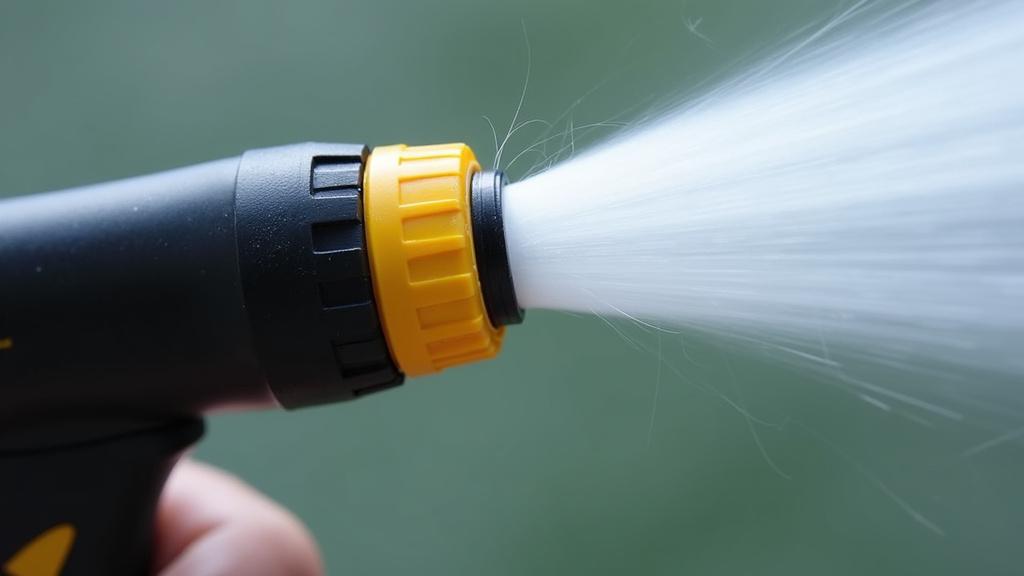
6 Common Nozzle Spray Angles You’ll Encounter
Let’s dive a bit deeper into six angles that are frequently used. You’ll see these on many different types of sprayers.
The 25° Spray Angle
This is a pretty narrow spray angle. You’ll typically find it used for very specific jobs. Think about applying a pesticide directly onto a pest infestation on a single plant. It’s also used for banding, where you apply spray in narrow strips.
The 50° Spray Angle
Still on the narrower side, the 50° angle offers a bit more width than the 25°. It’s great for precise applications where you need good control. You might use this for targeted weed control in certain garden settings or for applying treatments to specific areas of a crop row.
The 80° Spray Angle
This is a very popular choice for a lot of general spraying tasks. An 80° angle provides a good balance. It covers a decent area without being so wide that drift becomes an immediate problem. Many agricultural sprayers use 80° nozzles for applying herbicides and liquid fertilizers.
The 110° Spray Angle
When you need to cover ground more quickly, the 110° angle is a go-to. This wider spray pattern is excellent for large fields and broad-acre applications. It means you can cover more area with each pass of your sprayer. This angle is common on boom sprayers used in farming.
The 120° Spray Angle
This is an extra-wide spray angle. It’s designed for maximum coverage in the shortest amount of time. You might see 120° nozzles used in landscape applications or for specific strip applications where efficiency is key. Because the droplets are smaller and the area covered is so wide, careful calibration and spraying conditions are important to avoid drift.
Air Induction (AI) / Low Drift (LD) Nozzles
While not a single degree, these are a category you’ll often see mentioned. They are designed to produce larger, more uniform droplets. This is achieved through a special internal design that mixes air with the liquid. Many research bodies recommend these types of nozzles to reduce off-target spray, especially when using herbicides (University of Georgia Extension).
Choosing the Right Angle for Your Task
Selecting the correct nozzle spray angle isn’t just about preference; it’s about performance and efficiency. Here’s a quick guide to help you decide.
- Consider the Area: Large fields need wider angles (110°-120°). Small, precise spots need narrower angles (25°-50°).
- Think About the Product: Some liquids perform better with finer or coarser sprays. Check product labels for recommendations.
- Watch the Weather: Windy conditions call for narrower angles or low-drift nozzles to minimize spray drift.
- Match Your Sprayer: Ensure the nozzle type and angle are compatible with your sprayer’s pressure capabilities.
- Check for Overlap: Always aim for a consistent overlap between spray passes to ensure even coverage.
- Consult Recommendations: If you’re unsure, look for guidelines specific to the chemical or liquid you are applying.
Conclusion
Choosing the right nozzle spray angle is a simple but powerful way to improve your spraying results. You’ve learned that the angle affects how wide your spray pattern is, which directly impacts coverage and efficiency. Whether you need a narrow stream for precise spot treatments or a wide cone for covering large areas, understanding these angles ensures you get the job done right. Always consider your specific task, the product you’re using, and the weather conditions. Take a moment to check your current nozzles or consider upgrading to one that better matches your needs for your next spraying job.
Frequently Asked Questions
What happens if I use the wrong spray angle?
Using the wrong spray angle can lead to uneven coverage, either missing spots or applying too much product. It can also make your application less efficient, requiring more time and effort to complete the job. For instance, a spray angle that’s too wide for a small area might waste product through overlap.
Are low-drift nozzles always the best choice?
Low-drift nozzles, like Air Induction (AI) types, are excellent when spray drift is a major concern, such as in windy conditions or near sensitive areas. However, they might produce coarser droplets which could affect fine coverage in some applications. They are a great option for reducing off-target spray but aren’t always the only or best choice for every situation.
How does nozzle pressure affect the spray angle?
While the nozzle itself is designed with a specific spray angle, the pressure at which you spray can influence the pattern. Too low a pressure might cause the spray pattern to become uneven or not fully form. Too high a pressure can sometimes distort the intended angle or create finer droplets, increasing drift.
Can I change the spray angle on my existing nozzle?
Typically, the spray angle is a fixed characteristic of the nozzle tip itself. You cannot change the angle of a standard nozzle tip. If you need a different spray angle, you will need to replace the nozzle tip with one that has the desired degree measurement.
How do I know if I’m getting the right overlap?
Achieving proper overlap is key for even coverage, especially with wider spray angles. You can check your overlap by spraying a small test area and observing where the spray patterns meet. Aim for about a 50% overlap between passes to ensure there are no streaky lines of missed or over-applied product.