9 Best Pressure Washer Replacement Pumps (November 2026)
The best pressure washer replacement pumps include the YAMATIC 3/4" Horizontal Shaft Pressure Washer Pump for common 3/4-inch horizontal shafts, the Hourleey 3/4" Shaft Horizontal Pressure Washer Pump for a ready-to-install kit, and the TOOLCY Pressure Washer Pump 3/4" Shaft Horizontal for broad model cross-checking.
On this page (4 sections)
The best pressure washer replacement pump for most compatible gas washers is the YAMATIC 3/4-inch horizontal model, with a stated maximum of 3400 PSI and 2.5 GPM. That combination suits many household jobs where the engine, frame and hoses were already built for that class of output.
Vertical shaft shoppers should compare the YAMATIC 7/8 inch pump or EZJOB instead. Shaft direction and port layout decide fit before pressure ever matters.
A replacement pump can restore a machine without replacing a sound engine and frame. It suits an owner whose washer has a weak, leaking or pulsing pump, but less well when the engine is worn.
The right choice depends on shaft size, shaft direction, mounting holes, hose connections and the original output range. A higher maximum rating does not fix a wrong shaft or port position.
For daily use, PSI and GPM work together rather than alone. PSI helps with stubborn grime and GPM helps with rinse speed and coverage, while the engine, hose, nozzle and water supply still shape what reaches the surface.
Set up starts with removing the old pump and measuring the shaft. Check diameter, keyway, bolt pattern and clearance while the engine is disconnected, rather than relying on brand names alone.
Care after fitting is mostly about water quality and heat. Keep the inlet screen clean, give the pump a steady supply, and avoid long periods in bypass mode with the trigger closed.
Storage also matters for a long service life. Release pressure and drain water so the pump does not sit wet through the off season.
Start by learning which pressure washer pump type matches your machine. Then use our guide to the pressure washer pump motor to match engine size and shaft type before ordering.
Our picks at a glance
-
1
 Best for common 3/4-inch horizontal shafts
YAMATIC 3/4" Horizontal Shaft Pressure Washer Pump
9.7/10 our score
See it on Amazon -
2
 Best for a ready-to-install kit
Hourleey 3/4" Shaft Horizontal Pressure Washer Pump
9.6/10 our score
See it on Amazon -
3
 Best for broad model cross-checking
TOOLCY Pressure Washer Pump 3/4" Shaft Horizontal
9.5/10 our score
See it on Amazon
- 4
 Check it
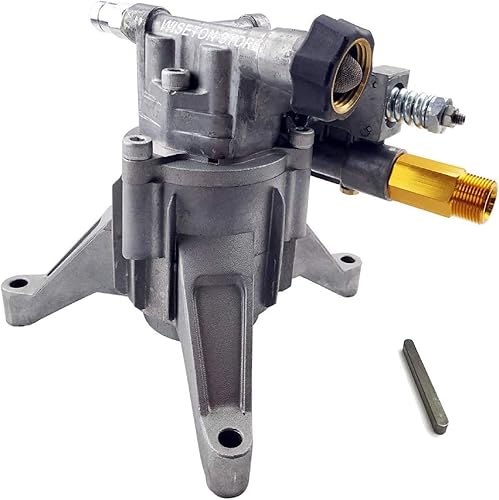
YAMATIC 7/8" Vertical Shaft Pressure Washer Pump
Best for rear-port vertical engines - 5
 Check it
EZJOB 2400-2800PSI Pressure Washer Pump Replacement
Best for lower-output vertical replacements - 6
 Check it
SIMPSON OEM Technologies 3300 PSI 2.4 GPM
Best for a 3300 PSI OEM-style replacement - 7
 Check it
WOJET Horizontal Self-Priming Pressure Washer Pump 3/4"Shaft
Best for approved remote water sources - 8
 Check it
SIMPSON OEM Technologies 3400 PSI 2.5 GPM
Best for a SIMPSON-style high-output fit - 9
 Check it
Hourleey 7/8" Shaft Vertical Pressure Washer Pump
Best for 7/8-inch vertical replacement value
Best pressure washer replacement pump options
The best pressure washer replacement pump depends on your washer's physical layout first and its maximum PSI second. We compared the stated shaft sizes, output, connections, mounting details, included parts and service features.
Our score weighs specs, features and buyer feedback against what you're shopping for.
YAMATIC 3/4" Horizontal Shaft Pressure Washer Pump: Best for common 3/4-inch horizontal shafts
- 3400 PSI maximum pressure
- 2.5 GPM maximum flow
- Pre-filled oil
- Thermal relief valve
A strong match for compatible gas pressure washers with a 3/4-inch horizontal shaft. Its pre-filled oil, adjustable unloader and thermal relief valve simplify replacement work.
Pros
- High stated output
- Pre-filled oil
- Adjustable unloader
Cons
- Not for vertical engines or 7/8-inch shafts
- Not for idle-down systems
The YAMATIC 3/4 inch horizontal pump is the strongest general pick for a compatible gas pressure washer. It reaches a stated maximum of 3400 PSI and 2.5 GPM, with a 3/4 inch NH inlet and M22 14mm outlet.
Its pre filled oil reduces setup work, while the adjustable unloader lets you adjust pressure to the engine needs. That helps when you move from a car wash to a driveway and back again.
The thermal relief valve helps manage heat when the pump is in bypass mode. It releases small amounts of hot water and draws in cooler water to limit heat buildup.
This pump is recommended for 180 to 208 cc and 5.5 to 7 HP engines. That range gives a practical check against the engine plate on your washer.
It fits only a 3/4 inch horizontal shaft, so it is not for vertical engines, 7/8 inch or 1 inch shafts, electric washers or idle down systems. Those limits are worth checking before the old pump comes off.
Choose it for common household gas washers where the shaft and mounting pattern match. Check engine orientation, port direction and frame clearance before you order.
For care, keep the inlet screen clear and purge air after connecting water. A steady supply will protect the pump far more than any extra pressure setting.
Hourleey 3/4" Shaft Horizontal Pressure Washer Pump: Best for a ready-to-install kit
- 3400 PSI maximum pressure
- 2.5 GPM maximum flow
- Pre-filled oil
- Maintenance-free crankcase
This horizontal pump suits a compatible gas washer that needs the common 3/4-inch shaft size. The kit includes mounting hardware, a shaft key, detergent hose and instructions.
Pros
- Complete installation hardware
- Maintenance-free crankcase
- Thermal relief valve
Cons
- Fit still depends on the washer model
- Maximum figures are not a guarantee of machine output
Hourleey 3/4 inch horizontal pump is a close match for buyers who want a complete setup kit. It is rated up to 3400 PSI and 2.5 GPM, with a 3/4 inch NH garden hose inlet and threaded M22 high pressure outlet.
The package includes a detergent hose, 4 bolts, a shaft key, 4 flat pads, 4 spring washers and an instruction manual. Having the hardware in one box lowers the chance of a missing washer stopping the job.
Its pre filled oil and maintenance free crankcase reduce routine service work. You do not need to add oil before the first start, and there is no planned oil change in normal use.
The pump is made for compatible gas washers, including select Simpson, Ryobi and Honda models. Those brand names do not guarantee fit, so compare the old pump shaft, holes and connection direction.
Pick it when installation hardware matters to you. The kit approach suits an owner who wants to finish the swap in one session.
Choose another model if your engine uses a vertical shaft or if the original washer needs a different port arrangement. Orientation rules first, even when the pressure numbers look right.
For daily care, check the detergent hose and fittings for leaks after fitting. A small leak at the inlet can starve the pump and look like low pressure.
TOOLCY Pressure Washer Pump 3/4" Shaft Horizontal: Best for broad model cross-checking
- 2600–3300 PSI operating range
- 2.5 GPM maximum flow
- 3 included nozzle tips
- Maintenance-free crankcase
TOOLCY gives a wide compatibility list and useful mounting measurements for shoppers comparing an old pump. It suits compatible 3/4-inch horizontal engines from 180 to 225 cc.
Pros
- Detailed compatibility list
- Mounting measurements
- Nozzle tips included
Cons
- Not for 7/8-inch shafts
- Output range is lower than some 3400 PSI picks
TOOLCY gives you useful measurements for comparing a 3/4 inch horizontal pump with the old unit. It supports a stated range of 2600 to 3300 PSI at 2.5 GPM and is intended for many 180 to 225 cc, 6 to 8 HP engines.
The pump includes 3 nozzle tips: 0 degree, 25 degree and soap. That helps you match the spray pattern to stripped paint, general washing or detergent use without a separate purchase.
It also has a maintenance free crankcase and die cast aluminum construction with brass components. The metal build suits outdoor storage better than a light plastic housing would.
Its mounting details include a 3 5/8 inch diagonal hole distance, 2 9/16 inch hole to hole distance, a 3/16 inch key width and 2 5/8 inch depth. These measurements help you compare the old pump before buying.
Choose TOOLCY when broad model cross checking and mounting dimensions are useful. It is not for a 7/8 inch shaft.
The wider engine range also helps, but only when the shaft and ports line up. Measure first and treat the compatibility list as a guide rather than a promise.
After fitting, run water through the pump before starting the engine. That simple step purges air and reduces the risk of a rough first start.
YAMATIC 7/8" Vertical Shaft Pressure Washer Pump: Best for rear-port vertical engines
- 3000 PSI maximum pressure
- 2.5 GPM maximum flow
- Rear inlet and outlet
- Pre-filled oil
This is the vertical option for compatible gas washers with a 7/8-inch shaft and rear-facing connections. It is not a substitute for a horizontal 3/4-inch pump.
Pros
- Rear-port layout
- Pre-filled oil
- Adjustable unloader
Cons
- Not for horizontal engines
- Not for front-facing inlet and outlet
The YAMATIC 7/8 inch vertical pump is the right category for a gas washer with a vertical shaft and rear facing connections. It reaches a stated maximum of 3000 PSI and 2.5 GPM.
Its 3/4 inch NH inlet and M22 14mm outlet face the rear. That layout suits a frame that was designed for hoses to route behind the engine.
The pre filled oil, adjustable unloader and thermal relief valve support a simpler replacement process. You can set pressure for the task at hand and let the relief valve guard against heat in bypass.
YAMATIC recommends it for 160 to 201 cc and 5 to 6 HP engines. That engine window helps you rule this pump in or out quickly.
It is not for a 3/4 inch shaft, horizontal engine, front facing inlet and outlet or idle down system. Front port machines need a different design even if the shaft size matches.
Pick this pump when the original washer has the same 7/8 inch vertical and rear port layout. If the ports face forward, compare another compatible design instead.
For storage, drain the pump and release pressure before the off season. Dry storage helps protect seals and metal parts until the next round of cleaning.
EZJOB 2400-2800PSI Pressure Washer Pump Replacement: Best for lower-output vertical replacements
- 2400–2800 PSI range
- 2.5 GPM maximum flow
- 7/8-inch vertical shaft
- Rear-facing connections
EZJOB fits shoppers whose original pump uses a 7/8-inch vertical engine and rear hose routing. Its lower pressure range can make sense when the washer is built around 2400–2800 PSI.
Pros
- Clear lower pressure range
- Pre-filled oil
- Includes shaft key
Cons
- Not for horizontal shafts
- Select-model fit must be checked carefully
EZJOB is designed for select 7/8 inch vertical shaft gas washers that work in a 2400 to 2800 PSI range. It provides up to 2.5 GPM and uses rear facing inlet and outlet connections.
The pump is intended for 4 to 7 HP, 196 to 224 cc engines at 3400 RPM. That match matters because the engine must drive the pump at its rated speed.
It includes pre filled oil, a shaft key, an easy start valve, a thermal relief valve, an unloader and an SAE gas engine flange. The easy start valve is meant to make pull starting easier after installation.
This lower pressure range can be useful when your original pressure washer was built around 2400 to 2800 PSI. It suits driveways, patios, decks, siding and vehicles in that original class.
Compare shaft length, keyway, mounting pattern, pump height and port direction. Brand and PSI alone do not guarantee fit on this select model design.
Choose EZJOB when those measurements match. It is not for horizontal shaft or electric pressure washers.
Care is simple with a pre filled crankcase and no planned oil change. Keep the water supply open and the inlet clear so the pump never runs dry.
SIMPSON OEM Technologies 3300 PSI 2.4 GPM: Best for a 3300 PSI OEM-style replacement
- 3300 PSI maximum pressure
- 2.4 GPM maximum flow
- Maintenance-free crankcase
- Anodized die-cast aluminum
This SIMPSON pump suits compatible gas washers with a horizontal engine and 3/4-inch shaft. Its maintenance-free crankcase and stainless steel pistons support a simple replacement plan.
Pros
- OEM Technologies design
- Maintenance-free crankcase
- Thermal relief valve
Cons
- 2.4 GPM maximum flow
- Port orientation still needs checking
The SIMPSON OEM Technologies 90028 suits a compatible horizontal gas washer with a 3/4 inch shaft and a stated maximum of 3300 PSI at 2.4 GPM. Its SAE bolt pattern fits many horizontal engine layouts.
The pump has a garden hose inlet, threaded M22 outlet and maintenance free crankcase. That means no oil change is planned in normal service.
Fully anodized die cast aluminum supports corrosion protection, while stainless steel pistons support seal life. Those details suit an owner who stores the washer outdoors or in a damp shed.
SIMPSON identifies this model for machines such as the Kohler SH270 and Honda GC160/190, but engine orientation and connection layout still need checking. The kit includes hardware and a siphon tube.
Pick it when 2.4 GPM fits the original washer. The slightly lower flow can still rinse well when the original machine was built for it.
Consider the 90029 if your matched machine is designed for 2.5 GPM. The choice should follow the original washer rating rather than the larger number alone.
For set up, tighten mounting bolts evenly and check the shaft key seating. An even mount helps the pump sit square on the engine shaft.
WOJET Horizontal Self-Priming Pressure Washer Pump 3/4"Shaft: Best for approved remote water sources
- 3400 PSI maximum pressure
- 2.5 GPM maximum flow
- Self-priming function
- Hand-adjustable unloader
WOJET stands out for a self-priming function that can draw from a bucket, pool or tank when the setup is suitable. It mounts directly to the engine crankshaft and accepts no other mounting configuration.
Pros
- Self-priming function
- Hand-adjustable pressure
- Siphon hose with filter
Cons
- Direct crankshaft mounting only
- Remote water use needs careful setup
WOJET stands apart because its stated design includes a self priming function. With a suitable suction hose, it can draw water from a bucket, pool or tank, which may help when a direct faucet is unavailable.
It is built for a 3/4 inch horizontal shaft, 180 to 225 cc engines and 6.5 to 7 HP. Output reaches a stated maximum of 3400 PSI and 2.5 GPM, with a garden hose inlet and M22 outlet.
The hand adjustable unloader lets you reduce or increase pressure without a wrench. Turn it counter clockwise for lighter tasks and clockwise for tougher jobs such as driveways.
The package includes a shaft key, siphon hose with filter, bolts and anti seize. The filter helps keep debris out of the pump when drawing from a bucket or tank.
WOJET mounts directly to the engine crankshaft only. Choose it for an approved self priming setup, not for a washer that requires another mounting configuration.
Self priming use needs patience at the start. Place the suction hose in water and let it prime until flow becomes steady before relying on full pressure.
For care, use a hose of at least 3/4 inch diameter for suction. A smaller hose can starve the pump and slow priming.
SIMPSON OEM Technologies 3400 PSI 2.5 GPM: Best for a SIMPSON-style high-output fit
- 3400 PSI maximum pressure
- 2.5 GPM maximum flow
- Stainless steel pistons
- Maintenance-free crankcase
This pump offers the highest stated output in the SIMPSON OEM Technologies pair. Choose it only when the horizontal shaft, engine capacity and connection layout match.
Pros
- 3400 PSI and 2.5 GPM
- Stainless steel pistons
- Thermal relief valve
Cons
- Fit is not determined by PSI alone
- Higher output may not suit every washer
The SIMPSON OEM Technologies 90029 is the higher output option in the SIMPSON horizontal pair. It reaches a stated maximum of 3400 PSI and 2.5 GPM on a compatible gas washer with a horizontal engine and 3/4 inch shaft.
The maintenance free crankcase avoids routine oil changes. That suits a homeowner who wants the replacement to be fit and forget as far as oil is concerned.
Stainless steel pistons, a stainless steel integrated unloader, an easy start system and a thermal relief valve are part of the design. The integrated unloader also supports the easy start function.
The kit includes a siphon tube with filter, mounting bolts, shaft key and instructions. The siphon tube helps with detergent pick up in normal use.
It uses a garden hose inlet and M22 high pressure outlet. Those standard connections make it easier to reuse existing hoses when the layout matches.
Choose it when your original washer supports the 3400 PSI and 2.5 GPM range. Match the inlet and outlet direction before choosing it over the 3300 PSI, 2.4 GPM model.
The pump is built from anodized die cast aluminum for corrosion protection. That helps when the washer is used often and stored in a garage or shed.
Hourleey 7/8" Shaft Vertical Pressure Washer Pump: Best for 7/8-inch vertical replacement value
- 3400 PSI maximum pressure
- 2.5 GPM maximum flow
- Pre-filled oil
- Maintenance-free crankcase
Hourleey gives vertical-shaft shoppers a high stated output and a small installation kit. Confirm the original washer's shaft, port direction and mounting hardware before choosing it.
Pros
- High stated output
- Pre-filled oil
- Installation hardware included
Cons
- Vertical fit only
- Maximum pressure does not confirm compatibility
Hourleey 7/8 inch vertical pump provides a stated maximum of 3400 PSI and 2.5 GPM for compatible gas pressure washers. It uses a 3/4 inch NH garden hose inlet and threaded M22 outlet.
The kit includes a detergent hose, 3 bolts, a shaft key, 3 flat pads, 3 spring washers and an instruction manual. That hardware set covers the main mounting and detergent needs for the swap.
Pre filled oil and a maintenance free crankcase reduce the service steps after installation. There is no initial oil fill and no periodic oil change in normal use.
This pump is intended for 7/8 inch vertical shafts and select Honda, Simpson, RYOBI, Briggs & Stratton, Subaru and Craftsman washers. Confirm the original port direction and mounting holes because brand compatibility alone does not guarantee fit.
Pick it when your vertical washer needs the 3400 PSI and 2.5 GPM class. It suits walls, fences, sidewalks and vehicles when the machine was built for that output.
It is not a replacement for a horizontal pump. Shaft direction must match the engine, even when the inlet and outlet threads look the same.
For care, check the double seal area for leaks after the first run. Address a small leak early so it does not turn into a larger problem.
How should you compare pressure washer pumps?
Compare replacement pump geometry before comparing output. A pump with the wrong shaft size, orientation or port direction will not become compatible because its PSI number is higher.
Which pressure washer pump type fits your engine?
A horizontal pump belongs on a horizontal engine shaft, while a vertical pump belongs on a vertical engine shaft. Measure the old shaft after removing the pump, then check its diameter: 3/4 inch is 0.75 inch and 7/8 inch is larger.
Orientation matters because the pump body, ports and frame clearance are built around it. A pump can have the right diameter and still fail to fit the layout.
Take the old pump off and look at the shaft from the end. A horizontal shaft extends parallel to the ground, while a vertical shaft points up or down.
Measure diameter with calipers or a gauge rather than guessing by eye. The gap between 3/4 inch and 7/8 inch is small enough to cause a mistake.
Check the keyway and shaft length at the same time. The new pump must slide on fully and sit square against the mounting face.
Check bolt spacing and pump height before you order. Those details decide whether the pump clears the frame and whether hoses can connect without strain.
For a broader explanation, see our guide to the best pressure washer pump type. It helps separate axial, triplex, horizontal and vertical choices before you compare product ratings.
Use that guide to sort the category first and the brand second. Once the type is clear, PSI and GPM become much easier to compare.
How do PSI and GPM affect daily cleaning?
PSI describes pressure, while GPM describes water flow. The two numbers work together, so compare both with the washer's original design rather than choosing the largest single figure.
Our guide to What Is Cleaning Power on a Pressure Washer? explains how pressure and flow combine. A pump rated for 3400 PSI does not mean every engine, hose and nozzle will deliver that output.
Why do mounting and port direction matter?
The pump must sit squarely on the engine shaft with the correct keyway and mounting holes. Inlet and outlet direction also affect hose routing, frame clearance and whether the connections can be reached without forcing a hose around the engine.
Measure the bolt spacing, shaft length, keyway, pump height and port position. The TOOLCY pump publishes several mounting measurements, while other products here identify the shaft and connection standards.
What output range should you choose?
Match the replacement pump's working range to the original washer's PSI and GPM. EZJOB's 2400–2800 PSI range suits a different class of machine than a 3400 PSI horizontal pump.
The engine must also supply the pump's needs. Use the pressure washer pump motor guide to compare engine size, shaft type and pump output before you replace the unit.
How do you install and care for a replacement pump?
Installation starts with a compatible water supply, a clean mounting surface and a pump that matches the old shaft. Disconnect the engine, remove pressure from the system and follow the pump instructions for bolts, keyway and connections.
Work on a flat surface with the washer stable and cool. Loosen fittings slowly because trapped pressure can release water even after the engine stops.
Remove the old pump and clean the engine mounting face. Dirt left under the new pump can stop it sitting square on the shaft.
Fit the shaft key first, then slide the pump on by hand. Start all bolts by hand before tightening, and tighten them in a cross pattern.
After mounting, connect the water supply before starting the engine. Turn the water on, purge trapped air and inspect fittings for leaks.
Keep the inlet screen and nozzle clear in daily use. A kinked hose, restricted water supply or blocked nozzle can cause low pressure and can make a good pump appear faulty.
Avoid leaving the pump in bypass for long periods. Thermal relief valves help manage heat buildup, but they do not make a cold water pump suitable for a hot water system.
For storage, release system pressure and drain remaining water. Store the washer where water cannot pool around the pump to protect seals and fittings through winter.
Use only the soap and detergent method intended for your washer. Our guide to What Soap Can I Use in a Pressure Washer? covers detergent choices and injector use, and rinsing the detergent system after use prevents a blocked injector later.
Check hoses and fittings each season for cracks and worn threads. Keep the instructions with the washer for the next service.
Which replacement pump should you choose?
Choose the YAMATIC 3/4 inch horizontal pump for the broadest match among these picks when your gas washer has the correct 3/4 inch shaft, mounting pattern and connections. It suits a compatible household machine in the 3400 PSI and 2.5 GPM class.
Choose TOOLCY when published mounting measurements and a broad compatibility list matter more. Its hole spacing and key width help you compare the old pump with confidence.
For a 7/8 inch vertical washer, pick the YAMATIC vertical model for rear ports and a 3000 PSI class, or EZJOB for a 2400 to 2800 PSI machine. Both need the rear facing layout to match the original frame.
The Hourleey vertical pump suits a matched 3400 PSI and 2.5 GPM setup. It is the higher output vertical pick when the shaft and ports line up.
For horizontal machines, the Hourleey 3/4 inch pump suits buyers who want hardware in the box. The SIMPSON 90028 suits a 3300 PSI and 2.4 GPM design, while the 90029 suits 3400 PSI and 2.5 GPM.
Choose WOJET when the direct crankshaft mount and self priming function fit your work area. It suits a bucket, pool or tank setup where a faucet is not handy.
For more brand specific comparisons, see the best gas pressure washer replacement pump guide and our best triplex pressure washer pump picks.
If the pump is not the problem, check the hose before ordering another part. Our guide to the best Craftsman pressure washer hose replacement can help with worn or leaking connections, while the best Craftsman pressure washer pump replacement guide focuses on Craftsman fit.
Measure the shaft one last time before you place the order. Keep the old pump until the new one has run well, and order only when shaft, orientation, ports and output all match.
Our top 3 picks at a glance
-
1
Best for common 3/4-inch horizontal shafts
YAMATIC 3/4" Horizontal Shaft Pressure Washer Pump
9.7/10 our score
See it on Amazon -
2
Best for a ready-to-install kit
Hourleey 3/4" Shaft Horizontal Pressure Washer Pump
9.6/10 our score
See it on Amazon -
3
Best for broad model cross-checking
TOOLCY Pressure Washer Pump 3/4" Shaft Horizontal
9.5/10 our score
See it on Amazon
Frequently asked questions
How do I choose the best pressure washer replacement pump?
Start with the engine shaft orientation and diameter, then compare the mounting pattern, pump height, inlet, outlet and hose direction. After fit, match the original PSI and GPM range.
A pump with a higher maximum rating may still be wrong if its shaft or ports do not line up.
Can I use a 3/4-inch pump on a 7/8-inch shaft?
No. A 3/4-inch pump is built for a 0.75-inch shaft, while a 7/8-inch pump is built for a larger shaft.
Horizontal and vertical orientation also matter.
Measure the old shaft and check the mounting pattern before ordering a replacement pump for a pressure washer.
What is the difference between a horizontal and vertical pressure washer pump?
A horizontal pump mounts to an engine with a horizontal output shaft. A vertical pump mounts to a vertical-shaft engine.
Port direction, frame clearance and mounting holes can differ too, so match the complete layout instead of using shaft diameter alone.
Do replacement pressure washer pumps need oil changes?
Some replacement pumps use a maintenance-free crankcase, while others arrive pre-filled with oil and describe a different service plan. Follow the instructions for the exact pump.
Never assume that one pump's maintenance schedule applies to another model.
Why does a replacement pressure washer pump lose pressure?
Check the water supply, inlet screen, hose, trapped air, nozzle and fittings first. Confirm that the engine and pump match.
A blocked nozzle, kinked hose or weak supply can cause low pressure even when the replacement pump is working.


