What PSI Pressure Washer Do You Need for Home Use?
Most home pressure washing needs fit 1,300 to 2,000 working PSI and about 1.2 to 2.0 GPM. Use lower pressure for cars and painted surfaces, and reserve higher pressure for durable concrete and heavy buildup.
On this page (8 sections)
- What home pressure washer PSI do common jobs need?
- Is PSI or GPM more important for home cleaning?
- Which home pressure washer products fit different needs?
- What PSI is safe for siding, wood and concrete?
- How should you choose a nozzle for home pressure washing?
- What can make a pressure washer lose useful PSI?
- How should you store and care for home pressure washer equipment?
- What is the best home pressure washer PSI for you?
The right home pressure washer PSI is usually 1,300 to 2,000 working PSI with about 1.2 to 2.0 GPM. That range covers most routine jobs without adding extra risk on every surface.
Use the lower end for cars, outdoor furniture and painted surfaces. Those materials mark, chip or lift more easily, so extra pressure rarely helps.
Move toward the higher end for patios, driveways and durable outdoor equipment. Sound concrete and masonry can tolerate stronger spray, especially after detergent has loosened the soil.
PSI means pounds per square inch, or spray force. It describes how hard the water hits, not how much water reaches the surface.
GPM means gallons per minute, or water flow. It describes how quickly water arrives and how fast loosened dirt can be carried away.
Together, they shape cleaning power, so a higher PSI number is not automatically better. A balanced washer can rinse well without making every pass feel harsh.
Think about the surfaces you wash most often, not just the toughest job you imagine. Start with the lowest useful pressure and the widest safe spray pattern.
Water supply matters too, because a washer cannot deliver its rated flow if the garden hose cannot keep up. Check that the inlet is clear and the hose is fully open before you judge the machine.
Pick a washer that fits your common tasks first, then let nozzle choice, distance and detergent do the supporting work. That approach keeps home cleaning practical instead of turning every job into a test of pressure.
What home pressure washer PSI do common jobs need?
Match pressure to the surface and the type of dirt. Start with the lowest useful pressure, keep the spray moving and increase cleaning power only when the material can handle it.
| Home task | Starting range | Practical approach |
|---|---|---|
| Cars and motorcycles | 1,300–1,800 PSI | Use a wide fan pattern and keep the wand back |
| Outdoor furniture | 1,300–1,800 PSI | Test a hidden area, especially on paint or soft plastic |
| House siding | 1,300–2,000 PSI | Work from a safe distance and avoid forcing water behind panels |
| Decks and fences | 1,300–2,000 PSI | Use a wider pattern to reduce gouging and striping |
| Patios and walkways | 1,800–2,500 PSI | Use controlled passes on durable concrete or masonry |
| Driveways | 2,000–2,500 PSI | Let detergent loosen soil before using concentrated spray |
| Outdoor equipment | 1,300–2,000 PSI | Avoid bearings, electrical parts and seals |
These ranges are starting points, not guarantees for every material. Painted wood, old mortar, vinyl siding, composite decking and natural stone can react differently to the same spray.
Age matters as much as material type. Chalked or peeled paint, softened mortar and thin or loose stone areas may need a gentler approach than new surfaces.
Test in a hidden spot before you commit to a full pass. A small trial shows whether the surface holds its finish, whether water is forced into seams, and whether the pattern leaves marks.
Distance changes the effect of the same PSI setting. Standing farther back spreads the spray and softens impact, while moving closer concentrates force into a smaller area.
Detergent can also change what pressure you need. Letting a cleaning solution sit for a few minutes often loosens grime so a wider fan pattern can finish the job.
Keep the wand moving in steady, overlapping passes. Pausing in one place raises the risk of striping or surface damage.
For a deeper explanation of the numbers, see What Is Cleaning Power on a Pressure Washer?. It explains why PSI and GPM should be considered together.
That guide can help you compare machines without chasing a single headline figure. It also shows why flow and pressure need to work as a pair on real home jobs.
Use the ranges as a place to begin, then adjust for the surface in front of you. The safest setting is the lowest one that removes soil without forcing water where it does not belong.
When in doubt, widen the spray, step back, and add detergent before adding pressure. That order protects the surface and usually gives a more even result.
Is PSI or GPM more important for home cleaning?
PSI controls spray force, while GPM controls water volume and rinsing speed. PSI helps break the bond between dirt and a surface, while GPM helps move the loosened soil away.
A simple cleaning-power comparison multiplies PSI by GPM. For example, 2,000 PSI at 1.2 GPM gives a different working result from 1,500 PSI at 2.0 GPM, even though both machines may suit regular home work.
Do not treat that calculation as a permission to use maximum pressure. Nozzle angle, distance, detergent, surface condition and your technique still affect the result.
Water flow also matters when rinsing soap from siding or washing loosened dirt from a driveway. A machine with modest PSI can still feel useful when its water flow matches the job.
If you want more flow for larger surfaces, compare a best 2 GPM pressure washer option. For lighter household work, a guide to What PSI Is a Light Duty Pressure Washer? can help you avoid buying more power than you need.
Which home pressure washer products fit different needs?
The best choice depends on the work you expect to do, the parts you need to store and how carefully you want to manage pressure. We compared the product specifications with common home cleaning tasks.
Sun Joe Pressure Washer for broad home coverage
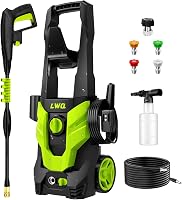
The Sun Joe Pressure Washer supplies up to 2030 PSI working pressure and 1.2 GPM water flow. Its five quick-connect tips cover 0°, 15°, 25°, 40° and soap patterns, giving you options from a narrow jet to a wider fan.
The 34-inch stainless steel spray lance has brass fittings, and the high-pressure hose is 20 ft long. The dual detergent tanks hold 0.9 L each, so you can keep separate solutions ready for different cleaning tasks.
Use the wider 40° tip for a cautious starting pass on appropriate surfaces. Reserve the narrower tips for durable materials and controlled spot work, and keep the wand moving to reduce surface damage.
This is the most flexible fit of the 3 products here for a homeowner who wants one electric pressure washer for vehicles, patios, siding and outdoor equipment. Sun Joe identifies it as a corded electric model, so plan around a suitable power connection.
Classic Accessories Pressure Washer Cover for storage
The Classic Accessories Pressure Washer Cover helps protect a stored pressure washer from UV damage, rain, dirt, birds and tree sap. It fits vertical or horizontal-style pressure washers up to 48 in L x 18.5 in W x 13.5 in H.
Weather-X fabric has water-resistant backing for weather and abrasion protection. The elastic shock cord gives the bottom a closer fit, while the Click-it closure helps with installation and removal.
The cover includes an integrated storage bag and weighs 7.2 oz. It is a storage and transport accessory, not a substitute for drying the machine and following the pressure washer's care instructions.
Use it when your pressure washer needs protection between jobs or during storage. Measure the machine first, including any attached hose reel, because a cover that is too tight can be difficult to install.
ProPulse B & S for a compatible hose replacement
The ProPulse B & S is a 1/4 in x 25 ft replacement pressure washer hose with a 3,100 PSI working-pressure rating. It fits many pressure washers that use American Standard M22-14mm female twist connections.
Its textile-braided construction has a smooth thermoplastic cover, a continuous inner tube and molded black bend restrictors on both ends. The hose is made in the USA and has a 4:1 burst-to-operating-pressure ratio.
Compatibility matters more than the maximum PSI alone. Check the connection type on your washer before ordering, and do not force a fitting that does not match.
A replacement hose can help when your original hose is damaged, kinked or too short for the work area. Route it away from sharp edges and avoid storing it with tight bends.
What PSI is safe for siding, wood and concrete?
Use lower pressure and a wider spray for soft or painted surfaces, and reserve stronger cleaning for sound concrete and masonry. The surface condition matters as much as the pressure rating.
Vinyl siding can allow water behind panels if you aim upward or work too close. Keep the spray directed according to the siding design, and avoid forcing water into vents, seams and window openings.
Wood can show gouges and stripes when the nozzle is too close. Use a wider pattern, test an unseen section and move with the grain where appropriate.
Old paint can lift even when the pressure seems moderate.
Concrete usually tolerates more pressure than painted wood, but cracks, damaged joints and loose aggregate can still worsen. Let detergent loosen oily or organic soil before making repeated high-pressure passes.
For heavy-duty cleaning, compare What PSI Is a Heavy Duty Pressure Washer?. The useful question is not simply whether a machine reaches a high number, but whether the surface and the cleaning method justify it.
How should you choose a nozzle for home pressure washing?
Choose the widest spray that completes the job, then move closer or change tips only when necessary. This habit spreads pressure over more area and gives better control on most home surfaces.
A narrow tip concentrates force into a smaller area, which raises the risk of marks and surface damage. That trade off can help on durable concrete, but it is a poor starting point for paint, wood or siding.
The Sun Joe includes 0°, 15°, 25°, 40° and soap tips. Each angle changes the width of the fan, and the soap tip is meant for detergent rather than hard cleaning.
A 40° pattern spreads water over more area, which suits a cautious first pass on many surfaces. It is a good place to learn how the surface responds before you narrow the spray.
A 25° tip sits in the middle for general cleaning tasks. It gives more focused power than a wide fan while still avoiding the intense stream of the narrowest options.
A 15° tip is stronger and suits durable materials with stubborn soil. Use it with extra care, keep it moving, and test an unseen area first.
A 0° tip produces a concentrated stream that requires extra caution. Reserve it for controlled spot work on materials that can clearly handle it.
The soap tip feeds detergent through the system for pre washing. Use it to loosen grime, then rinse with a wider fan tip for a cleaner finish.
Keep the nozzle at a consistent distance and make overlapping passes. Avoid pointing the spray at people, animals, electrical connections, light fixtures, window seals or damaged surfaces.
Detergent can reduce the need for aggressive pressure by loosening grime first. Let it work for a few minutes, then rinse without forcing the spray into joints or seams.
Read What Soap Can I Use in a Pressure Washer? before adding a cleaning solution, and rinse thoroughly afterward. The wrong product or leftover residue can leave films and make the surface look dull.
Store tips where you can find the right one without mixing them up, and check each tip for clogs before a job. When a tip seems worn or damaged, replace it rather than forcing the pattern.
What can make a pressure washer lose useful PSI?
A pressure washer can lose useful pressure because of a restricted water supply, a clogged nozzle, a kinked hose or a connection problem. These causes are common and often easy to check before you assume a larger repair is needed.
Check the simple flow restrictions before assuming the pump needs service. Water that cannot reach the pump freely will change the spray long before the machine itself fails.
Make sure the garden hose supplies enough water and that the inlet screen is clear. A partly blocked screen or a hose that is not fully open can starve the pump and weaken the spray.
Inspect the high-pressure hose for sharp bends, then check that the spray tip is clean and seated correctly. A kink can restrict flow, while a clogged tip can distort the fan pattern.
Look at the connections at both ends of the hose as well. A loose or damaged fitting can let water escape and reduce the pressure that reaches the lance.
A replacement hose only helps when the hose or its connection is part of the problem. If the inlet is blocked or the tip is clogged, a new hose will not fix the cause.
The ProPulse B & S is rated to 3,100 PSI, but it still requires the correct M22-14mm connection. Check your washer fittings before ordering, because a strong hose cannot help if the ends do not match.
For a troubleshooting checklist, read Why Is My Pressure Washer Losing PSI? What Really Matters.
Work through the list one step at a time and test the spray after each fix.
Stop using equipment that leaks, shows damaged fittings or behaves unpredictably. Those signs point to a safety issue that should be sorted out before the next cleaning job.
How should you store and care for home pressure washer equipment?
Dry the machine and accessories before storage, release pressure from the system and keep hoses loosely coiled. Protect the pressure washer from weather, but do not cover a wet machine and trap moisture underneath.
Use a cover that fits the pressure washer's shape and attached accessories. The Classic Accessories Pressure Washer Cover fits vertical or horizontal styles within its stated size range and covers attached hose reels.
A hose reel can make storage easier when it supports the hose without tight bends. If portability and hose organization matter, see the best portable pressure washer hose reel guide.
Keep spray tips together, inspect fittings before each use and follow the pressure washer manufacturer's shutdown and winter-storage instructions. Do not leave detergent in a system unless the equipment instructions allow it.
What is the best home pressure washer PSI for you?
Choose about 1,300 to 1,800 working PSI for cars, furniture and cautious siding work, or about 1,800 to 2,500 PSI for durable patios and concrete. That split keeps delicate surfaces safe while giving stronger cleaning where the material can handle it.
Match that pressure to useful GPM, the right nozzle and the condition of the surface. Flow helps rinse loosened soil away, while the nozzle controls how concentrated the spray feels on the material.
For cars and motorcycles, start low with a wide fan and keep the wand back. Paint, trim and seals respond better to steady rinsing than to a close, narrow stream.
For outdoor furniture, test a hidden area first, especially on painted or soft plastic. A wider pattern and a consistent distance reduce the chance of marks.
For siding, work from a safe distance and avoid forcing water behind panels or into vents. Let detergent loosen dirt before you make repeated passes.
For decks and fences, use a wider pattern to reduce gouging and striping. Wood shows uneven pressure easily, so overlap your passes and keep moving.
For patios, walkways and driveways, you can move toward higher pressure on sound concrete. Still, cracks, old joints and loose aggregate need care, so let detergent do part of the work.
The Sun Joe fits varied home jobs because it combines 2030 PSI working pressure, 1.2 GPM flow and 5 spray options. The 0°, 15°, 25° and 40° tips plus the soap tip let you change from rinsing to focused cleaning without extra parts.
Its 20 ft high pressure hose and 34 inch lance help you reach larger areas while keeping a steady distance. The corded electric design means you should plan for a suitable power connection before you start.
Choose the Classic Accessories cover when storage protection is the priority. It fits vertical or horizontal styles within its stated size range and helps shield the machine from UV, rain and dirt between jobs.
Choose the ProPulse B & S when you need a compatible 25 ft replacement hose. Its 3,100 PSI rating suits suitable washers, but the M22-14mm connection must match your machine.
If you want a different electric motor setup, compare best brushless motor electric pressure washer. That option may suit your preferences, but pressure, flow and nozzle control still set the cleaning result.
Pick the lowest pressure that cleans the surface well, then protect the equipment so it is ready for the next job. Dry the machine, coil hoses loosely, and store tips and detergent as the instructions direct.
Frequently asked questions
What PSI pressure washer is best for home use?
A home pressure washer around 1,300 to 2,000 working PSI suits many routine jobs, including vehicles, outdoor furniture, siding and patios. Choose by pressure and water flow together, then use the widest safe spray pattern first.
Durable concrete may need more cleaning power, while paint and soft materials need less.
Is 2,000 PSI enough to wash a house?
About 2,000 working PSI can handle many home exterior cleaning tasks when paired with the right nozzle and a steady water supply. Start with a wider spray, keep the wand moving and test an unseen area.
Older paint, loose trim and damaged siding can require lower pressure or hand cleaning.
Is higher PSI always better for a pressure washer?
Higher PSI is not always better because pressure can damage paint, wood, seals and soft surfaces. A useful home pressure washer balances PSI with GPM, nozzle choice, distance and cleaning solution.
Start at the lowest pressure that removes the soil, then adjust only when the surface allows it.
What GPM should a home pressure washer have?
A home pressure washer around 1.2 to 2.0 GPM covers many routine cleaning jobs. GPM controls how much water reaches the surface and helps carry loosened dirt away, while PSI controls the force of the spray.
Check both ratings instead of choosing from PSI alone.