How Does a Turbo Nozzle Work? Facts to Know
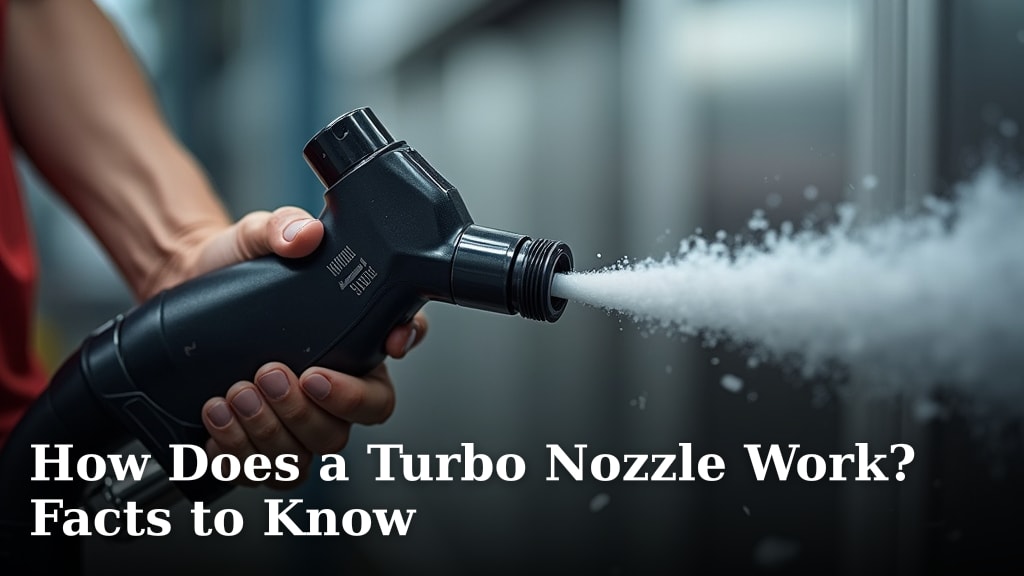
A turbo nozzle works by creating a high-speed, rotating stream of water. This spinning action concentrates the water pressure into a smaller, more powerful jet. It’s like turning a garden hose spray into a super-focused blast for tougher cleaning jobs. You’ll find they’re great for tasks needing extra cleaning power.
Many pressure washer users wonder about this specialized attachment. It’s designed to significantly boost cleaning efficiency. By changing how the water exits the nozzle, it can cut through dirt and grime much faster. This makes them a popular choice for stubborn stains on driveways or decks.
- Turbo nozzles create a spinning water jet.
- This spinning action intensifies water pressure.
- They are effective for tough cleaning tasks.
- You can tackle stubborn dirt and grime faster.
Ready to see how this little powerhouse gets its job done? Let’s walk through exactly how a turbo nozzle works its magic.
You’ve seen them, those specialized attachments for your pressure washer that promise to blast away dirt faster. One of the most popular is the turbo nozzle. But how exactly does this spinning wonder work its magic? We’ll break it down for you.
Understanding the Science Behind Turbo Nozzles
So, what’s the secret sauce behind a turbo nozzle? It’s all about physics and fluid dynamics. Unlike standard nozzles that spray a wide cone or a straight line, a turbo nozzle takes a different approach. It turns that steady stream of water into a powerful, conical jet that spins rapidly.
This spinning action is the key. Imagine a tiny, incredibly fast merry-go-round for water. This rotation doesn’t just look cool; it has a practical purpose. It concentrates the force of the water stream, making it much more effective at dislodging stubborn grime. Many pressure washing pros rely on this for tough jobs.
The Mechanics of the Spin
Inside the turbo nozzle, there’s a small rotor. This rotor has an internal mechanism that spins as the water passes through it. The water is forced through a constricted opening, which causes it to exit at high velocity. As it exits, it hits precisely angled surfaces within the nozzle’s tip.
These angled surfaces direct the water in a circular motion. Think of how a garden sprinkler head works, but on a much smaller and more intense scale. The result is a conical spray that rotates, often thousands of times per minute. This rapid rotation is what gives it the “turbo” effect.
Rotor Design and Water Flow
The design of the rotor is critical. It’s engineered to withstand high pressure and speed. The internal channels guide the water in a way that initiates the spinning motion efficiently. Some designs are simpler than others, but the core principle remains the same: create rotational energy from linear water flow.
We found that the angle of the internal vanes is meticulously calculated. Too shallow, and you won’t get enough spin. Too steep, and you might restrict flow too much. Manufacturers invest a lot of research into finding that sweet spot for optimal cleaning power and flow rate.
How the Spinning Jet Cleans Better
Now, why is a spinning jet more effective than a straight stream or a wide fan? It’s a combination of factors. The high-speed rotation creates a percussive effect. Each tiny droplet hitting the surface has more force because it’s part of a concentrated, fast-moving stream.
The spinning action also allows the water to impact the surface at multiple angles rapidly. This helps to break the bond between dirt, grime, and the surface more effectively. It’s like having many tiny, powerful brushes working at once. This is why they are so good for things like caked-on mud or algae.
Concentration of Force
A standard nozzle might spray water over a larger area, spreading its force thinly. A turbo nozzle, by contrast, focuses the same amount of water into a much smaller, rotating impact zone. This concentration means more power per square inch. Research indicates that this focused energy is key to cutting through tough stains quickly (National Association of Pipe & Drain Cleaning).
Imagine trying to scrub a tough stain with a soft sponge versus a stiff brush. The turbo nozzle acts more like that stiff brush, but with the added power of high-pressure water. You’re not just pushing the dirt around; you’re actively dislodging it.
Turbo Nozzles vs. Standard Nozzles
To really understand the turbo nozzle, it helps to compare it to its counterparts. Standard pressure washer nozzles come in a few main types. You typically see them color-coded, with different degrees of spray.
- Red (0-degree): A very narrow, pencil-like stream. It’s powerful but can damage surfaces if held too close. Not great for large areas.
- Yellow (15-degree): A narrower fan pattern. Good for some cleaning but still concentrated.
- Green (25-degree): A wider fan pattern. Better for covering more area, but less intense.
- White (40-degree): The widest fan pattern. Used for rinsing or delicate surfaces. Least powerful per square inch.
A turbo nozzle, while often looking like a standard nozzle on the outside, has that internal spinning mechanism. Its effective spray pattern might resemble a 15-degree nozzle, but the rotational action makes it feel much more powerful and faster for tough jobs.
When to Use Which Nozzle
The choice of nozzle depends entirely on the task. For general cleaning of siding or washing a car, a 25 or 40-degree nozzle is usually sufficient and safer. If you need to remove thick mold from a concrete patio or strip old paint, that’s where the turbo nozzle shines.
However, it’s important to remember that turbo nozzles are aggressive cleaners. They can etch or damage softer materials like wood or certain types of siding if used improperly. Always start with the lowest effective pressure and keep the nozzle moving.
Key Facts About Turbo Nozzles You Should Know
Beyond the mechanics, there are a few practical points to keep in mind when using a turbo nozzle. Knowing these can save you time and prevent potential damage.
PSI and GPM Compatibility
Not all turbo nozzles are created equal, and neither are pressure washers. It’s vital that your turbo nozzle is rated for the PSI (pounds per square inch) and GPM (gallons per minute) of your pressure washer. Using an incompatible nozzle can lead to poor performance or even damage to the nozzle or your machine.
We found that many manufacturers clearly state the compatible PSI and GPM ranges on their product packaging or website. Always check this before you buy or use a new nozzle. A nozzle designed for a 2000 PSI machine might not hold up well on a 3500 PSI unit.
The Importance of Matching
Using a nozzle that’s too small for your GPM can lead to excessive back pressure, potentially harming your pump. Conversely, a nozzle that’s too large won’t provide enough resistance for the water to build pressure effectively, resulting in a weak spray. Think of it like fitting the right shoe size – it needs to be just right for optimal performance.
Surface Considerations and Safety
As mentioned, turbo nozzles are powerful. They are best suited for hard, durable surfaces. This includes concrete, brick, stone, and some types of metal. They can quickly strip paint, splinter wood, or leave noticeable marks on softer materials.
We strongly advise testing the nozzle on an inconspicuous area first. This allows you to gauge its intensity and ensure it won’t damage your intended surface. Maintaining a consistent distance from the surface is also key; don’t linger in one spot.
Wear and Tear
The internal spinning mechanism of a turbo nozzle experiences significant wear over time. This is due to the high speeds and constant friction. You might notice over time that the nozzle becomes less effective or starts to vibrate differently. This is a sign that the internal components may be worn out.
Most experts suggest replacing a turbo nozzle after a certain amount of use, or when its performance noticeably degrades. It’s a consumable part, much like brake pads on a car. Some research suggests that worn bearings or vanes can reduce efficiency by up to 30% (Industrial Fluid Power Journal).
Maintenance Tips for Longevity
To get the most out of your turbo nozzle, a little maintenance goes a long way. After each use, rinse the nozzle thoroughly with clean water. This helps to remove any debris that could clog the internal mechanism or the exit orifice.
Store your turbo nozzle in a dry place, away from extreme temperatures. Keeping it in a small parts organizer or a dedicated compartment on your pressure washer cart can protect it from damage. Checking the inlet screen for clogs before attaching it to your wand is also a good habit.
When to Consider a Turbo Nozzle for Your Tasks
So, is a turbo nozzle the right tool for your next cleaning project? Ask yourself these questions:
- Am I dealing with stubborn, caked-on dirt or grime?
- Is the surface I’m cleaning hard and durable, like concrete or brick?
- Do I need to clean a large area quickly and efficiently?
- Is my pressure washer powerful enough (check PSI/GPM compatibility)?
- Am I comfortable with a more aggressive cleaning approach?
If you answered yes to most of these, a turbo nozzle could be a fantastic addition to your pressure washing arsenal.
| Nozzle Type | Best For | Considerations |
|---|---|---|
| Turbo Nozzle | Stubborn grime, concrete, brick, heavy-duty cleaning | Aggressive, potential for surface damage, requires compatible PSI/GPM |
| 0-Degree (Red) | Very targeted cleaning, tough spots | Highly abrasive, high risk of surface damage |
| 15-Degree (Yellow) | Stripping loose paint, moderate grime, uneven surfaces | Concentrated, still requires care |
| 25-Degree (Green) | General cleaning, decks, siding, patios | Good balance of power and coverage |
| 40-Degree (White) | Rinsing, cleaning cars, delicate surfaces | Widest fan, least power per square inch |
Conclusion
You’ve learned how a turbo nozzle transforms a standard pressure washer stream into a high-speed, rotating jet. This spinning action is what gives you that extra power to tackle tough grime and stubborn stains. Remember, while incredibly effective, they are aggressive tools best suited for durable surfaces. Always check for PSI/GPM compatibility and test in an inconspicuous spot first. Armed with this knowledge, you’re ready to choose the right nozzle for your next cleaning job.
Frequently Asked Questions
Can I use a turbo nozzle on my wooden deck?
We generally advise against using a turbo nozzle on wood. Its intense, rotating spray can easily etch, splinter, or damage softer materials like wood. You’re much better off using a wider fan nozzle for decks to avoid causing harm.
How often should I replace my turbo nozzle?
The internal spinning mechanism experiences a lot of wear. Over time, you might notice reduced cleaning power or increased vibration. Many experts suggest replacing your turbo nozzle when you see a significant drop in performance, or after a certain number of hours of heavy use.
What’s the difference between a turbo nozzle and a 0-degree nozzle?
A 0-degree nozzle sprays a straight, unwavering pencil-like stream. While powerful, it’s very concentrated and can easily damage surfaces. A turbo nozzle, on the other hand, spins its stream, distributing the force more effectively without being as damaging as a static 0-degree jet.
Will a turbo nozzle work with any pressure washer?
Not exactly. It’s essential to match the turbo nozzle’s PSI and GPM ratings to your pressure washer’s specifications. Using an incompatible nozzle can lead to poor cleaning results, or worse, damage to your equipment.
How do I maintain my turbo nozzle?
After each use, rinse your turbo nozzle thoroughly with clean water to remove any debris. Store it in a dry place to prevent rust or damage. Periodically checking the inlet screen for clogs before attaching it to your wand will also help it last longer.