How Far Should a Nozzle Be from the Surface?
The right nozzle distance from your surface is key to getting a great finish. For most spray painting jobs, aim for about 8 to 12 inches away. This distance helps prevent drips and ensures a smooth, even coat of paint.
Getting this distance wrong can lead to frustration. Too close, and you might get runs and uneven coverage. Too far, and the paint might not stick properly, or you’ll end up with a dry, dusty spray pattern. We found that consistent distance is more important than absolute inches.
- Hold nozzle 8-12 inches from surface.
- This prevents drips and ensures even paint.
- Too close causes runs.
- Too far causes dry spray.
- Consistency matters most for a good finish.
Let’s walk through exactly why this distance is so important and what happens when you get it wrong. We’ll cover how to find that sweet spot for different projects.
Finding the Right Spray Nozzle Distance
Getting the nozzle distance right is all about balancing paint delivery and surface contact. You want the paint to flow smoothly and evenly. This usually means holding the spray gun at a distance that allows the paint particles to spread out a bit before they hit the surface.
We found that for most common spray painting tasks, like using a paint sprayer on a wall or furniture, the sweet spot is typically between 8 and 12 inches. Think of it like tossing a ball; you don’t want to throw it too hard (too close) or too softly (too far). You want a nice, controlled arc.
Why Distance Matters So Much
The distance your nozzle is from the surface affects how the paint settles and forms a coat. It’s not just about how much paint comes out. It’s also about how that paint behaves in the air.
What Happens When You’re Too Close
If your spray nozzle is too close to the surface, you’re essentially dumping paint on it. The paint doesn’t have time to atomize properly, meaning it doesn’t break into fine droplets. This often results in heavy, wet lines of paint.
This is where you get those frustrating paint runs and drips. The paint is laid down too thick in spots. It then loses its grip and slides down the surface before it can dry. Many experts say that thick, uneven coats are a leading cause of poor paint job finishes (Paint Quality Institute).
You might also notice an uneven texture. Some areas will be overly saturated, while others might seem a bit sparse. It’s a real challenge to get a smooth finish when you’re too close.
What Happens When You’re Too Far
On the flip side, if you hold the nozzle too far away, the paint particles have too much time to travel. They start to lose their energy and stickiness before they reach the surface.
This leads to a “dry spray” pattern. You’ll see a dusty, feathered edge to your spray pattern. The paint might not adhere well, leading to a finish that feels gritty or rough. It can look like a light mist rather than a solid coat of paint.
This dry spray is also much more likely to peel or chip later on. Proper adhesion is key for a durable paint job. When the paint isn’t hitting the surface with the right impact, that bond isn’t as strong.
Achieving the Ideal 8-12 Inch Distance
So, how do you consistently hit that 8-12 inch mark? It’s about developing a good sense of your reach and keeping your hand moving. Think of it as a dance between your sprayer and the surface.
Your Arm as a Measuring Tool
Many DIY painters find that their forearm length is a good natural guide. From your elbow to the tip of your fingers, it’s often close to the ideal distance. You can test this by holding your sprayer and seeing where your hand naturally falls in relation to the tip.
Practice this a few times away from your actual project. You want to get a feel for what 8 inches feels like and what 12 inches feels like. You’ll start to develop muscle memory.
The Importance of Consistent Movement
The most critical part isn’t just the exact distance, but keeping it consistent throughout your pass. If you bob and weave, getting closer in some spots and farther in others, you’ll still get an uneven finish. This is why many experts stress uniform motion (The Spruce).
Imagine you’re drawing a line with a marker. You don’t want to press down hard and then lift up, then press down again. You want a steady, even stroke. Your spray gun should move with that same steady, even motion.
Start your spray just before you reach the edge of your work area and continue moving past the other edge before you release the trigger. This technique helps prevent getting heavy spots at the start and end of each pass. It ensures a nice, clean edge.
Adjusting for Different Sprayers and Paints
While 8-12 inches is a great starting point, you might need to make small adjustments. Different types of sprayers and paints behave a little differently. Research and found that material viscosity is a major factor.
Understanding Spray Patterns
Most sprayers produce a fan-shaped spray pattern. The size and shape of this fan can vary. A wider fan might allow you to be slightly farther away while still covering a good area. A narrower fan might require you to be a bit closer.
Check your sprayer’s manual. It often provides recommended distances based on the specific nozzle tip you’re using. This is super helpful information.
Paint Viscosity Matters
Thicker paints tend to need a slightly closer distance. This is because they need a bit more force to atomize properly. Thinner paints might do well with a slightly farther distance.
If you’re using a paint sprayer, you’ve likely thinned your paint according to the manufacturer’s instructions. Even so, subtle differences in thinning can impact how far you should hold the nozzle. We found that if you see runs, try moving your sprayer back an inch or two. If you see dry spray, move a bit closer.
Surface Type and Texture
The surface you’re painting can also play a small role. A rough or textured surface might absorb paint differently than a smooth one. For very porous surfaces, you might need to ensure a slightly more generous application without causing drips.
However, the 8-12 inch rule generally holds true across most common surfaces. The goal is always a uniform coating. Don’t overthink this part too much unless you’re working with unusual materials.
Tips for Maintaining Consistent Distance
Getting that perfect distance every time takes a little practice. But there are simple techniques to help you nail it.
The Moving Pass Technique
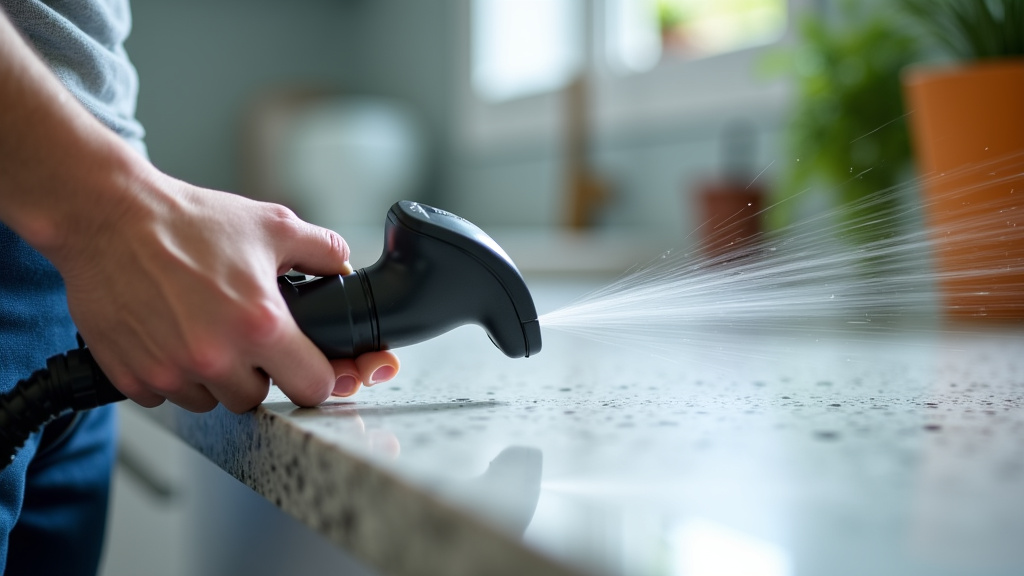
This is the most important tip: always keep the sprayer moving. Never start or stop spraying in the middle of your surface. Move the gun into position, pull the trigger, move across the surface, release the trigger, and then move the gun away.
This ensures that the paint application is even from edge to edge. You avoid those unsightly heavy spots that come from starting and stopping.
Using Your Body as a Guide
As mentioned, your arm is a great natural measuring tool. You can also use your leg or another part of your body to gauge distance if you’re painting at different heights or angles. The idea is to find a consistent reference point.
Listen to Your Sprayer
Sometimes, you can almost hear when your distance is off. If the paint is splattering or sounding “thin,” you might be too far. If it sounds like it’s struggling to get out or building up too much, you might be too close.
Test Sprays Are Your Friend
Before you dive into your main project, always do a test spray. Find a piece of cardboard or an inconspicuous area of your project. This is where you experiment with distance and spray pattern. You can easily see if you’re getting runs or dry spray.
This test run helps you dial in the perfect distance for your specific sprayer, paint, and technique. It saves you headaches later on. You can make small adjustments until the spray pattern looks like a smooth, even fan.
Troubleshooting Common Distance Issues
Don’t worry if your first few attempts aren’t perfect. Everyone encounters issues. The key is to identify the problem and make the right adjustment.
Dealing with Runs and Sags
If you’re seeing paint run down the surface, your nozzle is likely too close. You’re applying paint too thickly in a concentrated area. The simple solution is to increase your distance by an inch or two. Also, ensure you’re moving your sprayer at a consistent speed.
Fixing Dry Spray and Poor Coverage
If you notice a dusty, uneven coating with poor coverage, your nozzle is probably too far away. The paint isn’t reaching the surface with enough force to bond properly. You’ll need to decrease your distance. Bring the nozzle closer to the surface.
Also, check your spray pattern. If it’s very thin and wispy, you may need to adjust your sprayer’s pressure or the nozzle tip size if possible. Sometimes, a clog in the nozzle can cause this too.
Quick Checklist for the Right Distance
Here’s a handy checklist to keep in mind for achieving that perfect nozzle distance:
- Start with 8-12 inches from the surface.
- Keep your sprayer moving constantly during the pass.
- Maintain a consistent speed with your movement.
- Practice on a scrap piece first.
- Watch for runs (too close) or dry spray (too far).
- Adjust distance by 1-2 inches if needed.
Conclusion
You’ve learned that the sweet spot for your spray nozzle distance is usually 8 to 12 inches from the surface. This simple guideline helps you avoid common pitfalls like paint drips and dry, uneven spray patterns. Remember, consistent distance and movement are more important than hitting an exact number every single time. By trusting your arm as a guide and practicing on scrap material, you’ll build the muscle memory needed for a smooth, professional finish. Take a moment to do a quick test spray before you start your main project, and you’ll be well on your way to great results.
Frequently Asked Questions
Is the 8-12 inch rule the same for all types of paint sprayers?
Generally, yes, this distance is a solid starting point for most common airless or HVLP sprayers. However, factors like sprayer pressure and the specific nozzle tip you’re using can influence the ideal distance. Always check your sprayer’s manual for specific recommendations.
What if I’m painting a very textured surface like brick?
For highly textured surfaces, you might need to adjust slightly. You want to ensure the paint gets into the crevices without causing runs. Some painters find holding the nozzle a little closer and moving slightly slower can help, but always monitor for drips.
How do I know if my spray pattern is too wide or too narrow?
A good spray pattern should look like a smooth, oval fan shape. If it’s too wide and wispy at the edges, you might be too far away. If it’s very narrow and concentrated in the middle, you might be too close or need to adjust your sprayer’s settings.
Can using the wrong distance ruin a project?
While it can cause frustration and a less-than-perfect finish, it usually doesn’t “ruin” a project beyond repair. Runs can often be smoothed out, and dry spray can sometimes be lightly sanded and recoated. The key is to catch it early and make adjustments.
What’s the best way to practice maintaining a consistent distance?
Grab some large pieces of cardboard or scrap wood. Practice moving your spray gun across the surface at a steady pace, focusing on keeping your arm at the same distance throughout the pass. Aim to trigger on just before you reach the edge and off just after you pass the other edge.