How to Keep a Garden Hose from Kinking
Unwind the hose fully, pull it out in a straight line, and avoid sharp turns to keep it from kinking. When you finish, drain it and coil it loosely without twisting.
On this page (7 sections)
- How should you unwind a hose to prevent kinks?
- How can you route a hose without sharp bends?
- What should you do when a hose kinks?
- How should you coil a hose for storage?
- Does hose length affect kinking?
- When is a kinked hose too damaged to keep using?
- How do you keep a garden hose from kinking every time?
To keep a garden hose from kinking, unwind it fully, route it in wide curves, and coil it loosely after use. If a kink appears, shut off the water and straighten the bend before pulling more hose.
Most kinks start when a hose is twisted, pulled around a tight corner, or dragged while part of it is still coiled. A few handling and storage habits help maintain steady water flow and reduce wear.
How should you unwind a hose to prevent kinks?
Pull the hose out in a straight line before turning on the water. This releases twists and gives the hose room to move without folding back on itself.
Start at the spigot and walk toward the area where you need water, letting the hose unroll as you go. Avoid pulling from the nozzle while the hose is still wrapped around a reel or piled in a coil.
If the hose keeps turning over as it unrolls, pause and let the twist unwind naturally. Pulling harder can tighten a loop into a kink.
How can you route a hose without sharp bends?
Give the hose a broad path around corners and obstacles. A wide curve puts less stress on the hose than bending it sharply around a wall, planter, or post.
Keep the route away from car tires, mower wheels, gates, and places where people walk. If you need to pass a corner, move the hose around it with slack rather than pulling it taut.
A hose guide can help redirect the hose around a garden bed or building corner. Place it where the hose naturally changes direction, then check that the hose still moves freely when you walk back to the spigot.
For help choosing a hose for your yard, see our garden hoses buying guide. It can help you match hose length and handling needs to your outdoor setup.
What should you do when a hose kinks?
Turn off the water, release the tension, and straighten the kink by hand. Then pull slack from the nearest coil so the hose can lie flat again.
Don't yank the nozzle or drag the hose across the ground while the bend is tight. That can stretch the hose wall or stress the fitting.
If the bend returns at the same spot, inspect the whole route for a twist, snag, or tight turn. A crease that stays in place or starts leaking may call for a repair or a replacement section.
Can a different hose design reduce kinking?
A hose designed to flex and lie flat may be easier to handle, though careful routing still matters. Hybrid hoses combine materials in their construction; learn what a hybrid garden hose is before comparing one with other types.
The Flexzilla 50 ft hose uses a hybrid polymer and is described as flexible, able to lay flat, and able to coil easily.
The 25 ft version has the same stated hybrid polymer, flexibility, and lay-flat features in a shorter length.
The 100 ft version is also described as flexible and able to lay flat, with a longer reach for larger yards.
These features may help with handling, but the hose still needs a clear route and a loose coil. Compare more non-kinking garden hoses if hose flexibility is your main concern.
How should you coil a hose for storage?
Drain the hose and make broad, loose loops for storage. Tight coils and sharp folds can create bends that are harder to remove next time.
Turn off the water and open the nozzle to release pressure. Lift one end and let the water drain, then coil the hose without twisting it around your arm or forcing it onto a hook.
A reel can keep a hose contained, but guide it evenly as you wind. Stop if it crosses over itself or catches; correct the loop before continuing.
If carrying and coiling a full hose is difficult, compare lightweight garden hoses or options suited to seniors who want a lightweight garden hose. A hose with less weight may be easier to guide into a loose coil.
Does hose length affect kinking?
Choose enough hose to reach the work area without stretching it tight. Too little slack can pull the hose sharply around corners or tug at the spigot.
Too much hose can also tangle if it sits in a pile. Unwind only the length you need, and keep the remaining hose neatly arranged where it won't catch underfoot.
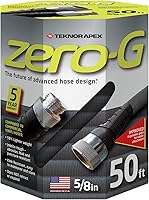
For a longer reach, compare 100 foot expandable garden hoses. Some people also consider Zero-G garden hoses when they want to reduce the burden of moving hose around a yard.
When is a kinked hose too damaged to keep using?
Replace or repair a hose if a crease stays put, the outer cover splits, or water leaks from the damaged area. A kink that disappears when straightened is usually different from a section that remains misshapen.
Check the hose along its full length, including around the fittings. If damage is limited to a section and the hose can be cut safely, a compatible garden hose repair kit may help restore it.
Follow the repair kit instructions and match the fitting to your hose size. If the hose has several damaged spots or keeps kinking at the same crease, replacing it may be simpler.
How do you keep a garden hose from kinking every time?
Unwind the hose before use, guide it around obstacles in wide curves, and store it drained in loose loops. When a kink appears, turn off the water and remove the twist before pulling again.
Choose a hose length that reaches without strain, and keep extra hose from tangling in a pile. If frequent kinks persist despite careful handling, compare a flexible hose design and check whether your current hose has a lasting crease.
For the easiest routine, start by unwinding the hose fully and laying out its route. Then drain and coil it loosely when you're done.
Frequently asked questions
How do I stop my garden hose from kinking?
Pull the hose out fully before turning on the water, and keep its route wide and clear of corners, wheels, and furniture. If a kink forms, turn off the water, straighten the bend by hand, and pull slack from the nearest coil instead of yanking the nozzle.
Should I store a garden hose coiled or straight?
Store it in a loose coil with broad loops, following the hose maker's guidance. Drain it first, keep it out of traffic, and avoid tight hooks or sharp bends that can press a permanent crease into the hose.
Does a hose reel prevent kinks?
A reel can make storage neater, but it won't prevent kinks if the hose crosses itself or is wound under tension. Feed the hose onto the reel evenly, keep the loops broad, and stop if you feel a snag instead of pulling harder.
Can a kinked garden hose be repaired?
A temporary bend may straighten when you turn off the water and lay the hose flat. If a section stays creased, leaks, or splits, replace that section or use a compatible repair fitting; our guide to the best garden hose repair kit can help you compare options.