How to Choose a Pressure Washer with a Vacuum
Choose a pressure washer with a vacuum by matching the cleaning mode to the job, then checking suction, water recovery, hose connections and filter care. A combined system can save storage space, but it may not replace a dedicated pressure washer and wet-dry vacuum for every task.
On this page (13 sections)
- What does a pressure washer with a vacuum do?
- Should you buy a combined washing and vacuum system?
- Which cleaning mode do you need?
- How should you evaluate suction and recovery?
- Which filters matter on a pressure washer vacuum?
- How do hose connections affect your choice?
- What pressure level is appropriate?
- How do you use a pressure washer vacuum safely?
- How can you protect the pump and vacuum path?
- What should you consider for storage?
- When is a separate pressure washer and vacuum better?
- Pressure washer with vacuum buying checklist
- Final decision: which pressure washer with vacuum should you choose?
A pressure washer with a vacuum is best chosen by comparing its cleaning mode, suction path, water recovery, filter setup and hose connections. The right system should match the work you do most often, because pressure washing and vacuum recovery solve different parts of a cleaning job.
A pressure washer breaks dirt loose with pressurized water. A vacuum collects loose debris, wet material or dirty water through suction.
Some combined systems support both jobs, while others use separate tools or attachments that still require you to switch modes.
Before choosing, decide whether you need water pressure, suction, recovery or all three. A system that looks compact may still need separate hoses, filters, tanks and nozzles for each cleaning method.
What does a pressure washer with a vacuum do?
A pressure washer with a vacuum combines surface cleaning with debris or water collection. The pressure side rinses or loosens dirt, while the vacuum side removes material that would otherwise remain on the surface or flow into a drain.
This setup can help with vehicles, workshops, patios, garage floors and other areas where dirty water needs better control. It may also reduce the number of separate machines you store.
The two functions are not interchangeable. Pressure washing needs a water supply, pump and high-pressure hose.
Vacuuming needs airflow, a collection route and filters that protect the motor or recovery system.
A combined unit is useful when you regularly change between these tasks. It may be less useful if you only pressure wash large outdoor surfaces or only collect dry indoor debris.
Should you buy a combined washing and vacuum system?
Buy a combined system when you need controlled rinsing and collection in the same cleaning routine. Choose separate equipment when one function is much more important than the other or when the jobs happen in different locations.
Ask these questions before choosing:
- Do you need to collect dirty water, or only rinse it away?
- Will you vacuum dry debris, wet material or both?
- Does the system have a separate recovery tank?
- Can you reach the filter without difficult disassembly?
- Does the pressure side accept your existing hose and accessories?
- Will the unit fit where you store it?
- Can you move it over the surfaces you clean?
- Does the system require a drain, outlet or disposal plan?
A combined machine can save space, but it can also create more maintenance points. Filters, hoses, seals, tanks and connections all need attention when the system handles dirt and water.
If your main concern is pressure performance, compare the system's cleaning power rather than focusing only on a vacuum label. Our guide to What Is Cleaning Power on a Pressure Washer? explains how pressure and flow work together.
Which cleaning mode do you need?
Choose the cleaning mode from the material you need to remove. High-pressure water suits bonded outdoor dirt, while vacuum suction suits loose debris and collected water.
Pressure washing
Pressure washing works by directing water through a nozzle at high speed. It can loosen mud, soil, algae and other surface grime, but the wrong pressure or nozzle can damage paint, wood, seals or soft materials.
A pressure washer needs a water inlet, a high-pressure hose, a gun or wand and a spray tip or other outlet. Check each connection before assuming a vacuum attachment will work with the pressure side.
Wet vacuuming
Wet vacuuming collects water and other damp material through a suction hose. It is useful when runoff needs to be gathered, such as in a garage, workshop or vehicle-cleaning area.
Wet recovery creates a different care routine from dry vacuuming. Empty the recovery container, rinse the parts that contact dirty water and let washable components dry as recommended by the system maker.
Dry vacuuming
Dry vacuuming collects loose dust, grit, leaves or other material without adding water. It can prepare a surface before pressure washing or remove debris after the area dries.
Do not assume a wet-dry function is included simply because a system has a vacuum connection. Confirm the intended dry and wet modes before using the machine.
Combined cleaning
Combined cleaning can be useful when you loosen dirt with water and collect the resulting runoff. The key question is where the dirty water goes.
A pressure washer that sprays water without recovery is not a water-collection system.
How should you evaluate suction and recovery?
Evaluate suction strength, hose reach and recovery capacity as a group. Strong suction is less useful if the hose clogs, the filter loads quickly or the recovery container fills before the job is complete.
Check whether the vacuum side gives clear information about:
- The type of material it can collect
- Wet or dry use
- Filter access
- Recovery container size
- Hose diameter and connection style
- Maximum hose length
- Shutoff or overflow protection
- Disposal and emptying steps
A system that collects water should have a clear way to empty or drain it. If you cannot reach the recovery container easily, routine cleaning may become a reason to avoid using the feature.
Suction also changes with hose length, bends, blockages and filter condition. Keep the hose route as short and direct as the job allows, and inspect it when airflow drops.
For pressure-side hose needs, see our guide to the best pressure washer hose and gun. A compatible gun and hose help you control the spray without forcing mismatched fittings together.
Which filters matter on a pressure washer vacuum?
Filters protect the working parts from sediment, debris and collected material. The pressure-water inlet and the vacuum-recovery path may need different filter types, so identify each filter before setup.
A water inlet filter can reduce sediment entering the pressure washer. The M MINGLE filter connects between a standard garden hose or home water spigot and the pressure washer inlet.
It includes a 40 mesh screen, a 100 mesh screen, 1 big white gasket, 2 hose washers and 3 filter washers.
The M MINGLE filter has 3/4 in GHT male and female threads and a maximum garden-hose working pressure of 80 PSI. Its role is water-side protection, so it does not replace a vacuum filter or collect dirty runoff.
The Sooprinse filter also uses 3/4 in connections and a 40 mesh screen. It includes 2 extra 100 mesh screens, 3 hose washers and 4 filter washers, giving you replacement screen and washer pieces for ongoing inlet-filter care.
Sooprinse describes the screens as alternating replacements for pressure pump protection. The filter has brass exterior finish details and plastic or PVC material, with a 0.75 in diameter and 10 total pieces.
Neither inlet filter is a vacuum recovery filter. Use them to protect the water path, then follow the combined system's instructions for the suction hose, collection container and vacuum filter.
How do hose connections affect your choice?
Hose connections decide whether the system can use your existing equipment. Match the thread size, connection type and intended pressure before attaching a hose, gun, wand or vacuum hose.
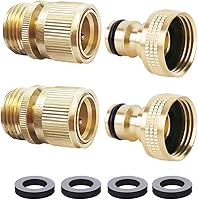
Pressure washer connections often differ from ordinary garden-hose connections. A component that fits a faucet may not be safe on a high-pressure outlet, and a pressure-washer gun is not automatically suitable for a regular water hose.
The YAMATIC Pressure Washer Gun with Extension Wand is designed for use with a high-pressure washer and high-pressure hose. It is not suitable for a garden hose, regular water hose or faucet.
The YAMATIC kit has a maximum operating pressure of 4000 PSI, a threaded M22-14 mm male inlet, an extra M22-15 mm male coupler and a universal 1/4 in quick connector outlet. The outlet can connect with accessories such as foam cannons, spray nozzle tips, turbo nozzles, surface cleaners and undercarriage cleaners.
It includes 2 extension wands that can be removed or extended to 3 lengths, reaching up to 40 in. Its brass material, brass fittings, steel pole and shockproof reinforced construction are aimed at high-pressure use.
Check your washer's hose fitting before choosing this gun. If you need a longer reach, compare the best pressure washer hose and wand kit options for a matched hose and wand setup.
What pressure level is appropriate?
Use the lowest pressure that removes the dirt safely, then adjust the nozzle, distance and spray pattern before raising pressure. A higher maximum number does not make every surface safer or cleaner.
Painted vehicles, wood, trim, seals and fragile surfaces need more care than concrete or heavy outdoor equipment. Keep the nozzle moving and test an inconspicuous area first.
Pressure and flow both affect cleaning. A system with high pressure but limited water flow may behave differently from one with lower pressure and more flow.
Your chosen nozzle also changes the spray pattern and the force concentrated on the surface.
For pipes, hoses and blocked lines, the correct setup may differ from ordinary surface washing. Read our guide to the best pressure washer for pipe cleaning before using a pressure washer inside a line.
How do you use a pressure washer vacuum safely?
Use the machine according to its cleaning mode and connect only parts rated for that mode. Keep pressure-water parts separate from vacuum-recovery parts unless the system specifically joins them.
A careful setup looks like this:
- Inspect the water inlet, pressure hose, gun, wand and nozzle.
- Check the vacuum hose, filter and recovery container.
- Install the correct water inlet filter if sediment is a concern.
- Confirm every threaded connection is fully seated without cross-threading.
- Start with the lowest suitable pressure setting.
- Keep people, pets and fragile objects away from the spray path.
- Use the vacuum side only for material it is designed to collect.
- Stop when the recovery container reaches its limit.
- Turn off the system and release pressure before changing pressure-side fittings.
- Empty and clean the recovery path after wet work.
Never use a pressure washer gun on a garden hose or faucet when the component requires a high-pressure washer and high-pressure hose. The YAMATIC gun's instructions specifically exclude garden hoses, regular water hoses and faucets.
How can you protect the pump and vacuum path?
Protect both paths by keeping sediment out of the inlet and avoiding blockages in the suction hose. A clean water supply helps the pressure side, while regular filter and hose care helps the vacuum side.
Inspect an inlet screen before each substantial job. A clogged screen can restrict water flow, while sand or debris can reach pressure washer parts if the inlet is left unprotected.
On the vacuum side, remove collected material before it hardens inside the hose or recovery container. Rinse parts that contact dirty water and allow washable components to dry before storage.
Check washers and gaskets when a threaded water connection leaks. The M MINGLE kit includes 1 big white gasket, 2 hose washers and 3 filter washers.
The Sooprinse kit includes 3 hose washers and 4 filter washers.
For another small replacement part, see the best pressure washer o ring kit. O-rings, gaskets and washers serve different sealing locations, so match the replacement to the connection you are repairing.
What should you consider for storage?
Choose a system that you can store with its hoses, filters, wand and recovery parts protected from damage. A compact machine is not convenient if the accessories stay wet, kinked or scattered.
Before putting the system away:
- Disconnect the water supply.
- Release pressure from the pressure side.
- Empty the recovery container.
- Check the vacuum hose for trapped debris.
- Rinse dirty filters or screens as directed.
- Dry parts that should not remain wet.
- Coil hoses without sharp bends.
- Store small washers, screens and fittings together.
- Keep the gun and wand where they will not be struck or bent.
Support points also matter for portable pressure washers. If the machine rocks or the base contacts rough ground, inspect its feet and mounting points.
Our guide to the best rubber feet for pressure washer covers replacement-foot decisions.
When is a separate pressure washer and vacuum better?
Separate machines are often better when the pressure washer and vacuum jobs require different locations, capacities or accessories. A dedicated pressure washer can stay ready for outdoor work while a wet-dry vacuum handles indoor or workshop cleanup.
Choose separate equipment when:
- You pressure wash large areas often.
- You need a large wet recovery container.
- You vacuum dry debris more than you wash surfaces.
- The combined system has limited hose reach.
- You need different filters for different materials.
- You want one tool available while the other is being cleaned.
- You already own compatible pressure-washing equipment.
Choose a combined system when storage space is limited and your jobs naturally move from rinsing to recovery. The best choice depends on how often you use each mode, not on the number of functions printed on the box.
Pressure washer with vacuum buying checklist
Use this checklist before you choose a pressure washer vacuum system:
- Confirm whether it supports pressure washing, wet vacuuming, dry vacuuming or a combination.
- Identify how dirty water and debris are collected.
- Check recovery capacity and emptying access.
- Confirm the filter types for the water inlet and vacuum path.
- Match pressure-side hose, gun and wand connections.
- Check the maximum operating pressure of each pressure accessory.
- Keep garden-hose fittings separate from high-pressure fittings.
- Plan where hoses, screens, washers and recovery parts will dry.
- Measure storage space for the full setup.
- Choose a service routine you will actually follow.
A good system should make the work easier to control, maintain and store. If one mode is rarely used, a simpler dedicated tool may be the more practical choice.
Final decision: which pressure washer with vacuum should you choose?
Choose a pressure washer with a vacuum when you need both pressurized cleaning and controlled collection in the same routine. Prioritize the cleaning mode, recovery path and filter access before comparing maximum pressure.
Pick a system with strong water-side protection if sediment threatens your pump or hoses. Pick a setup with clear wet recovery if runoff is the main problem.
If your work is mostly high-pressure washing, spend more attention on compatible hose, gun, wand and nozzle connections.
The M MINGLE filter suits buyers who want a 3/4 in GHT inlet filter with 40 and 100 mesh screens. The Sooprinse filter suits buyers who want extra 100 mesh screens and replacement washers.
The YAMATIC gun and wand kit suits high-pressure users who need M22 fittings, extension reach and a 4000 PSI maximum.
Pressure washer vacuum systems work best when each path is treated for its real job: water pressure for loosening dirt, suction for collecting material, and filters for protecting the equipment between them.
Frequently asked questions
Can a pressure washer also work as a vacuum?
Some systems combine pressure washing and vacuum recovery, but the two functions use different airflow, water and waste paths. Check whether the unit truly includes suction and recovery or only accepts a vacuum attachment.
A pressure washer alone does not automatically collect dirty water or loose debris.
What should I check before buying a pressure washer with a vacuum?
Check the cleaning modes, suction method, recovery capacity, filter access, hose connections and storage needs. Confirm whether the system handles wet material, dry debris or both, and make sure the pressure washer side has the flow and pressure controls needed for your surfaces.
Is a pressure washer vacuum useful for cars?
A pressure washer vacuum can suit car cleaning when you need both rinsing and dirty-water collection, but the correct setup depends on the vehicle and surface. Use suitable pressure, keep the nozzle moving and confirm that the vacuum side can handle the type of debris and moisture you create.
Do pressure washer vacuum systems need filters?
Yes, filters help keep sediment, debris and collected material away from pumps, hoses, motors and recovery paths. Use the filter type recommended for the system, inspect it often and clean or replace it before restricted flow or suction affects the job.