Which Nozzle Is Safest for Cars? Explained
When washing your car, the safest nozzles are typically those with a **gentle spray pattern** and a **wider fan angle**. These distribute water pressure more evenly, reducing the risk of scratching your car’s paint or damaging sensitive trim. You want to avoid concentrated, high-pressure streams.
Choosing the right nozzle isn’t just about avoiding damage; it’s also about making your car wash more effective. A nozzle that creates a **softer flow** can help rinse away soap and dirt without force. Many car care professionals recommend specific types for a reason – they work!
- Fan vs. Jet: Always choose a fan setting over a jet setting.
- Pressure is Key: Lower pressure is generally safer for car paint.
- Nozzle Material: Some nozzles are made from softer plastics to prevent scratches.
- Adjustability: Adjustable nozzles offer flexibility for different cleaning tasks.
Let’s break down which types of nozzles are best for keeping your car looking its best. You’ll be surprised how much difference the right nozzle can make!
Choosing the Right Hose Nozzle for Your Car Wash
When it comes to washing your car, selecting the correct hose nozzle is more important than you might think. It’s not just about spraying water; it’s about doing it safely and effectively. You want a nozzle that cleans well without causing damage to your car’s finish. We’ve found that understanding the different types and their functions can save you a lot of headaches and potential repair bills.
Understanding Water Pressure and Spray Patterns
The main thing to consider is how the nozzle directs water. Some nozzles blast water in a tight, focused stream. This can be great for certain tasks, but not for your car’s paint. High-pressure, narrow streams can etch into the clear coat, causing permanent damage. This is why research consistently points to wider spray patterns as being much safer.
The Danger of Concentrated Streams
Imagine spraying a garden hose directly at a delicate plant. You wouldn’t do it, right? Your car’s paint deserves the same consideration. A jet nozzle setting, for instance, concentrates all the water pressure into a tiny area. This creates intense force that can easily chip paint, scratch the surface, or even damage plastic trim. Many car detailing experts warn against these settings for washing.
The Benefits of Fan and Shower Settings
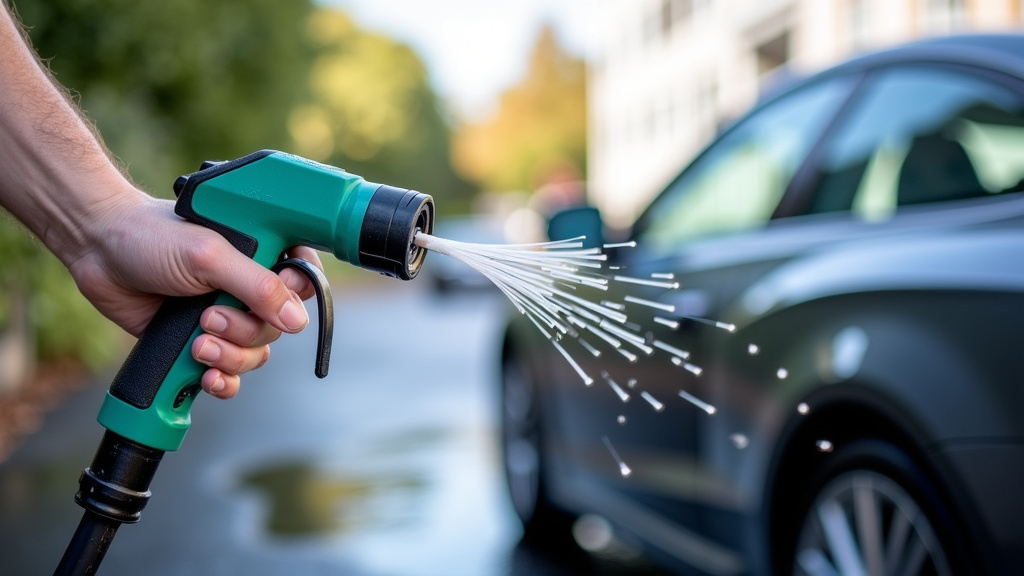
On the other hand, nozzles with a fan or shower setting distribute water over a larger area. This significantly reduces the pressure on any single point of your car’s surface. A gentle shower of water is excellent for rinsing away soap and loose dirt without scrubbing. A wider fan pattern, like a 45-degree or 60-degree spray, offers a broad yet controlled flow. This is your best bet for a safe and thorough rinse.
Types of Nozzles and How They Work
Not all hose nozzles are created equal. The design and adjustability of a nozzle determine its effectiveness and safety for car washing. Let’s look at some common types you might encounter.
Adjustable Nozzles: The Versatile Option
Adjustable nozzles are incredibly popular because they offer flexibility. You can typically twist the nozzle’s head or pull a trigger to change the spray pattern. This allows you to switch from a powerful jet for cleaning stubborn dirt off wheels to a gentle shower for rinsing the car body. Many experts recommend these because they adapt to different parts of your car.
Common Settings on Adjustable Nozzles
You’ll often find settings like:
- Jet: A concentrated, powerful stream. Use with caution on cars.
- Shower/Rinse: A soft, wide spray, ideal for rinsing soap.
- Fan/Cone: A broader, flat spray that covers more area gently.
- Soak: A very low-pressure, wide dispersal for wetting surfaces.
Multi-Setting Nozzles: More Options, More Control
These are a step up from basic adjustable nozzles. They often feature multiple distinct spray patterns, sometimes with names like “Car Wash,” “Gentle Shower,” or “Power Wash.” The key here is to look for specific settings designed for delicate surfaces or rinsing. A nozzle with 6 or 8 different patterns might seem appealing, but what matters most is having a gentle, wide option.
Material Matters: Avoiding Scratches
The material a nozzle is made from can also play a role in preventing scratches. While most are made of metal or plastic, some newer designs incorporate softer rubber or silicone tips. These can help prevent accidental dings or scratches if the nozzle bumps against your car. It’s a small detail, but one that can make a difference, especially if you’re new to washing your car.
What to Look for in a Safe Car Wash Nozzle
So, what should you prioritize when shopping for a nozzle? We’ve gathered the most important features to consider for a safe and effective car wash experience.
Prioritize Gentle and Wide Spray Patterns
This cannot be stressed enough: a gentle, wide spray pattern is your best friend. Think of it like using a soft sponge versus a stiff brush. You want to wash, not scrub with excessive force. A good nozzle will allow you to achieve this with just the water pressure from your hose. Some specialized car wash nozzles are designed to create a very fine mist, which is also excellent for gently rinsing soap.
Consider Your Hose and Water Pressure
The nozzle works in conjunction with your garden hose and the water pressure coming into your home. If you have very high water pressure, you might need a nozzle that offers even lower-pressure settings. Conversely, if your water pressure is low, a nozzle that allows you to focus the spray slightly might be necessary to get adequate rinsing power, but always err on the side of caution. You can often find basic flow rate information for nozzles, which can help gauge their intensity.
Ease of Use and Durability
A nozzle that is difficult to hold or adjust can lead to frustration and mistakes. Look for ergonomic designs with comfortable grips. Durability is also important. Metal nozzles tend to last longer than plastic ones, though many high-quality plastic nozzles are perfectly adequate for car washing. Check reviews to see how well a nozzle holds up over time.
Nozzle Features to Avoid
Just as important as knowing what to look for is knowing what to avoid. Some nozzle features can inadvertently cause damage to your car.
Avoid High-Pressure, Narrow Streams
As we’ve discussed, concentrated streams are a major risk. Settings like “Jet,” “Power,” or any extremely narrow spray should be avoided when washing your car’s paint. These are designed for tasks like cleaning concrete or blasting away tough grime, not for delicate automotive finishes. If a nozzle only offers a few intense settings, it’s probably not the best choice for your car.
Nozzles with Sharp Edges or Rough Textures
While less common, some nozzles might have rough edges or unpolished finishes. If you were to accidentally drag such a nozzle across your car’s paint, it could leave fine scratches. Opt for nozzles with smooth finishes, and consider those with rubberized grips or protective boots around the nozzle head for added safety.
Checklist for Choosing Your Car Wash Nozzle
To make your decision easier, here’s a quick checklist of what to look for:
- Gentle Spray Pattern: Prioritize settings like “Shower,” “Rinse,” or “Fan.”
- Wide Angle: Ensures water is distributed evenly.
- Adjustability: Allows you to switch between safe rinse and mild cleaning modes.
- Comfortable Grip: Makes the washing process easier and safer.
- Smooth Finish: Avoids accidental scratches from the nozzle itself.
- Reputable Brand: Look for brands known for quality gardening or car care products.
By keeping these points in mind, you can confidently select a nozzle that will help you keep your car looking its best while protecting its finish. Remember, a gentle approach often yields the best results when it comes to car care.
Conclusion
You’ve learned that the safest nozzle for your car wash is one that prioritizes gentle water distribution. Focusing on wide spray patterns like “Shower” or “Fan” settings is key. Avoid any nozzle that offers only high-pressure, concentrated streams. By choosing an adjustable or multi-setting nozzle with soft materials and a smooth finish, you protect your car’s paint. Your next step is to look for a nozzle with these features on your next shopping trip. This simple choice makes washing your car safer and more effective.
Frequently Asked Questions
Can I use a pressure washer nozzle on my car?
Generally, it’s best to avoid standard pressure washer nozzles, especially those with narrow tips, as they concentrate pressure too much for car paint. If your pressure washer has an adjustable nozzle or a low-pressure soap setting, you might be able to use it with extreme caution. Always research your specific pressure washer’s capabilities and start with the lowest pressure and widest fan setting possible.
What if my hose already has high water pressure?
If your home’s water pressure is already high, you’ll need a nozzle that offers very gentle settings. Look for nozzles specifically designed to reduce pressure or those with a wide “Soak” or “Mist” setting. Some nozzles are designed to regulate flow rate, which can help manage excessive pressure from your hose.
Do metal nozzles scratch cars more easily than plastic ones?
While metal nozzles can be durable, the material itself isn’t the sole factor. A smooth, well-finished metal nozzle is often safer than a cheap plastic one with rough edges. What matters most is the nozzle’s spray pattern and finish. Always check for any sharp edges or rough textures on any nozzle, regardless of material.
Is a nozzle with a “Car Wash” setting always safe?
A setting labeled “Car Wash” is usually a good indicator that the nozzle is designed for gentler use. However, it’s still wise to verify. Look at the spray pattern it produces – it should be wide and distributed, not a tight stream. If in doubt, test it on your hand first to gauge the water pressure and pattern.
How can I clean my car’s wheels safely with a hose nozzle?
For wheels, you might need slightly more focused pressure, but still avoid a direct jet stream on delicate finishes. An adjustable nozzle set to a “Fan” or a moderately concentrated “Rinse” setting is often effective for spraying wheel cleaner and rinsing. For very tough brake dust, consider a dedicated wheel cleaner and brush rather than relying solely on nozzle pressure.