How to Choose a 5000 PSI Electric Pressure Washer
A true 5000 PSI electric pressure washer is an industrial machine, so check working pressure, power supply and duty cycle before choosing one. Confirm your site can support its electrical load and water supply, and compare rated working pressure rather than relying on a maximum-pressure figure.
On this page (8 sections)
- What should you check before buying an electric pressure washer with 5000 PSI?
- How is working pressure different from maximum pressure?
- What power supply does industrial electric equipment need?
- How should you compare duty cycle and pump design?
- When should you choose a lower-pressure washer?
- How do you match pressure to a surface and nozzle?
- When does a wall-mounted hot-water washer make sense?
- What is the final decision rule for an electric pressure washer with 5000 PSI?
A true 5000 PSI electric pressure washer is an industrial machine, so check working pressure, power supply and duty cycle before choosing one. Confirm your site can support its electrical load and water supply, and compare rated working pressure rather than relying on a maximum-pressure figure.
Many consumer electric washers advertise maximum pressure well below 5000 PSI. The models in this guide are useful reference points, but none reaches 5000 PSI, so they should not be treated as substitutes for an industrial unit.
What should you check before buying an electric pressure washer with 5000 PSI?
Check rated working pressure, required electrical supply and duty cycle first. Those details tell you whether the machine can sustain the job at your site.
“5000 PSI” alone is incomplete. Ask for the rated working pressure and flow rate, then compare them with the demands of the cleaning task and the accessories you plan to use.
| Check | What to confirm | Why it matters |
|---|---|---|
| Working pressure | Rated PSI during operation, not only a peak figure | Indicates the pressure available while cleaning |
| Water flow | GPM at the stated pressure | Affects how much water reaches the surface |
| Power supply | Voltage, amperage, phase and circuit needs | Determines whether the installation can run the machine |
| Duty cycle | Allowed run time and rest periods | Helps prevent operation beyond the machine's limits |
| Water source | Required inlet flow and pressure | Keeps the pump supplied during use |
| Accessories | Pressure and flow ratings for hoses, guns and tips | Prevents mismatched equipment |
Ask the manufacturer or supplier for the operating manual and electrical requirements before ordering. If the specifications don't clearly state rated working pressure or duty cycle, get those details in writing before treating the unit as suitable.
How is working pressure different from maximum pressure?
Working pressure is the pressure the machine is rated to deliver during operation; maximum pressure may describe a peak. Compare the working figure across machines so you don't mistake a brief or theoretical maximum for sustained output.
Pressure alone doesn't describe cleaning capacity. Flow rate also matters because it affects how much water moves across the surface, while the nozzle changes the spray pattern and impact.
A pressure washer's pressure, flow and accessories work as a system. Make sure the hose, spray gun, fittings and nozzle are all rated for the machine's operating conditions.
If 5000 PSI is more than the job requires, compare lower-pressure options. Our guide to best electric pressure washer 4000 PSI covers a lower pressure range, while What PSI Is a Heavy Duty Pressure Washer? helps place pressure claims in context.
What power supply does industrial electric equipment need?
The required supply depends on the motor's electrical specifications, so confirm voltage, amperage, phase and circuit capacity before buying. A standard household outlet should not be assumed to support an industrial pressure washer.
Have a qualified electrician check the proposed circuit against the machine's requirements. Include the outlet, wiring, breaker and any distance between the power source and work area in that review.
Also check the machine's cord and ground-fault protection requirements. A long cord or an undersized extension can create problems, and extension cords should only be used when the manufacturer allows them and specifies a suitable type.
Electric equipment avoids exhaust at the point of use, but that doesn't remove the need to plan for water, ventilation around the motor and safe cable placement. Keep connections away from spray and standing water, following the machine's manual.
For commercial work, compare an industrial electric pressure washer and a best commercial electric pressure washer guide to narrow the equipment class before choosing a specific machine.
How should you compare duty cycle and pump design?
Choose a machine whose duty cycle matches the length and frequency of your work sessions. A high pressure rating doesn't tell you how long the washer can run without a pause.
Look for an explicit run-time and cool-down schedule in the operating instructions. If you expect repeated or extended cleaning sessions, ask the manufacturer how the stated duty cycle applies to your use.
Pump design is another part of that decision. A triplex pump electric pressure washer may suit buyers comparing serviceable pump options, but confirm its pressure, flow and duty ratings rather than choosing from pump type alone.
Plan maintenance around the pump and motor instructions. Before storage, follow our guide to using pressure washer pump guard.
The correct water supply, filters and operating intervals can help you avoid running equipment outside its specified conditions.
When should you choose a lower-pressure washer?
Choose a lower-pressure washer when the work involves routine home cleaning or surfaces that don't need industrial force. Extra pressure can raise equipment and setup demands without making every task easier.
For light household work, see What PSI Is a Light Duty Pressure Washer? to compare a gentler range. Consider the material and finish you need to clean, since wood, paint and softer surfaces can be damaged by concentrated spray.
If you're comparing pressure levels, the products below illustrate consumer electric models with different stated maximum and working pressures. They do not provide 5000 PSI, but their published details show why it helps to distinguish a maximum figure from a rated working figure.
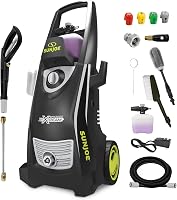
Sun Joe Pressure Washer: a consumer reference point
The Sun Joe SPX3000 has 2030 PSI working pressure and 1.2 GPM rated water flow. Its 13-amp corded electric power source and five quick-connect tips suit routine outdoor cleaning rather than a 5000 PSI industrial workload.
The included tips cover 0°, 15°, 25°, 40° and soap. Two onboard detergent tanks hold separate solutions, which can help when switching between cleaning tasks.
Westinghouse ePX3100v: compact portability
The Westinghouse ePX3100v has 1800 rated PSI and 1.2 rated GPM, with a maximum pressure of 2100 PSI. Its 17.6 lb weight and built-in handle make it a compact option for household tasks.
The pump automatically stops when the trigger isn't engaged. It comes with a detachable foam cannon and three quick-connect spray tips.
Westinghouse WPX3000e: higher consumer working pressure
The Westinghouse WPX3000e delivers 2600 rated PSI and 1.1 rated GPM, with a maximum pressure of 3000 PSI. Its 120V electric motor, axial three-piston auto-stop pump and 35 ft GFCI cord make it a higher-pressure consumer comparison.
It includes five nozzle tips, a 25 ft hose and a 0.45 gallon soap tank. Those features don't make it a 5000 PSI machine, but they show how working pressure and practical setup details belong in the same comparison.
How do you match pressure to a surface and nozzle?
Match the pressure and spray pattern to the surface material and the tool's instructions. A narrow jet concentrates force, so start with a wider pattern and more distance when you're unsure how a finish will respond.
Check the nozzle and accessory ratings before connecting them. Never use a tip, hose or gun that isn't approved for the washer's pressure and flow.
For concrete, begin at a safe distance and test an inconspicuous area. On painted or soft surfaces, use lower pressure and a broader spray, or choose another cleaning method if the manufacturer advises against pressure washing.
A surface cleaner can make broad flat areas easier to cover, but it must be compatible with the washer's output. Don't assume that an accessory rated for one machine is safe with another.
When does a wall-mounted hot-water washer make sense?
A wall mounted hot water pressure washer may suit a fixed work area that needs hot-water cleaning and a permanent installation. Compare its power and plumbing requirements before deciding whether a stationary system fits your space.
Hot water can be useful for certain cleaning tasks, but the right equipment still depends on the soil, surface and cleaning solution. Check the machine and detergent instructions before use.
A portable cold-water washer may be easier to move between locations. If the work is occasional and the supply requirements are difficult to meet, a lower-pressure portable machine could be the more practical choice.
If you're choosing equipment for home use, our best Craftsman pressure washer guide offers another consumer comparison.
What is the final decision rule for an electric pressure washer with 5000 PSI?
Choose a 5000 PSI electric washer only when the job needs that rated working pressure, your site can meet its electrical and water demands, and its duty cycle matches your schedule. If those conditions aren't clear, gather the operating manual and confirm the requirements with the manufacturer first.
For a less demanding home task, compare lower-pressure machines and choose the lowest output that fits the surface and cleaning method. For a gas-powered comparison, see 3000 PSI gas pressure washers.
Start with the best electric pressure washer 4000 PSI guide if you want to assess a lower-pressure class.
Sources:
Frequently asked questions
Can an electric pressure washer really reach 5000 PSI?
Some industrial electric systems may be rated for that pressure, but the pump, motor, electrical supply and duty cycle must all support it. Check the machine's rated working pressure and required circuit before buying.
A maximum or peak figure alone does not show what pressure it can sustain during work.
Is a 4000 PSI electric pressure washer close enough?
A 4000 PSI machine may fit a job that needs less pressure than a true 5000 PSI system, but compare working pressure, flow and accessory ratings. Don't assume a smaller pressure gap makes the machines interchangeable.
Match the tool to the surface and confirm the equipment maker's limits.
What electrical supply does a 5000 PSI electric pressure washer need?
The required supply depends on the motor and pump design. Check the voltage, amperage, phase and circuit requirements in the equipment specifications, and have a qualified electrician review the installation if the load is unfamiliar.
A household outlet should not be assumed to support industrial equipment.
Does a triplex pump matter for a 5000 PSI washer?
Pump design matters because it affects service needs and suitability for sustained work, but the pump label alone doesn't guarantee pressure or duty cycle. Compare the pump's rated pressure and flow with the motor and operating schedule.
See our electric pressure washer with triplex pump guide for pump selection details.
Can I use a 5000 PSI washer on a driveway?
Only if the surface, nozzle, cleaning distance and operating method suit that pressure. High pressure can damage concrete edges, coatings and softer materials when used poorly.
Check the surface and accessory instructions, start with a wider spray pattern at a distance, and increase cleaning force cautiously.