How to Fix an Electric Pressure Washer
To fix an electric pressure washer, check power, water flow, trigger controls, spray tips, and hose connections in that order. Stop using it if the cord, plug, housing, or motor shows damage.
On this page (9 sections)
- How do you fix an electric pressure washer that will not start?
- What should you check when the motor runs but pressure is low?
- Why does an electric pressure washer keep shutting off?
- How do you fix an electric pressure washer with no water flow?
- What should you check if the spray wand pulses?
- Which electric pressure washer parts can you replace?
- How can you protect an electric pressure washer after repair?
- When should you stop and seek service?
- What is the best order for fixing an electric pressure washer?
To fix an electric pressure washer, check the power supply, water flow, trigger, spray tip, and hose connections in that order. These checks solve many startup, shutdown, and low-pressure problems without opening the machine.
Unplug the washer before inspecting any electrical part. If the cord, plug, housing, or motor smells burnt, shows damage, or becomes unusually hot, stop troubleshooting and arrange qualified service.
How do you fix an electric pressure washer that will not start?
Confirm power and water first. An electric pressure washer may not start when the outlet, extension setup, plug, switch, water supply, or trapped pump pressure is the problem.
Check these points:
- Make sure the power switch is off.
- Plug another device into the outlet to check whether power is available.
- Inspect the plug and cord for cuts, crushed sections, or loose connections.
- Reset a tripped breaker or ground-fault outlet if appropriate.
- Turn on the water supply fully.
- Confirm that the garden hose is connected and not kinked.
- Squeeze the spray-gun trigger with the washer off to release trapped pressure.
- Switch the washer on only after water flows freely.
Do not repeatedly reset a breaker that trips again. That can indicate an electrical fault or a circuit that cannot support the load.
What should you check when the motor runs but pressure is low?
Check water flow, the inlet screen, the high-pressure hose, and the nozzle before blaming the pump. Low pressure often comes from a restriction or loose connection outside the motor.
Remove the spray tip only after switching off the washer and releasing pressure. Clear debris with the supplied cleaning tool when available, or follow the washer manual for the approved cleaning method.
Inspect the garden hose for kinks and confirm that its connection does not draw air. Check the high-pressure hose for bends, crushed areas, or leaks around the fittings.
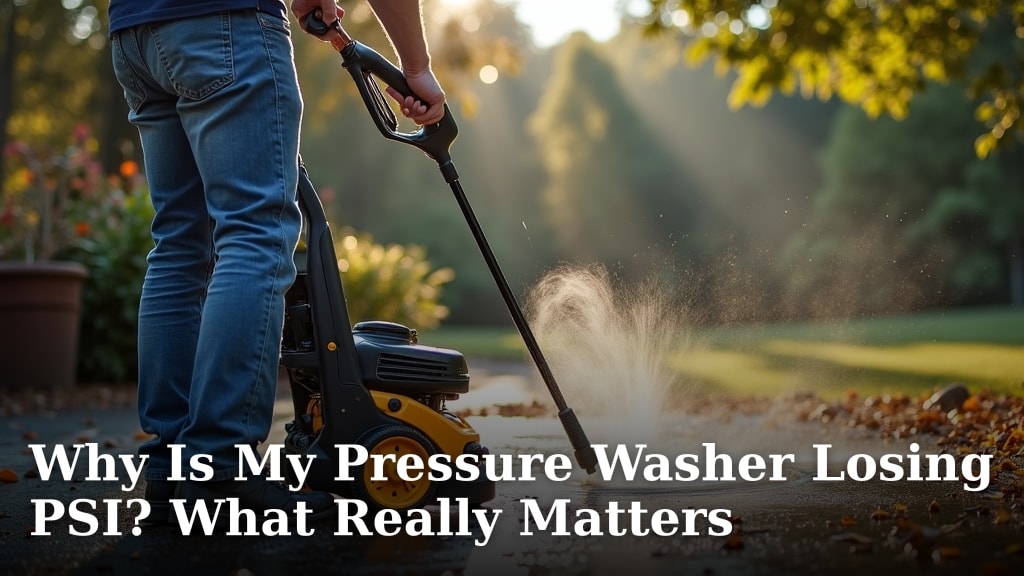
For a deeper pressure diagnosis, see Why Is My Pressure Washer Losing PSI? What Really Matters.
The guide helps separate a blocked nozzle from water-supply and pump problems.
When does a replacement hose make sense?
A replacement hose makes sense when the original hose leaks, kinks badly, or has damaged connections. The ProPulse hose is 1/4 in inside diameter, 25 ft long, and rated for 3,100 PSI working pressure.
This hose is designed for gas or electric pressure washers up to 3,100 PSI and has a 4:1 burst-to-operating-pressure ratio. Check your washer's connection type before ordering because the stated M22-14mm fitting must match.
Do not use a hose with damaged ends or visible reinforcement. Keep the hose free of sharp bends during operation, and release pressure before disconnecting it.
Why does an electric pressure washer keep shutting off?
Repeated shutdowns usually call for a water-flow, pressure, circuit, or motor check. For shutdowns tied to excess heat, see why a pressure washer overheats.
Start with the easiest external causes before considering a pressure switch or internal repair.
Release the trigger and switch off the washer. Check for a blocked nozzle, kinked hose, restricted inlet screen, loose connection, or a water supply that cannot keep up with the washer.
Try the washer on a suitable outlet without adding unnecessary electrical load. Do not use a damaged extension cord, and do not keep running the unit if the breaker trips repeatedly.
If the washer starts and stops whenever you release the trigger, its automatic stop system may be reacting to pressure. A faulty pressure-control part can also cause cycling, so use the manual's instructions before replacing anything.
For replacement guidance, compare best electric pressure washer replacement parts and best electric pressure washer pressure switch.
How do you fix an electric pressure washer with no water flow?
Turn off the washer and confirm that water reaches the pump before troubleshooting pressure. See how to fix a pressure washer for broader troubleshooting steps.
A closed tap, blocked inlet, kinked hose, or trapped air can prevent normal operation.
Disconnect the garden hose only after shutting off the water and releasing pressure. Inspect the hose end and inlet screen for dirt, then reconnect the hose firmly.
With the washer off, open the water supply and squeeze the spray-gun trigger until water flows steadily. This can help clear air from the system, but follow the manual if it gives a different priming process.
Never run an electric pressure washer without its required water supply. Dry operation can damage internal parts.
What should you check if the spray wand pulses?
Pulsing usually points to interrupted water flow or a partial blockage. Inspect the water tap, garden hose, inlet screen, spray tip, and high-pressure hose in that order.
A partially blocked tip can alternate between stronger and weaker spray. Remove and clean it using the washer's approved method, then check whether the spray pattern returns to normal.
Loose fittings can also draw air into the water path. Tighten connections by hand as directed, but do not force plastic fittings or use tools where the manual does not allow them.
Use What Is Cleaning Power on a Pressure Washer? to match pressure and water flow to the surface. A narrow spray tip can damage soft materials even when the washer is working correctly.
Which electric pressure washer parts can you replace?
Replace simple external parts only when the replacement matches the washer and the manual allows it. Common examples include spray tips, hoses, inlet screens, and some pressure-control parts.
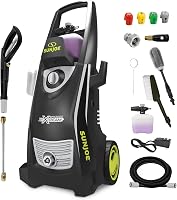
The Sun Joe Pressure Washer is a corded electric SPX3000 model with 2,030 PSI maximum pressure, 1.2 GPM water flow, five quick-connect spray tips, and two 0.9 L detergent tanks.
Its included spray tips are 0°, 15°, 25°, 40°, and soap. The washer also has a 34 in stainless steel spray lance, a 20 ft high-pressure hose, and a garden hose adapter with a female coupler.
The Sun Joe suits someone replacing an older electric washer and wanting several spray options in one unit. Its corded design means your outlet and hose locations still shape where you can work.
Choose parts by model and connection, not by appearance alone. The wrong hose, switch, nozzle, or adapter can create leaks, poor pressure, or unsafe operation.
How can you protect an electric pressure washer after repair?
Dry the washer and protect it from weather, dirt, and sun before storage. Remove water according to the manual, keep connections clean, and store the cord and hose without sharp bends.
The Classic Accessories Pressure Washer Cover is polyester and fits vertical or horizontal pressure washers up to 48 in long, 18.5 in wide, and 13.5 in high.
Its Weather-X fabric has water-resistant backing, and the cover is designed to protect against UV damage, rain, dirt, birds, and tree sap. An elastic shock cord helps hold it in place, while the back closure supports installation and removal.
The cover also accommodates attached hose reels and includes a storage bag. Measure your washer, including any attached reel, before choosing a cover.
Keep the washer fully dry before covering it. A cover protects against outdoor exposure, but it does not replace proper winter storage or repairs to leaks.
When should you stop and seek service?
Stop troubleshooting when the problem points inside the motor, wiring, pump, capacitor, or pressure-control system. Unplug the washer and use qualified service if you see melted insulation, smoke, burning odor, exposed wiring, repeated breaker trips, or water entering electrical parts.
Do not bypass a safety switch or continue using a washer that shocks you. Consumer Product Safety Commission electrical safety guidance explains why damaged cords and electrical equipment need careful handling.
If external checks do not restore normal operation, record the model number and symptoms. That information can help a service professional identify the correct part without guessing.
What is the best order for fixing an electric pressure washer?
Start with power and water, then check pressure, nozzle, hose, and controls before replacing parts. This order keeps a simple blockage from being mistaken for a motor or pump failure.
Pick the ProPulse hose when a compatible M22-14mm replacement hose is the problem. Choose the Sun Joe SPX3000 when you need a corded electric washer with multiple spray tips and detergent tanks.
Choose the Classic Accessories cover when outdoor storage is exposing a compatible washer to weather and debris.
For cleaner results, use the correct tip and detergent for the surface. Our guide to What Soap Can I Use in a Pressure Washer? covers detergent choices, while How to Choose a Pressure Washer with a Vacuum is useful when wet cleanup is part of the job.
If you are comparing electric and gas machines, review best gas pressure washer with honda engine before replacing a failed unit.
Frequently asked questions
Why won't my electric pressure washer start?
Check that the power switch is off before inspecting the outlet, plug, cord, and reset controls. Confirm that water is connected and flowing, then squeeze the trigger to release trapped pressure.
If the washer still will not start, unplug it and arrange qualified service.
Why does an electric pressure washer keep shutting off?
Repeated shutdowns can come from restricted water flow, a blocked spray tip, trapped pressure, an overloaded circuit, or a motor problem. Release the trigger, switch off the washer, unplug it, and check the simple external causes before using it again.
How do I fix low pressure on an electric pressure washer?
Start with the water supply, inlet screen, hose, connections, and spray tip. A kinked hose, clogged screen, loose fitting, or blocked nozzle can reduce pressure.
If those checks do not help, the pump or pressure-control parts may need service.
Can I repair an electric pressure washer motor myself?
Only attempt simple external checks unless you are qualified to work on electrical equipment. Unplug the washer before inspection, and do not open the motor housing when the cord, switch, capacitor, wiring, or internal parts may be involved.