Why Is My Kärcher Pressure Washer Leaking Water?
A Kärcher pressure washer usually leaks from a loose hose fitting, worn O ring, damaged hose, or failed pump seal. Unplug it, shut off the water, and locate the leak before replacing parts.
On this page (8 sections)
- Where does a Kärcher pressure washer usually leak?
- How do you check the hose and fittings?
- Could a worn O ring cause the leak?
- What if the leak comes from the Kärcher spray gun?
- Why is water leaking from the pump?
- Can a replacement gun or wand fix a weak spray?
- How should you repair a Kärcher pressure washer leak?
- When should you stop troubleshooting?
A Kärcher pressure washer leaking water usually has a loose connection, worn O ring, damaged hose, or failed pump seal.
Turn off the tap and unplug the machine before you start checking anything.
Squeeze the trigger to release pressure, then dry the unit so you can see fresh water.
Water often runs along the frame, so the lowest puddle may not show the true source.
Start at the hose and gun connections, then check the inlet, outlet, unloader area, and pump housing.
A small drip at a fitting is often simple to fix with a clean seal or a tighter connection.
A leak from the pump body is different and should not be ignored.
It can signal a failed seal, a cracked housing, or water moving toward electrical parts.
That kind of leak needs a careful stop, not more testing under pressure.
This matters most for home users who keep the washer in a garage or shed.
A slow leak can look minor, yet it may weaken a hose or damage nearby storage.
It can also waste water and make the spray feel uneven.
Checking the source first saves you from replacing a part that was not at fault.
Work from the outside inward and confirm each wet point before you move on.
Keep the model number handy, because fittings and seals differ between Kärcher machines.
Match any replacement to the thread, pressure rating, and hose type you already have.
Once the source is clear, you can choose a simple repair or a model specific part.
That order keeps a small connection leak from becoming a larger pump problem.
Where does a Kärcher pressure washer usually leak?
Most leaks start at a hose connection, O ring, spray gun, inlet filter, or pump seal.
A leak at a removable fitting is generally easier to isolate than water coming through the pump body or motor housing.
Wipe every connection dry, including the hose ends, couplers, and the base of the spray gun.
Restore water briefly without starting the motor, then watch for the first bead of water.
The first wet point matters, because pressure and gravity can carry water a long way.
A leak that appears only while spraying may involve a high pressure hose, gun, wand, or outlet fitting.
Watch the trigger area and the lance joint while you squeeze and release in short bursts.
A leak that continues while the trigger is released can point to an inlet connection, valve, or internal pump problem.
That pattern often means supply side pressure is still reaching a weak seal somewhere.
Check the inlet filter housing next, since grit and a warped seal can both let water pass.
Look closely at the garden hose coupling, but do not assume that joint is the only inlet risk.
A damaged hose end can weep under pressure even when the collar feels tight.
The unloader and valve area deserve a close look if the trail leads toward the pump.
Water there may drip onto the frame and appear below the motor instead.
Separate a fitting leak from a pump leak by drying each zone before you test again.
If water returns at the same joint, focus on the seal, thread, and hose end.
If it returns from inside the housing, stop and treat it as a pump issue.
That split saves time and keeps you from changing hoses when the pump is at fault.
It also stops a worn O ring from hiding a more serious internal failure.
How do you check the hose and fittings?
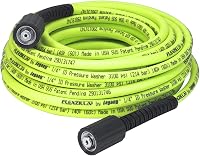
Inspect the high-pressure hose ends first because they carry the most connection stress. Look for a split jacket, bent fitting, loose collar, missing seal, or water emerging where the hose enters its connector.
Do not connect a pressure washer gun directly to a garden hose or faucet. The garden hose feeds the pressure washer, while the high-pressure hose connects the washer to the spray gun.
If the hose is damaged, compare the fitting size and thread before replacing it. Our guide to best replacement hoses for Kärcher pressure washers covers the connection details that matter.
Avoid wrapping tape over a damaged high-pressure hose. Tape may hide the leak briefly, but it doesn't restore the hose's pressure rating or repair a failed crimp.
Could a worn O ring cause the leak?
Yes. A flattened, cracked, or missing O ring can let water escape from an otherwise tight Kärcher connection.
Remove pressure before opening the fitting, then check the seal for cuts, deformation, dirt, or dry surfaces.
Use the correct replacement size for the connection. Do not stack several O rings or force a fitting that has the wrong thread.
The best O rings for Kärcher pressure washers can help when the leak is clearly coming from a removable connection. Lightly seat the replacement without pinching it, then tighten the fitting by hand before checking it again.
Can a replacement spray gun stop a connection leak?
A replacement gun can help when the gun body, inlet, or trigger connection is the wet point, but it won't repair a leaking hose or pump. Confirm the fitting before ordering because Kärcher models can use different hose connections.
The M MINGLE gun uses an M22 connection and supports M22 14 mm or 15 mm fitting arrangements. It has 3 lengths, 5 spray nozzle tips, a 1/4 in quick connect, and a maximum operating pressure of 4000 PSI.
It cannot connect directly to a garden hose. Measure the hose fitting before buying, since models from the same brand can use different connections.
What if the leak comes from the Kärcher spray gun?
A spray gun that leaks around the trigger, barrel, or inlet may have a worn internal seal or damaged body. Disconnect it from the hose and check whether water escapes from the gun alone when the system is pressurized.
The JOEJET replacement gun includes a 16 in jet wand, 5 spray nozzles, and a nozzle holder. It fits some Kärcher electric pressure washers, including K1700, K1710, and K1800, uses an M22-14 mm hose connection, and has a 2000 PSI maximum pressure.
JOEJET states that this gun is for electric pressure washers, not gas models. It also should not be used with an M22-15 mm hose or a garden hose.
Before replacing the gun, check the connection seal and make sure the hose is fully seated. A mismatch can look like a defective gun.
Why is water leaking from the pump?
Water leaking from the pump body, shaft area, or valve section usually means an internal seal, valve, housing, or pump component needs attention. Stop using the washer until you identify whether the water is external or entering the motor area.
Do not open an electrical pressure washer while it is connected to power. If water reaches the motor, switch, plug, or cable, keep the unit disconnected and follow Kärcher's service guidance.
A pump leak can also cause pressure loss, pulsing, or an uneven spray. If the leak is paired with weak output, see why your pressure washer is losing PSI and why a pressure washer pump may be leaking water.
If the pump housing is cracked or the shaft seal has failed, replacing only an external O ring won't solve the problem. Compare the model number before choosing a Kärcher pressure washer pump replacement.
Can a replacement gun or wand fix a weak spray?
A gun or wand can fix a leak at that assembly, but it won't fix a blocked nozzle or damaged pump. Remove the nozzle, check its opening, and rinse away debris before assuming the washer needs a major part.
The Tool Daily Deluxe gun has a 40 in extension, 3 usable lengths, M22 14 mm and 15 mm fitting support, a 1/4 in quick connector, and a maximum pressure of 5000 PSI. Its package includes 5 O rings, 5 nozzles, a nozzle holder, and an adapter.
It must connect to a pressure washer hose, not directly to a garden hose or faucet. The maker rates its maximum water temperature at 140°F and its maximum flow rate at 8 GPM.
Choose this type of replacement when the gun or hose connection is the confirmed leak. If the spray pattern is still uneven after the connection is dry, read why a pressure washer spray can be uneven.
How should you repair a Kärcher pressure washer leak?
Repair the smallest confirmed problem first: clean and reseat a fitting, replace a damaged O ring, replace a split hose, then investigate the pump. Avoid tightening plastic parts until they crack or using sealant where the original seal should do the work.
Use the correct pressure rating for every replacement. A part that threads on may still be unsafe or unsuitable if its fitting, pressure range, or machine connection is wrong.
For replacement parts generally, see the best replacement parts for Kärcher pressure washers. Keep the model number nearby because connection styles can differ across Kärcher machines.
When should you stop troubleshooting?
Stop and arrange service when water reaches electrical parts, the pump housing is cracked, the leak returns after a correct seal replacement, or the source cannot be located safely. Do not operate the washer with a damaged high-pressure hose.
If you need hot water for a cleaning job, first check whether the machine is designed for it. A guide to choosing an electric hot water pressure washer explains why water temperature limits matter.
A Kärcher pressure washer leaking water from a fitting may need only a clean seal or compatible hose. A pump-body leak needs a model-specific repair decision, and continued use can turn a small leak into a larger failure.
Frequently asked questions
Why is my Kärcher pressure washer leaking water from the hose?
A hose leak usually comes from a loose M22 connection, damaged hose end, missing O ring, or a fitting that does not match the machine. Shut off the water, release pressure, inspect the seal and threads, then replace the damaged hose or O ring if needed.
Can a Kärcher pressure washer leak from the pump?
Yes. Water can leak from a pump seal, cracked pump housing, valve area, or connection around the pump.
External fitting leaks may be repairable with a seal or replacement part, but a leak from the pump body often needs a pump repair or replacement.
Why does my Kärcher pressure washer leak when turned off?
A leak while the machine is off usually points to water pressure remaining in the inlet, a loose connection, a damaged O ring, or a valve that is not sealing. Turn off the tap, unplug the washer, squeeze the trigger to release pressure, and inspect each wet connection.
Is it safe to use a leaking Kärcher pressure washer?
Do not keep using the washer until you know where the water is coming from. Water near electrical parts creates a safety risk, and continued use can worsen a hose, seal, pump, or housing problem.
Disconnect power and water before inspection.