Why Is My Pressure Washer Spray Uneven? Quick Fixes
Your pressure washer spray is uneven because of a clogged nozzle, low water pressure, or an unstable fuel-to-air mixture in gas models. These common issues prevent a consistent water stream. You might notice the spray pattern wavering or pulsing. Fixing these problems is usually quite straightforward.
An uneven spray can make your cleaning job much harder. It might leave streaks on surfaces you’re trying to clean. We found that addressing the nozzle and water supply are the most frequent solutions. For gas engines, checking the fuel and air systems is also important for a steady output.
- Uneven spray often means a clogged nozzle.
- Low water supply pressure can also cause pulsing.
- Gas engines might have fuel or air mixture problems.
- Checking these simple things first saves time.
- Most fixes involve basic cleaning or adjustments.
Let’s walk through exactly how to fix that frustrating uneven spray pattern on your pressure washer.
It’s frustrating when your pressure washer doesn’t spray evenly, right? You expect a clean, consistent stream to tackle dirt and grime, but instead, you get a wavering, pulsing mess. This can leave streaks and make your job twice as hard. Don’t worry, this is a common problem, and usually, the fix is simpler than you think. We’ve found that most uneven spray issues stem from a few key areas that are easy to check and correct.
Troubleshooting Your Pressure Washer’s Uneven Spray
An uneven spray pattern often feels like your pressure washer is having an off day. It might spray hard one second and weak the next, or the pattern could be all over the place. This isn’t usually a sign of a major malfunction. We’ve found that most often, it’s something simple like a blockage or a supply issue. Let’s dive into the most common culprits and how you can get that spray back on track.
Common Causes for Inconsistent Pressure Washer Spray
When your pressure washer sputters and spits rather than spraying smoothly, it can be really annoying. You’re trying to get a job done, and the tool isn’t cooperating. We’ve seen this happen a lot, and the reasons are typically straightforward. Understanding these can save you a lot of time and frustration.
1. Clogged Nozzle: The Usual Suspect
The nozzle is the tip of the wand where the water exits. It’s designed to create a specific spray pattern. If something gets stuck in this small opening, the water can’t flow out evenly. Tiny bits of debris, like sand, rust, or even mineral deposits, can cause a blockage. We found that this is the most frequent reason for an uneven spray pattern.
How to Clean a Clogged Nozzle
Cleaning your nozzle is often the easiest fix. First, always disconnect the pressure washer from the water source and turn off the engine. Never try to clean a nozzle while the machine is running. You’ll want to remove the nozzle tip from the wand. Most pressure washer nozzles twist or pull off easily. Once removed, you can try to clear the blockage.
- Use a thin, stiff wire, like a paperclip or a special nozzle cleaning tool. Gently push it into the nozzle opening to dislodge any debris.
- If that doesn’t work, try soaking the nozzle in a solution of vinegar and water. Vinegar is great at breaking down mineral deposits. Let it soak for about 30 minutes.
- After soaking, rinse the nozzle thoroughly with clean water. You can also use a fine brush to scrub away any remaining bits.
- Finally, reattach the nozzle and test your pressure washer. You should notice a much more consistent spray.
2. Water Supply Issues: Not Enough Juice
Your pressure washer needs a steady, sufficient flow of water to operate correctly. If the water supply isn’t up to par, the pump can’t get enough water. This can lead to pulsing or an uneven spray. Think of it like trying to drink through a straw that’s half-collapsed – you won’t get a smooth flow.
Checking Your Water Source
The garden hose is often the bottleneck. Make sure you’re using a garden hose that’s at least 50 feet long and has a diameter of 3/4 inch. Longer hoses or narrower hoses can restrict water flow. We found that shorter, wider hoses provide the best water delivery.
Ensuring Adequate Water Pressure
Your home’s water pressure matters too. Most pressure washers need a minimum of 20 PSI (pounds per square inch) at the source. You can check your home’s water pressure with a simple gauge that screws onto an outdoor faucet. If your home’s pressure is too low, you might need to consider a pressure booster pump, although this is less common.
What About the Faucet?
Don’t forget the faucet itself! Make sure the outdoor faucet you’re using is fully open. Sometimes, people only open them partially, which can limit water flow. Also, check the connection between the hose and the faucet for any leaks. A simple washer inside the hose connector can sometimes be worn out, causing a slow leak and reduced flow.
3. Issues with Gas-Powered Pressure Washers
If you have a gas-powered pressure washer, the engine is also a critical component. An unstable fuel-to-air mixture can cause the engine to run rough, which in turn affects the pump and the spray pattern. This can result in a sputtering or uneven spray that fluctuates.
Checking the Air Filter
A clogged air filter is a common cause of engine problems in gas-powered equipment. The engine needs clean air to combust fuel properly. If the air filter is dirty, the engine struggles to get enough air, leading to a poor fuel mixture. We found that a dirty air filter is a frequent culprit for rough engine performance.
- Locate the air filter cover on your pressure washer’s engine.
- Remove the cover and take out the air filter.
- Inspect the filter. If it’s visibly dirty or clogged with debris, it needs cleaning or replacement.
- You can often tap a dirty filter against a hard surface to remove loose dirt. For more stubborn grime, you might be able to wash it with soap and water, but be sure to let it dry completely before reinstalling. Many small engine filters are disposable and should be replaced when dirty.
The Spark Plug: Is it Firing Right?
The spark plug ignites the fuel-air mixture in the engine. If the spark plug is dirty, fouled, or worn, it won’t create a strong enough spark. This can lead to inconsistent combustion and a rough-running engine. Many experts say a faulty spark plug is a primary reason for engine misfires (Cleveland Clinic).
- Ensure the engine is off and cool.
- Use a spark plug wrench to carefully remove the spark plug.
- Examine the spark plug tip. It should be a light brown or grey color. Black, sooty deposits or a white, chalky residue indicate a problem.
- You can clean a slightly fouled spark plug with a wire brush. Check the gap between the electrodes using a gap tool and adjust if necessary according to your owner’s manual.
- If the spark plug is heavily fouled or looks damaged, it’s best to replace it with a new one.
Fuel Quality and Carburetor Concerns
The type and condition of your fuel are also important for gas engines. Old fuel, or fuel that has been sitting for too long, can lose its octane and cause engine issues. Stale fuel can gum up the carburetor, which mixes the fuel and air. Many mechanics suggest using fresh fuel no older than 30 days for small engines (Small Engine Repair Association).
If you suspect fuel issues, you might need to drain the old fuel and refill with fresh gasoline. For carburetor problems, cleaning can be a more involved process. If you’re not comfortable with this, it might be time to consult your owner’s manual or a service professional.
Checking the Inlet Filter
Before water even reaches the pump, it passes through an inlet filter. This filter, often a screen inside the hose connection point, is designed to catch larger debris that could damage the pump. If this filter becomes clogged, it restricts water flow, just like a low-pressure supply or a clogged hose.
- Disconnect the water hose from the pressure washer.
- Look inside the threaded inlet where the hose connects. You should see a fine mesh screen.
- Carefully remove this screen. You might need needle-nose pliers.
- Rinse the screen thoroughly under running water. Use a soft brush if needed.
- Reinsert the clean screen and reconnect your hose.
Is the Wand or Hose Kinked?
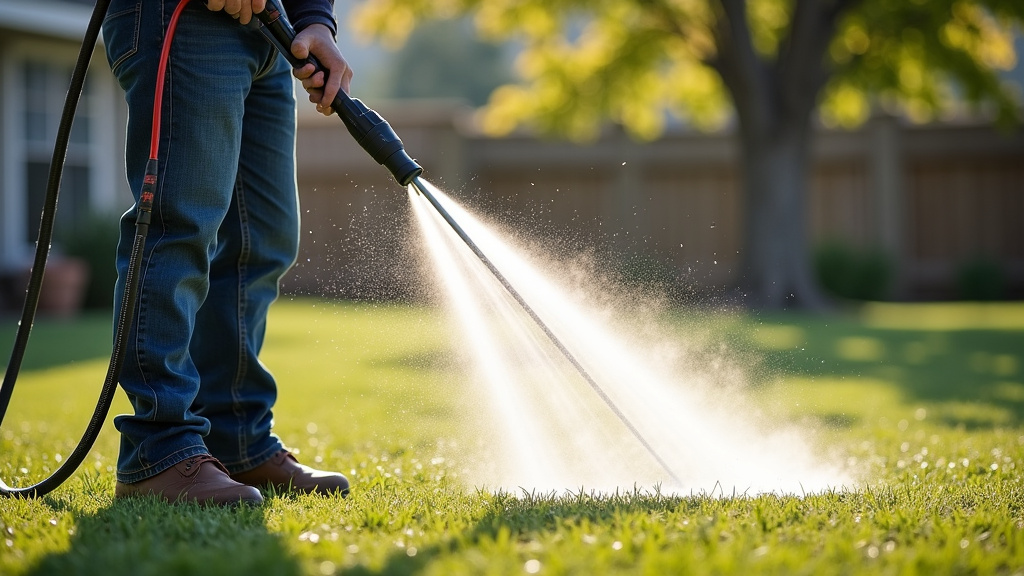
Sometimes, the simplest things are overlooked. A kinked hose can severely restrict water flow, leading to an uneven spray. Similarly, if the high-pressure hose or the wand itself has an internal blockage, it will affect the spray pattern. Walk along the entire length of your high-pressure hose and your garden hose. Make sure there are no sharp bends or folds that are pinching the hose.
Quick Checklist for an Uneven Spray
Let’s summarize the fastest ways to get your pressure washer spraying evenly again:
- Nozzle Check: Ensure the nozzle tip is clean and free of debris.
- Water Flow: Verify your garden hose is fully connected and not kinked.
- Inlet Filter: Clean the mesh screen at the water inlet.
- Gas Engine (if applicable): Inspect the air filter and spark plug.
- Fuel Quality (if applicable): Use fresh gasoline.
Conclusion
You’ve learned that an uneven pressure washer spray is usually a simple fix. Most often, it’s a clogged nozzle, restricted water flow, or engine issues in gas models. By checking and cleaning your nozzle, ensuring a strong water supply, and inspecting your air filter and spark plug if you have a gas unit, you can restore that consistent spray. Don’t let a frustrating spray pattern stop your cleaning projects. Try these quick steps first to get your pressure washer working like new again.
Frequently Asked Questions
How often should I clean my pressure washer nozzle?
We recommend cleaning your nozzle after every few uses, or if you notice a change in the spray pattern. It’s especially important to clean it if you’ve been using water with a lot of sediment or minerals.
Can a kink in the garden hose really cause uneven spray?
Yes, absolutely. A kink severely restricts water flow to the pump. This starves the system, causing the pump to surge and the spray to become inconsistent. Always ensure your garden hose is laid out straight and free of bends.
What if cleaning the nozzle doesn’t fix the uneven spray?
If the nozzle is clean, check your water supply next. Ensure your garden hose is wide enough and your faucet is fully open. Also, clean the inlet filter on the pressure washer itself, as a clogged screen can also limit water flow.
My gas pressure washer is sputtering – is it always the spark plug?
Not always, but it’s a common cause. A dirty air filter or stale fuel can also lead to sputtering and an uneven spray. We suggest checking the air filter and trying fresh fuel before assuming the spark plug is the issue.
Is it safe to use a paperclip to clean the nozzle?
Yes, a paperclip or a similar thin, stiff wire can be safe if used gently. The key is to avoid forcing it or damaging the nozzle’s internal components. If you’re concerned, a dedicated nozzle cleaning tool is a good investment.