6 Best Wide-Angle Pressure Washer Nozzles (October 2026)
The best wide-angle pressure washer nozzles include the STYDDI Pressure Washer Quick-Connect Pivoting Coupler Kit for awkward angles, the McKillans 40 Degree Pressure Washer Nozzle for car rinsing, and the PWACCS 240° Swivel Coupler & 7 Nozzle for overhead rinsing.
On this page (5 sections)
The best wide-angle pressure washer nozzle for most broad rinsing is the Kärcher eco!Booster, which has a wide flat spray pattern and a 1/4 in quick connect. For a simple 40-degree tip, consider McKillans; for awkward angles, choose a pivoting coupler kit.
A wider pattern can cover more surface with each pass, but it does not make every nozzle interchangeable. Confirm connection type, pressure rating and orifice, then pick the pattern for the surface and task.
See what the colors on pressure washer nozzles mean before choosing a tip by color. The common pressure washer nozzle angles explain how spray width changes the stream.
Our picks at a glance
-
1
 Best for awkward angles
STYDDI Pressure Washer Quick-Connect Pivoting Coupler Kit
9.7/10 our score
See it on Amazon -
2

-
3

- 4
 Check it
DEKELIY Pressure Washer Nozzles
Best for varied spray patterns - 5
 Check it
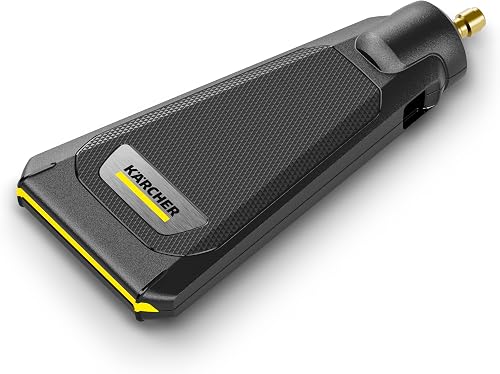
Kärcher eco!Booster Pressure Washer Nozzle
Best for broad flat coverage - 6
 Check it
Weslymoo Pressure Washer Spray Nozzle
Best for rotating spot cleaning
Which wide-angle pressure washer nozzle fits each job?
The STYDDI kit is the most flexible pick for awkward angles, while McKillans is the direct choice for a broad 40-degree rinse. The products below are ordered by score, with options for a wide flat pattern, rotating spray and multiple tips.
STYDDI Pressure Washer Quick-Connect Pivoting Coupler Kit: Best for awkward angles
- 7 spray tips
- 5 pivoting angles
- 1/4 in quick connect
- Up to 4500 PSI
The pivoting coupler and 7 tips offer several spray choices for cleaning around vehicles and other hard-to-reach areas. Check the wand connection and pressure rating before use.
Pros
- Five coupler positions
- Seven spray modes
- Up to 4500 PSI
Cons
- More parts than a single rinse nozzle
- Must match the washer and connection
McKillans 40 Degree Pressure Washer Nozzle: Best for car rinsing
- 40-degree spray pattern
- Rubberized nozzle guard
- Stainless steel internals
- 4.0 orifice
A 40-degree pattern is suited to broad rinsing, and the rubberized guard is designed to help protect paint from accidental contact. Match the 4.0 orifice to your pressure washer.
Pros
- Wide 40-degree rinse pattern
- Rubberized guard
- Stainless steel internals
Cons
- Single spray pattern
- Orifice must suit the washer
PWACCS 240° Swivel Coupler & 7 Nozzle: Best for overhead rinsing
- 7 pivot positions
- 7 spray tips
- 1/4 in quick connect
- Up to 4500 PSI
The swivel coupler changes the wand-to-tip angle, while 7 spray tips give you multiple patterns. Its nozzle holder keeps the tips together between jobs.
Pros
- Seven pivot positions
- Seven spray tips
- Includes nozzle holder
Cons
- Kit takes more storage space than one nozzle
- Confirm fit with your washer
DEKELIY Pressure Washer Nozzles: Best for varied spray patterns
- Two rotating turbo tips
- Seven additional spray tips
- 1/4 in quick connect
- Up to 4000 PSI
This set pairs two rotating tips with seven other spray tips for different cleaning jobs. Check the tip rating and the connection fit before attaching it.
Pros
- Two rotating tips
- Several spray patterns
- 1/4 in quick connect
Cons
- Not a single wide-fan nozzle
- Maximum pressure is 4000 PSI
Kärcher eco!Booster Pressure Washer Nozzle: Best for broad flat coverage
- Wide flat spray pattern
- Universal 1/4 in quick connect
- Maximum pressure 3000 PSI
- Designed for electric washers
The eco!Booster uses a wide flat spray pattern for uniform coverage on broad surfaces. Kärcher says it offers up to 50% greater cleaning performance than a standard flat jet in the respective Kärcher pressure washer class.
Pros
- Wide flat spray pattern
- Universal 1/4 in quick connect
- Designed for broad surfaces
Cons
- Maximum pressure is 3000 PSI
- Check the washer manual for compatibility
Weslymoo Pressure Washer Spray Nozzle: Best for rotating spot cleaning
- Rotating spray action
- Five additional tips
- 1/4 in quick connect
- Up to 4000 PSI
The rotating nozzle is intended for stubborn grime, and five additional tips provide other spray choices. Match the 4.0 orifice and pressure rating to your washer.
Pros
- Rotating spray action
- Five additional tips
- 1/4 in quick connect
Cons
- Rotating action is not the same as a broad fan rinse
- Use fresh water only
Our score weighs specs, features and buyer feedback against what you're shopping for. We checked the available product details and focused on spray width, angle adjustment, connection type and pressure limits.
How to choose a wide spray tip
Choose a wide spray tip when you want a gentler, broader rinse, and use a narrower pattern only when the surface and job allow it. A wide fan can help cover siding, vehicles or patio furniture, but technique and washer pressure still matter.
What does a wide-angle pressure washer nozzle do?
A wide-angle tip spreads water across a broader fan than a narrow-angle tip. That can make it useful for rinsing and general cleaning, though each pass may have less concentrated impact than a narrow stream.
Angle labels are a useful starting point, not a guarantee of safe cleaning. Read our guide to what nozzle degree and spray angle mean to compare common patterns and their uses.
Should you choose a fixed tip, a set or an adjustable nozzle?
Choose a fixed 40-degree tip if you mainly need a broad rinse, and choose a set if you switch between different cleaning tasks. An adjustable option can reduce loose parts, while a multi-pattern set lets you swap tips.
The best pressure washer multi-nozzle options can help if you need several patterns in one setup. For a single tip with changing spray settings, compare the best adjustable pressure washer nozzles.
How do nozzle colors relate to spray width?
Many pressure washer tip sets use colors to identify spray patterns, but colors alone are not enough to confirm the angle or fit. Check the markings and instructions that come with the tip set.
Our pressure washer nozzle color guide explains common color conventions and why you should verify the pattern before use. Some kits also include soap or rinse tips, which serve a different role from a wide-angle cleaning tip.
What should you check before using a wide-angle tip?
Check the connection, orifice and maximum pressure before attaching a nozzle. Then start farther from the surface and move closer only if the material tolerates the spray.
A 1/4 in quick-connect fitting appears on several picks here, but match it to your wand rather than assuming it fits every washer. The washer's pressure and flow should also suit the nozzle.
A wider fan does not remove the need for care around paint, soft wood, seals or nearby people. Follow the washer manual and the surface maker's instructions, and test a small hidden area first.
Does a wide-angle nozzle work for soap?
A regular wide-angle nozzle is for rinsing or cleaning, while a soap tip is designed to apply detergent at low pressure. Use the washer's detergent instructions and the soap tip intended for your setup.
Learn what a soap nozzle on a pressure washer does before adding detergent. If you are unsure about the detergent itself, see what soap you can use in a pressure washer.
Which wide-angle pressure washer nozzle should you pick?
Choose the Kärcher eco!Booster if you want a dedicated wide flat spray pattern for broad coverage and your washer is compatible. Pick McKillans for a straightforward 40-degree rinse, or STYDDI if adjustable aiming and multiple tips better match your jobs.
If you often change spray patterns, compare multi-nozzle and adjustable designs before buying. Match the nozzle to the washer and surface, then follow the maker's guidance for safe distance and use.
Our top 3 picks at a glance
-
1
Best for awkward angles
STYDDI Pressure Washer Quick-Connect Pivoting Coupler Kit
9.7/10 our score
See it on Amazon -
2
-
3
Frequently asked questions
What pressure washer nozzle gives the widest spray?
A 40-degree tip makes a broad fan for rinsing, while a specialty nozzle such as the Kärcher eco!Booster uses a wide flat spray pattern. Check the nozzle instructions and your washer manual for compatible pressure and connections.
A wider pattern spreads the stream over more area, so it may be less suited to concentrated grime removal.
Is a 40-degree nozzle safe for washing a car?
A 40-degree tip is commonly used for rinsing because its fan spreads water over a wider area. McKillans describes its 40-degree nozzle as suitable for car washing and includes a rubberized guard intended to help prevent accidental contact marks.
Keep the tip moving and follow your vehicle and washer guidance.
Can a wide-angle pressure washer nozzle damage a surface?
Yes. A wide spray can still damage paint, wood, seals or other delicate materials if the pressure is too high or the tip is too close.
Start at a greater distance, use a suitable tip, and test an inconspicuous area.
Follow the surface and washer manufacturers' instructions.
Does a pivoting coupler make a nozzle wider?
No. A pivoting coupler changes the direction of the wand and tip, while the nozzle determines the spray pattern.
It can help aim a wider rinse beneath a car or toward a hard-to-reach area.
Choose a tip for the spray width you need, then use a coupler only if the angle is difficult to reach.
How do I know if a nozzle fits my pressure washer?
Check the connector type, pressure limit and orifice against your washer and wand. Several picks here use a 1/4 in quick-connect fitting, but that alone does not confirm that every washer setup is compatible.
Follow the washer manual and do not exceed the nozzle's stated pressure rating.