What Do the Colors on Pressure Washer Nozzles Mean?
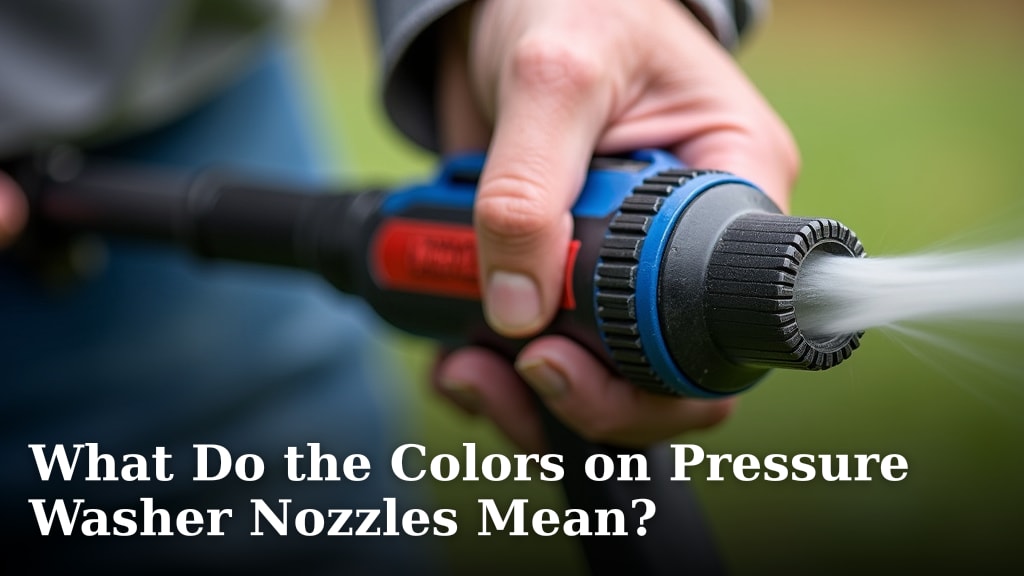
The colors on your pressure washer nozzles tell you about their spray angle, which controls how wide or narrow the stream of water is. Red nozzles have the narrowest spray for tough, concentrated cleaning. Green nozzles offer a wider spray for medium-duty jobs. White nozzles provide an even wider spray for rinsing surfaces. You need to pick the right color to avoid damaging what you’re cleaning.
Understanding these nozzle colors helps you work more efficiently and safely. A narrower spray is great for removing stubborn dirt, but it can damage soft materials if you’re not careful. A wider spray covers more area quickly, making it perfect for general cleaning and rinsing. Choosing the correct nozzle ensures you get the best cleaning results without causing harm to your property. Many experts agree that using the correct nozzle is key for effective pressure washing.
- Nozzle colors indicate the spray angle.
- Red = narrow spray (tough cleaning).
- Green = medium spray (general cleaning).
- White = wide spray (rinsing).
- Match the nozzle to the job to prevent damage.
Ready to learn which nozzle color is right for your next project? Let’s break down what each color means and how to use them correctly.
Decoding Your Pressure Washer Nozzle Colors
You’ve got a pressure washer, and you’ve noticed those colored tips. They aren’t just for show; they’re your secret weapon for tackling different cleaning jobs. Each color signals a different spray pattern. This pattern directly affects how concentrated the water stream is. Understanding this will help you clean effectively and avoid damaging surfaces.
The Role of Spray Angle in Pressure Washing
Think of the spray angle like how wide you spread your fingers. A narrow angle is like pointing one finger. A wide angle is like spreading all your fingers apart. The narrower the angle, the more pressure is focused on a small spot. The wider the angle, the pressure is spread out over a larger area. This is why choosing the right nozzle is so important for any task you have.
Understanding Pressure Washer Nozzle Degrees
Pressure washer nozzles are rated by degrees. A common range is from 0 to 65 degrees. The degree number tells you how wide the spray pattern is. A 0-degree nozzle has a very tight, concentrated stream. A 40 or 65-degree nozzle has a much broader, fan-like spray. The colors correspond to these degrees, making it easy to pick the right one for the job.
Why Spray Angle Matters for Your Surfaces
Using a nozzle that’s too powerful for a delicate surface can cause damage. Imagine trying to clean a painted car with a fire hose. It wouldn’t end well. Similarly, using a nozzle that’s too wide for a really dirty area might mean you’re not getting enough cleaning power. You need to match the nozzle’s spray angle to the task at hand. This prevents harm and ensures a cleaner finish.
The Common Pressure Washer Nozzle Colors Explained
Most pressure washers come with a set of standard colored nozzles. You’ll typically see red, yellow, green, white, and sometimes black. Each color has a specific spray angle and is designed for different types of cleaning. We’ll break down what each one means so you can use them confidently. The white nozzle is your go-to for lighter cleaning and rinsing, and our guide explains what PSI is safe for vinyl siding.
Red Nozzle (0 Degrees): The Powerhouse for Stubborn Dirt
The red nozzle is your 0-degree tip. This means it shoots a laser-like, straight stream of water. It’s the most aggressive nozzle available. You’ll use this for the toughest jobs. Think about caked-on mud or stubborn oil stains. Research shows this concentrated stream can remove dirt very effectively from hard surfaces (e.g., concrete). However, it’s crucial to use this nozzle with extreme caution. It can easily damage softer materials like wood, paint, or siding. Always keep it moving and don’t hold it too close to the surface.
Yellow Nozzle (15 Degrees): For Serious Grime
Next up is the yellow nozzle, typically offering a 15-degree spray. This is still a powerful option. It provides a more concentrated stream than green or white, but it spreads the water out a bit more than red. This makes it good for areas with heavy dirt build-up. You might use it for cleaning driveways, sidewalks, or heavily soiled decks. It offers a good balance between cleaning power and coverage. However, like the red nozzle, it’s best kept away from delicate surfaces. Always test in an inconspicuous area first.
Green Nozzle (25 Degrees): The All-Purpose Cleaner
The green nozzle is often considered the workhorse for general cleaning. It usually provides a 25-degree spray. This angle creates a wider fan pattern. It allows you to cover more ground while still having enough power to clean effectively. This nozzle is ideal for cleaning patios, fences, siding on your house, and outdoor furniture. It’s a safe bet for most common household cleaning tasks. We found that many users rely on the green nozzle for its versatility. It offers a good balance of power and surface area coverage.
White Nozzle (40 Degrees): Gentle Cleaning and Rinsing
The white nozzle is your go-to for lighter cleaning and rinsing. It typically has a 40-degree spray. This creates a very wide fan pattern. The pressure is significantly spread out, making it much gentler on surfaces. You’ll want to use this for washing cars, cleaning windows, or rinsing away soap and debris after using a stronger nozzle. It’s excellent for general surface preparation or a final rinse. It helps avoid leaving streaks or water spots.
Black Nozzle (65 Degrees or Soap Nozzle): The Gentle Giant
The black nozzle, often called the soap nozzle, is the widest of the common set, usually around 65 degrees. Its purpose is to apply cleaning solutions or to rinse very gently. The spray is so wide and low-pressure that it’s safe for almost any surface. You’ll use this to apply detergent to your car before scrubbing, or for a final rinse of delicate items. Some pressure washers also have a dedicated soap dispenser or siphon tube that works in conjunction with a specific nozzle setting. Always check your manual.
Choosing the Right Nozzle: A Simple Guide
Selecting the correct nozzle can seem tricky at first. But once you understand the basics, it becomes second nature. Here’s a quick way to decide:
- Tough Stains & Hard Surfaces: Think RED or YELLOW. These are for concrete, brick, and very stubborn grime.
- General Cleaning: GREEN is your best friend. Use it for siding, decks, fences, and most outdoor cleaning.
- Light Cleaning & Rinsing: WHITE is ideal for cars, windows, and removing soap.
- Applying Soap or Very Gentle Rinse: BLACK is the safest choice for detergents or delicate jobs.
A Quick Reference Table for Nozzle Colors
To make things even easier, here’s a table summarizing the common nozzle colors and their uses. This can be a handy guide to keep around your garage or shed.
| Nozzle Color | Spray Angle (Degrees) | Best For | Caution |
|---|---|---|---|
| Red | 0° | Extremely tough stains, concrete, stripping paint. | Can easily damage soft surfaces; use with extreme care. |
| Yellow | 15° | Heavy dirt, oil stains, stubborn grime on hard surfaces. | Still aggressive; avoid delicate materials. |
| Green | 25° | General cleaning, siding, decks, fences, patios. | Good all-rounder, but test on new surfaces. |
| White | 40° | Light cleaning, rinsing cars, windows, furniture. | Safe for most surfaces. |
| Black | 65° (or Soap Nozzle) | Applying soap, gentle rinsing, delicate surfaces. | Very low pressure, excellent for detergent application. |
What About Other Colors?
You might encounter other colors on specialized nozzles. For instance, some manufacturers use blue for a 40-degree nozzle or pink for a 25-degree nozzle. The key is to look for the degree marking etched onto the nozzle itself. If you can’t find it, or if the color is unfamiliar, it’s always best to consult your pressure washer’s manual. Many modern pressure washers also come with variable spray nozzles that allow you to adjust the angle without changing tips.
A Checklist for Choosing the Right Nozzle
To help you remember, keep this quick checklist in mind before you start spraying:
- Identify the Surface: Is it concrete, wood, painted metal, plastic?
- Assess the Dirt Level: Is it light dust or thick, caked-on mud?
- Start Wide, Go Narrow: Always begin with a wider angle (white or green) and switch to a narrower one (yellow or red) only if needed.
- Test in a Small Area: Before cleaning the whole surface, try the nozzle in an inconspicuous spot.
- Keep Moving: Never hold any nozzle directly on one spot for too long, especially the red and yellow ones.
- Check Your Manual: When in doubt, your pressure washer’s instruction book is your best guide.
Conclusion
You’ve now learned how those colorful pressure washer nozzles are your key to effective and safe cleaning. Remember, each color represents a different spray angle, and matching it to your task prevents damage and ensures the best results. Think of red and yellow for tough jobs, green for everyday cleaning, and white or black for gentle rinsing and soap application. Always start with a wider spray and test in an inconspicuous spot first. By understanding these simple color codes, you’re ready to tackle your next project with confidence and get your property looking its best.
Frequently Asked Questions
Do all pressure washer brands use the same color nozzles?
Generally, yes, most pressure washer brands follow the standard color coding for nozzles (red, yellow, green, white, black). However, it’s always wise to double-check your pressure washer’s manual if you encounter unfamiliar colors, as some specialized nozzles might differ. The degree marking on the nozzle itself is the most reliable indicator.
Can I use a red nozzle on my wooden deck?
Using a red (0-degree) nozzle on a wooden deck is strongly discouraged. The highly concentrated spray can easily gouge, splinter, or strip the wood, causing permanent damage. For wooden decks, you should opt for a wider angle nozzle like the green (25-degree) or white (40-degree) and keep the nozzle moving to avoid etching.
What happens if I use a nozzle that’s too wide for a dirty surface?
If you use a nozzle with too wide a spray angle (like white or black) on a very dirty surface, you likely won’t achieve the desired clean. The pressure will be too spread out to effectively lift stubborn grime. You’ll end up spending more time and effort without getting the results you want. It’s better to start with a medium-width nozzle and only switch to a narrower one if needed.
My pressure washer came with only one or two nozzles. Can I buy more colors separately?
Yes, you can usually purchase additional nozzle tips separately. Many hardware stores and online retailers sell universal pressure washer nozzle sets that include various colors and spray angles. Just ensure the nozzle is compatible with your pressure washer’s GPM (gallons per minute) and PSI (pounds per square inch) rating to avoid performance issues or damage.
What’s the difference between the black nozzle and the soap dispenser on my pressure washer?
The black nozzle (typically 65 degrees) is designed to apply soap at a lower pressure. It works by drawing detergent through a siphon tube. Some pressure washers also have a separate, built-in detergent tank or a specific setting that utilizes a different nozzle (often the black one) to dispense soap. Always refer to your owner’s manual to understand how your specific machine applies cleaning solutions.