Can You Use a Pressure Washer in a Bathroom?
No, a standard pressure washer generally isn't suitable for bathroom cleaning. Its forceful spray can send water into electrical areas, damage grout or finishes, and soak parts of the room that are hard to dry.
On this page (9 sections)
- Can you use a pressure washer for bathrooms safely?
- What can go wrong when pressure washing a bathroom?
- Why does indoor splash make a pressure washer a poor fit?
- What should you use to clean a bathroom instead?
- Can a pressure washer clean shower tile or grout?
- Does a pressure washer's spray pattern make bathroom use safe?
- Where can you use a pressure washer instead?
- How do you reduce pressure washer risks on outdoor jobs?
- Is a pressure washer for bathrooms ever the right choice?
No, a standard pressure washer generally isn't a good choice for a bathroom. The spray can force water into electrical areas, damage grout and finishes, and soak walls, cabinets, and flooring that are difficult to dry.
For tile, tubs, and fixtures, use a surface-approved cleaner with a soft brush or cloth. A pressure washer is made for jobs with room to manage its spray and runoff, such as outdoor equipment and surfaces.
Can you use a pressure washer for bathrooms safely?
In most homes, don't use a pressure washer indoors in a bathroom. The tight space makes it hard to control splash, protect electrical components, and keep water out of gaps and adjoining rooms.
A bathroom has outlets, switches, lights, fans, and often a nearby hair dryer or other plugged-in device. Even if the stream is aimed at a shower wall, rebound spray can travel in several directions.
A regular shower hose or handheld shower head is different from a pressure washer. It delivers water at ordinary household flow and is designed for rinsing in a wet area.
If you're learning how to operate a pressure washer, keep the basic setup and operating steps for suitable outdoor tasks. They don't make a bathroom an appropriate cleaning location.
What can go wrong when pressure washing a bathroom?
The main risks are electrical exposure, water intrusion, surface damage, and loss of footing. Each can happen even when you aim carefully, because spray bounces off hard surfaces and spreads beyond the target.
Water can enter outlets, light fixtures, fan housings, or openings around plumbing. It can also pass behind tile through cracked grout, failed caulk, or damaged seals, leaving moisture in places you can't inspect or dry easily.
A narrow jet can chip tile, erode grout, damage coatings, or mark softer materials. The risk rises when a surface is already loose, cracked, or worn.
Wet floors also become slippery. A pressure washer hose and power cord add trip hazards in a compact room.
How much pressure is too much for skin?
A pressure washer can injure skin, so keep its spray away from people and pets. Don't test the jet on your hand or any part of your body.
Read how much PSI is dangerous to skin for more on why pressure and nozzle choice matter. A lower pressure setting doesn't make indoor bathroom use safe by itself.
Why does indoor splash make a pressure washer a poor fit?
A bathroom offers little space to contain high-pressure spray and runoff. Water rebounds from tile, glass, and porcelain, then can reach floors, doorways, cabinets, and electrical fixtures.
The room's seams and edges also matter. Water may collect behind a toilet, under a vanity, around a tub, or along a shower threshold without being visible from where you're standing.
A pressure washer also needs a suitable water supply and, depending on the model, a power source. Check the manual for setup requirements, but don't run cords or equipment in a wet bathroom to make the job work.
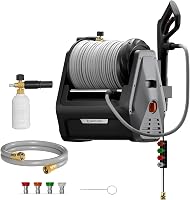
The Sun Joe SPX3000 has five quick-connect tips, a 20 ft high-pressure hose, and two detergent tanks. Those features are intended for pressure-washing tasks, but they don't address the splash, electrical, and moisture risks inside an enclosed bathroom.
What should you use to clean a bathroom instead?
Choose a cleaner approved for the surface, then use a soft brush or cloth. That gives you more control around grout lines, caulk, fixtures, and electrical areas.
- Check the tile, tub, fixture, and cleaner instructions.
- Ventilate the room as directed by the cleaner's label.
- Apply the cleaner to a small area with a cloth or approved applicator.
- Gently scrub buildup with a soft brush.
- Rinse or wipe as directed, and dry nearby surfaces.
Don't mix cleaning chemicals. Wear any protective gear required by the cleaner label, and stop if a surface changes color or finish.
For soap scum or grime that needs more effort, let an approved cleaner sit only for the time its instructions allow. Scrubbing with a suitable brush is easier to control than a high-force jet.
Can a pressure washer clean shower tile or grout?
Don't pressure wash shower tile or grout. A forceful stream can damage weak joints or push water through gaps behind the tile.
Check for loose tiles, cracked grout, and failed caulk before cleaning. If you find damage, address it first or ask a qualified professional how to protect the area from water.
For routine buildup, use a soft grout brush and a cleaner approved for the material. Avoid abrasive tools that can scratch tile or damage its finish.
Does a pressure washer's spray pattern make bathroom use safe?
No. A wider spray tip still doesn't make a pressure washer a good indoor bathroom cleaner.
It may spread the water over more area, but splash and runoff can still reach surfaces and openings outside the target.
Pressure washers work by sending water through a pump and nozzle to create a forceful stream. Learn how a pressure washer works to understand why its spray needs careful control.
A wide fan pattern can reduce concentration compared with a narrow jet, but it doesn't remove the risks of electrical contact, water intrusion, or slippery floors. Don't rely on a nozzle change as a safety fix.
Where can you use a pressure washer instead?
Use a pressure washer only for suitable tasks in a space where you can control spray and runoff. Follow the machine's instructions and the surface maker's cleaning guidance.
Patios, driveways, and some outdoor equipment may be reasonable candidates when the material and equipment instructions allow it. Keep the stream away from people, pets, outlets, and surfaces that could be damaged.
For outdoor setup steps, see Greenworks washer instructions.
If you already own a washer, store it dry and covered between jobs. The Classic Accessories cover fits vertical or horizontal pressure washers up to 48 x 18.5 x 13.5 in and has a water-resistant backing.
Measure your washer before choosing a cover. Its dimensions and shape need to fit the cover's stated range.
The ProPulse B & S is a replacement hose, not a bathroom cleaning accessory. It is 25 ft long, has American Standard M22-14 mm female twist connections, and is rated for 3,100 PSI working pressure.
Check the washer's connections and pressure requirements before selecting any replacement hose. A hose's pressure rating doesn't make indoor use safe.
How do you reduce pressure washer risks on outdoor jobs?
Follow the washer manual, keep the spray pointed away from people, and wear suitable footwear. Use the right nozzle and distance for the surface, and keep electrical connections out of wet areas.
Review pressure washer safety guidance before an outdoor job. It covers safe handling choices that matter even when you're working away from the bathroom.
Never point the stream at skin, animals, or electrical equipment. Stop if the surface begins to chip, loosen, or show damage.
Is a pressure washer for bathrooms ever the right choice?
A standard pressure washer isn't the right tool for routine bathroom cleaning. Choose a surface-approved cleaner and hand tools for tile, grout, tubs, and fixtures.
The Sun Joe is a corded pressure washer with outdoor cleaning features, while the cover and replacement hose help with storage or compatible washer maintenance. None is a bathroom cleaning solution.
For a bathroom, match the cleaner and brush to the surface, avoid forcing water into gaps, and dry wet areas after cleaning. For pressure washing elsewhere, follow the manual and pressure washer safety guidance.
Frequently asked questions
Can a pressure washer damage bathroom tile?
Yes. A concentrated jet can chip tile, strip a coating, or loosen grout, especially around damaged joints and edges.
Bathroom surfaces vary, so use the tile or fixture maker's cleaning instructions and start with a soft brush or cloth.
Avoid directing a pressure washer at grout, seals, or caulk.
Is it safe to use an electric pressure washer in a bathroom?
Usually not. Water can reach outlets, switches, lights, cords, or the washer itself, creating shock risks, while overspray can spread beyond the shower or tub.
Follow the pressure washer manual and electrical safety guidance.
For routine bathroom cleaning, use hand tools designed for wet indoor spaces.
What is safer than pressure washing a bathroom?
Use a bathroom cleaner approved for the surface, a soft brush or non-scratch pad, and a damp microfiber cloth. Work in a small area, rinse as the cleaner directs, and dry nearby surfaces.
For stubborn buildup, follow the fixture or tile maker's care instructions before trying a stronger method.
Can I use a pressure washer to clean shower grout?
Avoid it. A narrow, high-force spray can remove or weaken grout and push water behind tile, where it may be difficult to dry.
Use a soft grout brush and a cleaner approved for your tile and grout.
Repair loose or cracked grout before cleaning the area.