Power Washer vs Pressure Washer: Which Should You Choose? (October 2026)
Choose a pressure washer for most home cleaning, and a power washer when heated water helps loosen grease or oily grime. The main difference is heat, not the name: both use pressurized water, but power washers heat it.
On this page (6 sections)
Choose a pressure washer for most home cleaning, and a power washer when heat helps loosen greasy grime. In everyday use, the names can overlap, but a power washer heats water while a pressure washer generally sprays it cold.
That distinction matters more than the label on the machine. Think about the kind of dirt you need to remove, the surfaces you clean and the equipment your job requires.
A cold-water model can handle many routine outdoor jobs, including rinsing vehicles and cleaning patios. For oily residue, heated water may help, but the exact washer must be designed to heat water.

Power washer vs pressure washer: what's the main difference?
A power washer heats water; a pressure washer uses cold or unheated water. Both rely on a pump, hose and nozzle to direct water at a surface.
Heat can help loosen grease and oily soil. For ordinary dirt, mud and loose buildup, water flow, pressure, nozzle choice and cleaning technique also affect the result.
The terms aren't always used consistently in product names and everyday conversation. Check the machine's manual for whether it heats water instead of relying on the words “power washer” or “pressure washer” alone.
Does pressure washer vs power washer mean electric vs gas?
No. Heat is the key difference, while electric and gas describe the power source.
A machine's fuel or electrical setup doesn't tell you whether it heats water.
A heated machine needs a heat source and will have operating requirements related to it. Before buying, check the manual for water temperature limits, fuel or electrical needs and setup instructions.
If the power source is your main decision, compare electric pressure washers vs gas models. Those choices affect where you can work and how you supply power, but they don't by themselves determine whether water is heated.
Which washer suits the job you have?
Choose cold-water pressure washing for routine dirt, and consider heated power washing for grease or oily grime. Match the machine to the residue and surface rather than buying extra heat for every task.
A cold-water washer can suit cleaning outdoor furniture, fences, patios and vehicles. For a light-duty household option, read the Kärcher K2 pressure washer review.
For larger or tougher cleaning work, look at the washer's pressure and flow alongside the spray options.
Grease is a different challenge from dust or loose mud. Heat may help break it up, but you still need a washer and cleaning method rated for the surface and soil.
When does heated power washing help?
Heated water may help with oily residue on suitable hard surfaces and equipment. It can make grease easier to loosen, although the right cleaner, dwell time and technique still matter.
Don't assume heat is safe for every material. Paint, sealants, wood, plastics and some vehicle surfaces can be damaged by an unsuitable combination of heat, pressure or spray distance.
Check the surface and washer manuals before starting. If the material's heat tolerance is unclear, use a safer cleaning method or ask the surface maker for guidance.
When is a cold-water pressure washer enough?
Cold water is often enough for loose dirt, mud, dust and routine outdoor buildup. It also avoids the added heating system and its operating requirements.
For a home, start by listing the surfaces you plan to clean and how often you'll use the machine. A pressure washer with useful spray options may be more practical than a heated model if you don't have greasy jobs.
Our guide to choosing a pressure washer covers the buying factors beyond heat, including power source and the kind of work you expect to do.
Do pressure and water flow matter more than heat?
Heat, pressure and water flow solve different parts of a cleaning job. Heat can help with grease, while pressure and flow affect how water reaches and rinses the surface.
A narrow spray can concentrate force in a small area. A wider fan spreads the water, which is often a better starting point for broad surfaces or more delicate work.
More pressure doesn't automatically mean faster or safer cleaning. For a high-output electric model, see 5000 PSI electric pressure washer guidance.
The right setup depends on the surface, nozzle, distance and the washer's directions.
For a plain explanation of how pressure and flow relate, read what cleaning power means on a pressure washer. Use that guidance alongside the surface maker's care instructions.
What should you check before cleaning?
Start with the surface material and the type of soil. Then check the manual for allowed nozzle choices, working distance, water temperature and detergent use.
Begin with a wider spray pattern and a greater distance, then make small adjustments if the surface tolerates them. Don't aim a narrow jet at people, animals, windows, electrical equipment or anything that can be cut or damaged by water.
Use only detergents permitted by the washer and surface instructions. Our guide to soap for a pressure washer explains what to consider before adding detergent.
Which cold-water washers fit common home jobs?
A cold-water electric washer can suit routine home cleaning when its pressure, flow and reach match your tasks. The four options below offer different spray choices, portability features and included detergent equipment.
They don't heat water, so choose another type of machine if heated washing is essential for your work. We compared their stated features against common home-cleaning needs.
How should you compare these pressure washers?
Compare the details that affect your actual work: spray choices, hose reach, detergent setup and ease of moving the machine. For heavier-duty electric work, see industrial electric pressure washer options.
A heated option isn't necessary unless the jobs you face benefit from hot water.
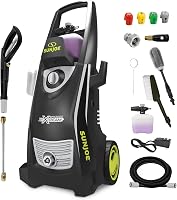
The Sun Joe Pressure Washer has five spray tips, including soap, and two onboard detergent tanks. Its stated working pressure is up to 2030 PSI, with 1.2 GPM water flow.
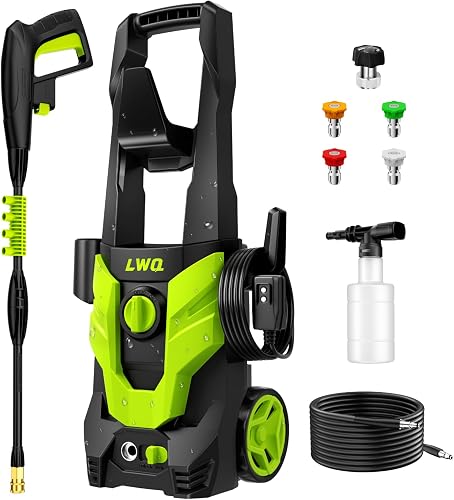
The LWQ Pressure Washer includes four nozzles, a foam cannon and dual rollers. Its stated maximum pressure is 2030 PSI and its maximum flow rate is 2.5 GPM.
The Sun Joe SPX100-GO weighs 14.33 pounds and comes with four nozzles, a foam bottle, a 20-foot hose and a 35-foot power cord. Its maximum pressure is 1800 PSI.
The MZK Lightweight Pressure Washer weighs 9.9 pounds and includes an adjustable nozzle, foam cannon, 21-foot hose and 17-foot power cord. Its stated flow is up to 2.0 GPM.
For gentler cleaning tasks, see our guide to the best low-pressure power washers. If noise is a concern in your yard or neighborhood, compare options in our quiet pressure washer guide.
What should you know before using soap or washing a car?
Use a detergent made for pressure washers and follow both the washer and surface instructions. Soap can help lift dirt, but it doesn't replace the right spray pattern or a careful rinse.
For a car, use a wide spray pattern and keep the nozzle at a safe distance from the paint, trim, tires and seals. Apply vehicle-safe soap according to its directions, and rinse it off before it dries.
Don't use bleach or another chemical unless both the washer and the surface instructions allow it. The pressure washer soap guide explains how to choose a cleaner for the task.
Which washer should you choose?
Choose a cold-water pressure washer for regular home dirt and rinsing; choose a heated power washer when your work often involves grease and the machine is rated for that use. Heat is a job feature, not a measure of pressure or power source.
For most household tasks, start with the surfaces you clean and the features you'll use. The best electric pressure washers for home use can help narrow down cold-water options by setup and everyday needs.
If you already have a specific machine in mind, our Kärcher K5 pressure washer review covers another option for home cleaning. Check its manual for the allowed surfaces, water temperature and accessories before you begin.
Pick heated washing for suitable greasy jobs; pick cold-water pressure washing for routine outdoor cleanup. In either case, follow the washer manual and the surface maker's care directions.
See the Kärcher K5 pressure washer review
Frequently asked questions
What is the difference between a power washer and a pressure washer?
A power washer heats its water, while a standard pressure washer uses unheated water. Both push water through a pump and spray nozzle, but added heat can help with oily or greasy grime.
For routine dirt on outdoor surfaces, a cold-water pressure washer is often enough.
Is a power washer better for concrete?
A heated power washer can help when concrete has oily or greasy residue, but heat isn't required for every concrete cleaning job. Choose the pressure, water flow, nozzle and cleaning method for the surface, and follow the washer maker's directions.
Test an inconspicuous spot first.
Can you use a pressure washer with hot water?
Use hot water only if the washer is designed for it and its manual allows it. A cold-water pressure washer may not be built to handle heated water, and adding hot water against its instructions can damage equipment or create a safety risk.
Does a power washer use more electricity?
A heated power washer needs energy to raise the water temperature, so it has an added heating demand. Total use depends on the machine, fuel or power source, water temperature and job.
Check the exact model's requirements and manual before comparing operating needs.
Which should I choose for washing a car?
A cold-water pressure washer is usually the simpler choice for rinsing a car, provided you use a suitable spray pattern and keep the nozzle at a safe distance. Heat isn't usually the deciding feature for routine car washing.
Use soap made for pressure washers when applying detergent.