Why Won’t My Electric Pressure Washer Start?
An electric pressure washer usually won't start because power is interrupted at the outlet, GFCI, reset device, cord, or switch. Check those points in order, then confirm water is flowing before trying again.
On this page (10 sections)
- What should you check first when an electric pressure washer won't start?
- Could the outlet or GFCI be stopping the washer?
- How do you check the cord, plug, and switch?
- Can low water flow prevent an electric pressure washer from starting?
- What if the motor hums but the washer does not run?
- How can storage cause startup trouble?
- Could the high-pressure hose stop the washer from starting?
- What should you do after the washer starts?
- When should you stop troubleshooting?
- What is the safest fix for an electric pressure washer that won't start?
An electric pressure washer usually won't start because power is interrupted at the outlet, GFCI, reset device, cord, or switch. Check those points in order, then confirm water is flowing before trying again.
Unplug the washer before checking connections or removing a cover. If you smell burning, see melted plastic, find a damaged cord, or hear unusual electrical buzzing, stop troubleshooting and arrange professional service.
What should you check first when an electric pressure washer won't start?
Start with the outlet and reset devices, then inspect the cord and switch. These checks solve many startup failures without opening the machine.
- Make sure the power switch is in the off position.
- Plug a lamp or other suitable device into the same outlet.
- Reset the outlet's GFCI if it has a reset button.
- Check the washer's own GFCI plug or reset button.
- Inspect the plug and cord for cuts, crushed areas, burn marks, or loose connections.
- Move the switch to on only after the water supply is connected.
Don't keep pressing reset if the device trips immediately. Repeated trips can indicate a fault rather than a simple startup delay.
Could the outlet or GFCI be stopping the washer?
Yes. A tripped GFCI or breaker is one of the first causes to rule out.
Pressure washers are used around water, so their electrical protection may interrupt power when it senses a problem.
Reset the GFCI once with the washer unplugged. If it trips again as soon as you connect the washer, unplug it and test the outlet with another safe device.
Check the electrical panel for a tripped breaker, but don't replace a breaker with a larger one. Avoid using an outlet that is wet, loose, cracked, or warm.
The Consumer Product Safety Commission's electrical safety guidance covers basic precautions around cords, plugs, and household electrical equipment.
How do you check the cord, plug, and switch?
Look for visible damage and make sure the switch moves fully into its operating position. A pressure washer cannot start if power stops at the cord, plug, or switch.
Keep the washer unplugged while you inspect it. Check both ends of the cord, the plug blades, and the strain relief where the cord enters the housing.
Do not tape over a damaged cord or bend the plug blades to make a loose connection fit. Replace damaged parts through the manufacturer or a qualified repair service.
If the switch feels stuck, loose, or unusually hot, don't force it. A switch problem needs service, especially if the outlet and GFCI work normally with other devices.
Can low water flow prevent an electric pressure washer from starting?
Low water flow usually causes poor pressure or cycling, but some washers also use water-flow controls that affect startup. Connect the garden hose fully, turn on the tap, and squeeze the spray-gun trigger before switching on the motor.
Remove kinks from the inlet hose. Check the inlet screen for dirt and rinse it only as the manual allows.
Purge trapped air by holding the trigger open until water flows steadily. Keep the spray wand pointed in a safe direction while doing this.
If the motor starts and stops, close the trigger briefly and open it again. Persistent cycling can point to an inlet restriction, leaking connection, or pump problem.
What if the motor hums but the washer does not run?
A hum without normal operation can indicate a stalled motor, low voltage, a blocked pump, or an electrical fault. Switch the washer off, unplug it, and don't keep trying to start it.
Check that the pump is not under pressure. With the washer unplugged and the water supply connected, squeeze the trigger to release pressure from the hose and gun.
Make sure the spray tip is not blocked. A blocked tip usually affects spray performance after startup, but releasing pressure and clearing the tip can still help rule out a restriction.
If the motor only hums after these checks, professional diagnosis is safer than opening the electrical housing.
Does a replacement pressure washer help with startup problems?
A replacement can make sense when an electric washer has recurring electrical faults, damaged controls, or a pump that is not economical to repair. Choose a machine based on the work you do and the electrical setup available.
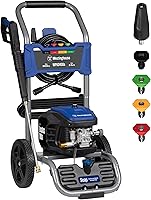
The Sun Joe Pressure Washer is a corded electric model with a maximum pressure of 2030 psi, 1.2 GPM water flow in its high-pressure cleaning description, a 20-foot hose, and five quick-connect spray tips.
Check the outlet location, hose reach, and storage space before choosing any replacement. A new machine still needs a suitable circuit, a dry connection, and a steady water supply.
How can storage cause startup trouble?
Poor storage can expose a pressure washer to moisture, dirt, UV damage, or crushed cords. Store it dry, protect the electrical plug, and follow the manual's steps for draining and winter storage.
A cover can reduce exposure to rain, dirt, birds, tree sap, and sunlight when the washer is stored or transported. It cannot make a wet machine safe to power on.
The Classic Accessories Pressure Washer Cover is made from polyester with Weather-X fabric and water-resistant backing. It fits vertical or horizontal pressure washers up to 48 in L x 18.5 in W x 13.5 in H, covers attached hose reels, and has an elastic shock cord and back closure.
Dry the washer before covering it. Check the cover's fit against your machine's shape and dimensions, and keep the cord from being pinched underneath.
Could the high-pressure hose stop the washer from starting?
A hose problem normally affects pressure or leaks rather than electrical startup, but a kink or trapped pressure can make operation seem stuck. Turn off the machine, release trigger pressure, and inspect the hose before restarting.
Look for kinks, cuts, bulges, and loose connections. Do not use a hose with visible damage or fittings that do not match the washer.
The ProPulse B & S is a 1/4 in x 25 ft replacement pressure washer hose with a 3,100 psi working pressure and American Standard M22-14mm female twist connects. It is made in the USA and is designed for many gas or electric pressure washers with matching connections.
Confirm the connector type and pressure requirement before ordering. A hose that fits one washer may not fit another, even when both machines are electric.
What should you do after the washer starts?
Once the motor runs, keep the trigger open briefly and check for steady water flow, leaks, and normal sound. Start with a wide spray pattern and keep the wand pointed away from people, pets, and fragile surfaces.
Watch the outlet, plug, cord, hose, and pump connections during the first minute. Turn the machine off if the breaker trips, the plug heats up, or water reaches electrical parts.
If the unit starts but loses pressure, see Why Isn’t My Pressure Washer Pulling Soap? for detergent-system checks. For a broader repair sequence, read How to Fix a Pressure Washer and How to Fix an Electric Pressure Washer.
When should you stop troubleshooting?
Stop and seek service when the washer has electrical damage, repeated breaker trips, burning smells, smoke, a hot plug, or a motor that only hums. These signs can point to faults that are not safe to diagnose by repeated resets.
For a washer that starts and then shuts down, check Why Won’t My Power Washer Start? for related symptoms. If the motor runs but the housing or pump becomes unusually hot, read Why Is My Pressure Washer Overheating?.
Leaks also deserve attention. Use Why Is My Kärcher Pressure Washer Leaking Water? for a brand-specific leak path, or Why Is My Pressure Washer Pump Leaking Water? when water appears around the pump.
What is the safest fix for an electric pressure washer that won't start?
Check the outlet, GFCI, breaker, cord, switch, water supply, and pressure release in that order. If the washer still won't start, or if any electrical part shows damage, stop using it and arrange qualified service.
Choose the Classic Accessories cover for safer dry storage, the Sun Joe Pressure Washer when replacement is more practical, or the ProPulse B & S when a compatible hose is the weak point. Match every replacement part to the washer's connection, pressure, and manual.
Frequently asked questions
Why won't my electric pressure washer start after sitting unused?
Check the outlet, GFCI, reset button, cord, switch, and water supply. Storage can also leave dirt around connections or allow moisture to reach electrical parts.
Unplug the washer before inspecting it, and stop if the cord, plug, housing, or switch looks damaged.
Can a pressure washer start without water?
Some electric pressure washers may turn on briefly, but running without a water supply can damage the pump. Connect the garden hose, turn on the tap, squeeze the trigger to purge air, and confirm steady water flow before switching on the motor.
Why does my electric pressure washer keep tripping the breaker?
A tripping breaker can point to an overloaded circuit, damaged cord, motor trouble, or another electrical fault. Disconnect other loads, avoid repeated resets, and stop using the washer if the breaker trips again or the cord and plug become hot.
Should I use an extension cord with an electric pressure washer?
Use an extension cord only when the pressure washer manual allows it and the cord matches the required rating, length, and outdoor-use conditions. A long, thin, damaged, or loosely connected cord can cause voltage drop, heat, or nuisance trips.