Can You Use Bleach in a Pressure Washer Foamer?
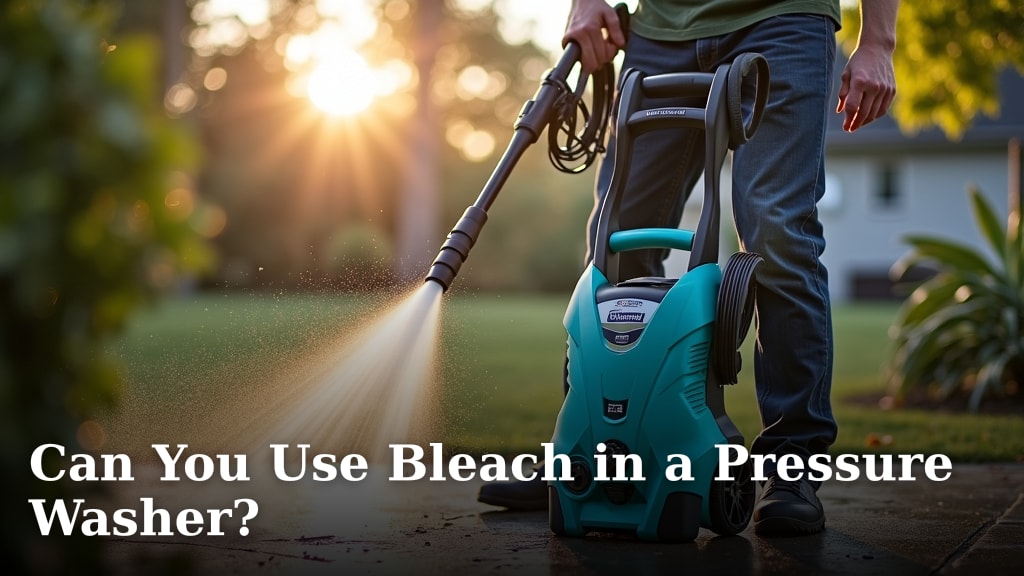
Only use bleach in a pressure washer foamer if the attachment and washer makers allow it. Check their chemical compatibility guidance and the bleach label, and prevent spray, mist, and runoff from reaching people, pets, plants, or materials that bleach can damage.
On this page (6 sections)
- Can you use bleach in a pressure washer foamer?
- What should you check before filling a foamer with bleach?
- How is a pressure washer foamer different from a soap injector?
- What should you use if bleach is not approved?
- How can you reduce bleach exposure while cleaning?
- What is the safest decision rule for bleach in a foamer?
Only use bleach in a pressure washer foamer if the attachment and pressure washer makers allow it. Check their chemical guidance and the bleach label, then plan for spray, mist, contact, and runoff before applying anything.
A foamer’s ability to hold liquid does not prove that its seals, tubing, or other parts can tolerate bleach. If the manuals do not clearly approve it, choose a compatible pressure washer cleaner instead.
Can you use bleach in a pressure washer foamer?
Sometimes, but only when the foamer and washer instructions permit bleach. Check the exact attachment manual, not just the washer manual, because a separate foamer can have different material limits and cleanup steps.
Follow the bleach label for allowed surfaces, dilution, protective measures, and rinsing.
Do not guess a concentration or mix bleach with another cleaner. In particular, never combine it with ammonia, acids, or other products unless the labels explicitly direct that combination.
A foamer can spread solution as droplets or mist. Keep people and pets away from the work area, protect nearby plants and surfaces, and avoid breathing spray.
For the broader washer setup, see Can You Use Bleach in a Pressure Washer?. The same equipment and chemical checks apply, but a foamer adds its own compatibility question.
What should you check before filling a foamer with bleach?
Confirm chemical compatibility, permitted use, and cleanup instructions before adding bleach. Use the product label and the equipment makers’ directions as your decision sources.
Check these points first:
- Foamer materials: Look for explicit guidance on bleach or sodium hypochlorite compatibility for the reservoir, seals, hose, fittings, and nozzle.
- Washer instructions: Confirm whether the washer allows chemical use through that attachment and how the solution should be fed and rinsed.
- Chemical label: Verify the intended surface, dilution, application method, ventilation, protective gear, and rinse directions.
- Exposure paths: Consider drift, overspray, splashes, runoff, and contact with clothing or skin.
- Nearby materials: Move or cover items that bleach could discolor or damage, and keep runoff away from areas where it could cause harm.
- Cleanup: Check how to flush or store the foamer after use, and follow the manufacturer’s steps promptly.
If a manual says only to use approved cleaners, or does not address bleach, treat that as unresolved compatibility. Contact the attachment maker or use a cleaner whose label and instructions fit the foamer.
Does a foamer make bleach safer?
No. Foam does not remove bleach’s chemical or exposure risks.
It changes how solution is delivered.
Some foaming attachments can still produce droplets that travel beyond the target surface.
Keep the spray pointed away from people, animals, doors, windows, and air intakes. Stop if wind carries droplets toward anything you need to protect.
How is a pressure washer foamer different from a soap injector?
A foamer and a soap injector deliver cleaner differently, so each needs its own compatibility check. A foamer lays solution onto a surface as foam, while an injector draws detergent into the washer’s water stream.
For injector options, see General Pump downstream injectors.
A foamer may be a separate bottle attachment, while an injector can route cleaner through parts of the washer. For washer-specific soap guidance, see Greenworks washer soap guide.
Neither design makes an unapproved chemical safe for its materials.
Read How Does a Pressure Washer Soap Injector Work? to understand the injector’s role. For low-pressure detergent application, what a soap nozzle does explains how a washer nozzle can be part of the process.
Don't assume that bleach approved for one delivery method is approved for another. For injector options with stainless steel parts, see stainless steel downstream injectors.
Match the chemical label to the specific tool and follow the tool maker’s instructions.
What should you use if bleach is not approved?
Choose a cleaner labeled for your surface and compatible with the foamer. A purpose-made outdoor detergent can help remove grime without requiring you to put an unapproved chemical through the attachment.
Simple Green Oxy Solve Total Outdoor Cleaner is a peroxide-based concentrate for pressure washer or manual use, with wood, concrete, vinyl, and other surfaces named for use.
Simple Green Oxy Solve Concrete and Driveway is described for driveways, walkways, patios, and masonry, including grime such as oil, rust, grease, and tire marks.
Simple Green Oxy Solve House and Siding Pressure is described for siding materials including vinyl, aluminum, stucco, wood, and brick, and stains from algae, moss, and mildew.
Use any cleaner only as its label and your equipment instructions direct. A product’s surface fit does not confirm that a particular foamer accepts it.
For another surface-focused option, compare best patio detergents for pressure washers. To choose among detergent types, read What Soap Can I Use in a Pressure Washer?.
How can you reduce bleach exposure while cleaning?
Keep the solution contained, avoid breathing spray, and control where rinse water goes. Read the label first, follow its protective measures, and keep other people and pets out of the work area.
Avoid spraying toward yourself or into the wind. Do not use a foamer near open windows, doorways, or air intakes where mist could enter.
Protect plants and nearby materials from overspray and runoff. Work in a way that directs rinse water only to a place permitted by the product label and local requirements.
If solution contacts skin or eyes, follow the product label’s first-aid directions. Keep the container label available while working so you can act on its instructions.
Can dish soap replace bleach in a foamer?
Dish soap is not automatically a suitable substitute. It may produce suds, but suds alone do not show that the soap is compatible with the foamer, washer, or surface.
Check both the soap label and equipment instructions before using it. Our guide to using dish soap in a pressure washer covers the equipment and cleaning considerations.
What is the safest decision rule for bleach in a foamer?
Use bleach only when the foamer maker, pressure washer maker, and bleach label all support the intended use. Follow the specified dilution, application, exposure precautions, and cleanup steps.
If any instruction is missing or unclear, do not put bleach in the foamer. Pick a compatible cleaner labeled for the surface, then apply and rinse it according to its directions.
Frequently asked questions
Can you put bleach in a pressure washer foamer?
Only if the foamer and pressure washer makers say bleach is compatible, and the bleach label allows the intended use. Check seals, tubing, reservoir, and rinse directions in the equipment manuals.
If the guidance is unclear, use a cleaner approved for the attachment or apply a suitable product with a separate sprayer.
Is a foam cannon the same as a pressure washer soap injector?
No. A foam cannon or foamer is an attachment that mixes solution and air to lay down foam, while a soap injector draws detergent into the washer’s water flow.
Their materials and instructions can differ, so compatibility with one does not confirm compatibility with the other.
Can bleach damage a pressure washer foamer?
It can if the foamer’s materials are not rated for bleach or if the solution sits in the attachment. Check the maker’s chemical compatibility and cleanup instructions before use.
Rinse only as directed, and replace parts that show cracking, swelling, leaks, or other damage.
What can I use instead of bleach in a pressure washer foamer?
Use a pressure washer detergent that names your surface and is approved for your foamer. For outdoor grime, a peroxide-based cleaner may be an option if its label and your equipment instructions allow it.
Pre-wet, apply at the directed dilution, and rinse as directed.