What PSI Do Professionals Use? How It Works

Professionals use a range of PSI, typically between 80 and 120 PSI, for tasks like car washing and pressure cleaning. The exact PSI needed depends on the job, from delicate surfaces needing lower pressure to tough grime requiring higher PSI. This pressure is generated by a pump that forces water through a narrow nozzle, creating a powerful spray.
Understanding PSI (pounds per square inch) helps you choose the right tool for your cleaning needs. Using too much PSI can damage surfaces, while too little won’t clean effectively. It’s all about matching the power of the spray to the type of mess you’re tackling.
- PSI means pounds per square inch.
- Pros use 80-120 PSI for most jobs.
- Higher PSI cleans tougher dirt.
- Lower PSI protects delicate surfaces.
- Match PSI to your cleaning task.
Let’s walk through exactly how PSI works and what’s best for different cleaning jobs.
Understanding How Pressure Washers Work: The Science of PSI
You’ve heard about PSI, but what does it really mean for your cleaning? PSI stands for pounds per square inch. It’s a measure of pressure. Think of it like the force of water pushing out of your cleaning tool. The higher the PSI, the stronger the push.
Professionals use this force to clean surfaces quickly and effectively. But it’s not a one-size-fits-all situation. You need the right PSI for the right job. Too much can cause damage. Too little won’t get the job done.
How a Pressure Washer Creates PSI
A pressure washer is pretty clever. It takes water from your garden hose and makes it much more powerful. It does this using a pump and a special nozzle.
The Role of the Pump
Inside every pressure washer is a pump. This pump is the heart of the machine. It draws water in from your regular hose. Then, it compresses that water. It forces it into a smaller space, increasing the pressure dramatically. This is where the high PSI numbers come from.
Electric pressure washers usually have axial cam pumps. Gas-powered ones often use a triplex pump. Both are designed to build and maintain high pressure reliably.
The Nozzle: The Force Multiplier
The nozzle on the end of the spray wand is just as important. It’s not just a hole; it’s engineered precisely. The nozzle has a very small opening. When the high-pressure water is forced through this tiny opening, it speeds up. This creates a concentrated, powerful stream. It’s like squeezing your thumb over a garden hose to make the water shoot further.
The size and angle of the nozzle tip change the spray pattern and the PSI. Different tips are used for different tasks. We’ll get to that soon!
Professional PSI Ranges for Different Jobs
So, what PSI do the pros actually use? It really depends on what they’re cleaning. You won’t see someone blasting a delicate deck with the same pressure they use for concrete.
The Sweet Spot: 80 to 120 PSI
For many common tasks, professionals aim for a PSI range between 80 and 120 PSI. This is often achieved with electric pressure washers or the lower settings on gas models. This pressure is great for general cleaning.
Think about washing your car or cleaning patio furniture. You need enough power to lift dirt and grime. But you don’t want to strip paint or dent the metal. This moderate PSI range offers that balance. It’s effective without being overly aggressive. For tasks like washing your car, consider how much PSI is safe for vehicles.
Tackling Tougher Grime: 120 to 1900 PSI
When you need to remove stubborn dirt, mold, or paint, you’ll need more power. Professionals might step up to pressure washers in the 120 to 1900 PSI range. Gas-powered machines are more common here.
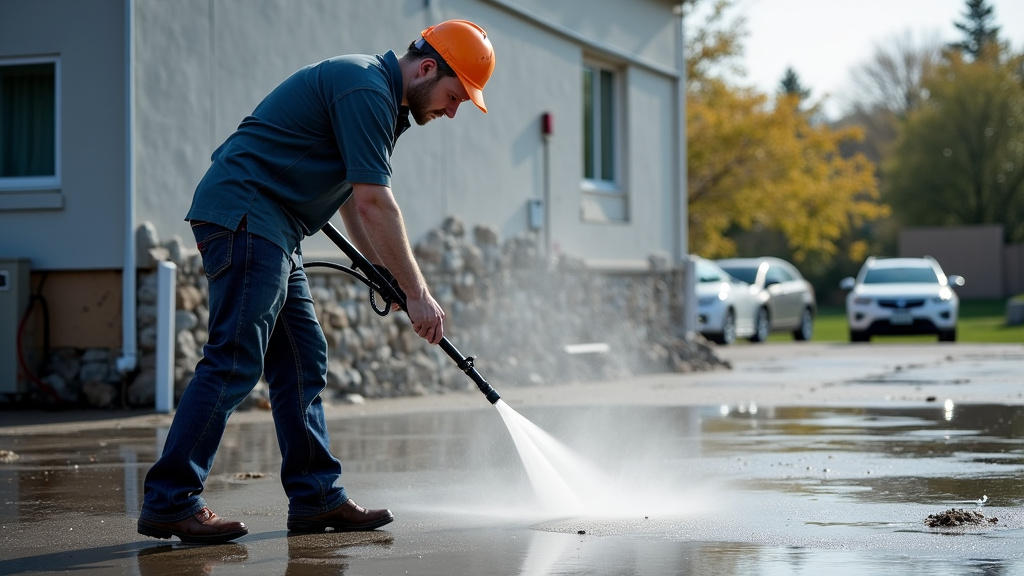
This is the kind of pressure used for cleaning driveways, brick walls, or removing mildew from siding. The higher PSI can blast away embedded dirt that lower pressures just can’t touch. However, using this much force requires care. You need to keep the nozzle moving and maintain a safe distance.
Heavy-Duty Cleaning: 1900+ PSI
For serious industrial cleaning or large-scale projects, professionals might use machines that deliver 1900 PSI and even higher. These are not your average home-use machines. They often use powerful gas engines and specialized pumps.
These machines are used for things like cleaning construction sites, stripping old paint from large surfaces, or cleaning heavy machinery. The sheer force can remove almost anything. But again, extreme caution is advised. Damage to surfaces is a real risk with this much power.
Matching PSI to Your Cleaning Surfaces
Knowing the PSI range is one thing. Knowing where to use it is another. Using the wrong pressure can turn a cleaning job into a repair job.
Delicate Surfaces: Wood, Cars, and Painted Areas
When you’re cleaning materials like soft wood, car exteriors, or painted surfaces, you need to be gentle. High PSI can easily damage these. It can splinter wood, chip paint, or even scratch your car’s finish. For these, you’ll want to stay on the lower end of the PSI scale, typically 800 to 1200 PSI.
Often, the best approach is to use a wider spray nozzle (like a 25 or 40-degree tip). This spreads the water over a larger area, reducing the direct impact force. Maintaining a good distance from the surface is also key. Think of it like showering yourself versus using a fire hose.
Medium-Duty Surfaces: Concrete, Brick, and Vinyl Siding
Most common household cleaning tasks fall into this category. Concrete driveways, brick patios, and vinyl siding can handle a bit more pressure. For these surfaces, a PSI range of For surfaces like vinyl siding, it’s important to know the appropriate PSI range.1200 to 1900 PSI is usually effective.
This pressure is enough to lift dirt, moss, and light staining without causing damage. You can often use a medium-angle nozzle (around 15 to 25 degrees). Still, it’s wise to test a small, inconspicuous area first. This ensures you don’t accidentally etch the surface.
Tough Surfaces: Heavy Grime and Concrete Floors
For really tough jobs, like removing oil stains from a garage floor or cleaning heavily soiled concrete, you can use higher PSI. Machines in the 1900 to 3000 PSI range are suitable here.
For these tasks, a narrower nozzle (like a 0 or 15-degree tip) might be used, but with extreme caution. It’s often better to use a wider nozzle at a slightly higher PSI than a narrow one that concentrates all the force. Using a turbo nozzle can also help break up stubborn dirt on concrete.
Key Factors Beyond Just PSI
While PSI is the headline number, it’s not the only thing that matters. Several other factors influence how well and how safely a pressure washer cleans.
GPM: The Unsung Hero
GPM stands for gallons per minute. This measures the volume of water the pressure washer delivers. Think of it as the “amount of cleaning power” the machine has.
A higher GPM means more water is hitting the surface. This helps rinse away dirt and detergent more effectively. A machine with high PSI but low GPM might blast hard but rinse poorly. Many experts say GPM is just as important, if not more so, than PSI for overall cleaning efficiency (U.S. Department of Energy).
Nozzle Types: The Right Tool for the Job
We’ve touched on this, but it’s worth repeating. The nozzle tip is critical. They come in different degrees, usually marked by color or a number.
- Red (0-degree): A pinpoint stream. Very powerful, but use with extreme caution. Can damage surfaces quickly.
- Yellow (15-degree): A narrow fan pattern. Good for removing stubborn dirt from hard surfaces.
- Green (25-degree): A wider fan pattern. A good all-around choice for most cleaning.
- White (40-degree): A very wide fan pattern. Best for delicate surfaces or rinsing.
- Black (Soap nozzle): Uses low pressure to draw detergent.
Water Temperature: Hot vs. Cold
Most consumer pressure washers use cold water. However, hot water pressure washers exist. They are much more expensive and complex. Hot water can significantly improve cleaning power, especially for grease and oil.
Research shows that hot water can cut through grease and oil much faster than cold water alone (NCBI). For most home use, cold water is perfectly adequate, but if you’re dealing with industrial grease, hot water might be a professional’s choice.
A Quick Checklist for Choosing Your PSI Approach
Before you grab that sprayer, take a moment to think about your task. Here’s a quick guide:
- Assess the Surface: Is it soft wood, delicate paint, or tough concrete?
- Identify the Grime: Is it light dust, mud, or stubborn oil stains?
- Start Low: Always begin with the lowest effective PSI for your task.
- Use the Right Nozzle: Match the nozzle degree to the surface and dirt.
- Maintain Distance: Keep the wand at a safe distance, especially with high PSI.
- Test First: Try a small, hidden spot to ensure no damage occurs.
Conclusion
You now understand that professionals choose their PSI based on the job at hand. Remember, the 80-120 PSI range is a great starting point for most tasks, offering a balance of cleaning power and surface protection. For tougher dirt, higher PSI is needed, but always with caution and the right nozzle. Always match your pressure to the surface you’re cleaning, starting low and increasing only as needed. Your next step should be to identify the primary cleaning tasks you face. Then, consider the surfaces involved and choose your tool and nozzle accordingly for a safe and effective clean.
Frequently Asked Questions
What’s the difference between PSI and GPM?
PSI (pounds per square inch) measures the force of the water spray. GPM (gallons per minute) measures the volume or amount of water flowing. Professionals often consider GPM just as important as PSI because a higher GPM helps rinse away dirt and detergent more effectively, leading to a better clean.
Can I use a high PSI on my car?
It’s generally not recommended to use high PSI on your car’s exterior. Research suggests that pressures between 800 to 1200 PSI with a wide nozzle (like 40 degrees) and good distance are safest for car washing. Higher PSI can easily damage paint, trim, and even seals.
Do professionals use hot water pressure washers?
Yes, professionals sometimes use hot water pressure washers for specific tough jobs. Hot water is much more effective at cutting through grease and oil than cold water alone. However, these machines are typically more expensive and complex, and cold water is sufficient for most common cleaning tasks.
How do I know which nozzle to use?
Nozzles are color-coded and indicate the spray pattern. Red (0-degree) is a powerful pinpoint stream for tough surfaces (use with extreme caution). Yellow (15-degree) and green (25-degree) offer wider fan patterns for general cleaning. White (40-degree) has a very wide fan, best for delicate surfaces or rinsing.
Is it okay to use a turbo nozzle on concrete?
Yes, a turbo nozzle can be effective on tough concrete surfaces. It spins a zero-degree stream in a cone pattern, which can help break up stubborn dirt and stains more quickly. However, always start with the lowest pressure setting and test in an inconspicuous area first to avoid etching the concrete.